Category: Banking Matters

  • Loan Agreement in India: Key Clauses Every Borrower Must Read Before Signing

    Loan Agreement in India: Key Clauses Every Borrower Must Read Before Signing

    Introduction

    Getting approved for a loan—whether it is for a new home, a car, or scaling your business—is an exciting milestone. However, the excitement often overshadows the most critical step of the process: reading the fine print.

    Borrowers in India frequently sign lengthy legal documents without reviewing them carefully, assuming they are standard non-negotiable templates. This can lead to serious financial and legal consequences later.

    Here is a comprehensive guide to understanding your loan agreement and the key clauses you must review before signing.


    Why a Loan Agreement is Legally Binding

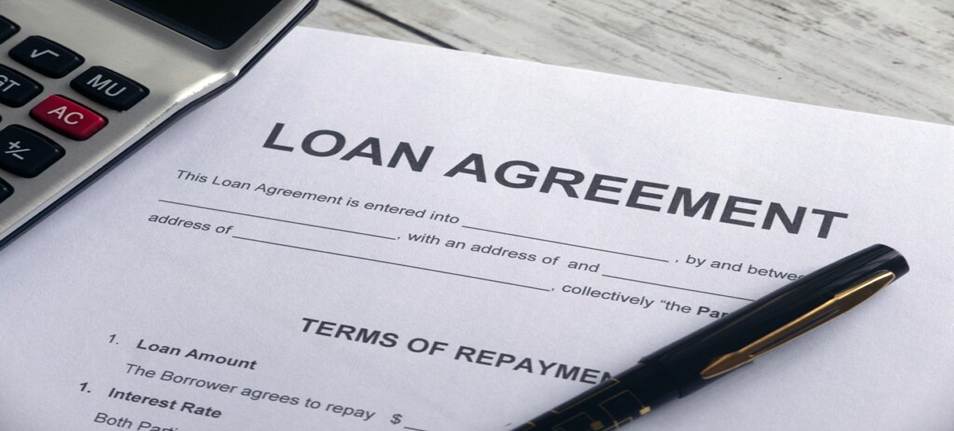
    A loan agreement is not just a document issued by a bank—it is a legally binding contract governed by the Indian Contract Act, 1872.

    Once signed, it binds both the borrower and the lender. While you are obligated to repay the loan, the bank must also follow the agreed terms.

    This means lenders cannot arbitrarily change core conditions without adhering to the contract, giving you legal grounds to hold them accountable.


    Key Clauses You Must Always Read

    Do not let legal jargon overwhelm you. Focus on these critical clauses:

    • Interest Rate (Fixed vs Floating): Check whether your rate is fixed or fluctuates with market conditions and how often it resets.
    • Prepayment & Foreclosure Charges: Some banks charge penalties for early repayment, although RBI restricts this for certain loans.
    • Default Clause: Understand what qualifies as a default, including cross-default triggers linked to other loans.

    What is the MITC Document?

    The RBI requires lenders to provide a Most Important Terms and Conditions (MITC) document.

    This is a simplified summary of your loan’s key aspects such as interest rates, penalties, and charges.

    Always review the MITC carefully—it is designed for transparency and quick understanding.


    Hidden Charges You Must Watch Out For

    The advertised interest rate is not the only cost. Pay attention to:

    • Processing Fees: One-time non-refundable charges.
    • Penal Charges: Fees applied when you miss EMI payments.
    • Additional Costs: Legal, valuation, documentation, or insurance charges bundled into the loan.

    What Happens if You Default?

    If you default, the lender has legal remedies—but you also have rights:

    • SARFAESI Act: Banks can auction secured assets after proper notice.
    • Debt Recovery Tribunal (DRT): Handles large loan disputes where you can present your case.
    • Recovery Agent Rules: RBI prohibits harassment, abuse, or calls at odd hours.

    Can You Negotiate Loan Terms?

    Yes. A loan agreement is negotiable, especially if you have a strong credit profile.

    You may negotiate:

    • Lower interest margins
    • Processing fee waivers
    • Better prepayment terms

    Never hesitate to request changes before signing.


    How Does Lawizer Help You?
    Loan agreements are complex, and missing one clause can cost you significantly. Lawizer simplifies the process by providing expert legal assistance.

    Why Choose Lawizer?

    • Clause Analysis: Identifies hidden risks and unfair terms
    • Simple Explanation: Converts legal jargon into plain language
    • Negotiation Support: Helps you secure better terms
    • Legal Protection: Guidance against harassment or violations
    • Fully Online: Fast and affordable document review

    Protect your financial future before you sign.


    Frequently Asked Questions

    Can Lawizer help negotiate my loan agreement?

    A: Yes, Lawizer provides expert insights and actionable negotiation points.

    Is Lawizer a law firm?

    A: No, it is a legal-tech platform offering accessible legal solutions.

    What should I do if recovery agents harass me?

    A: File a complaint with the bank and escalate to RBI if needed.

    Can Lawizer help after signing the agreement?

    A: Yes, it can review active agreements and guide you on your rights.

  • CHEQUE BOUNCE CASE (SECTION 138): LEGAL NOTICE, RULES & PUNISHMENT

    CHEQUE BOUNCE CASE (SECTION 138): LEGAL NOTICE, RULES & PUNISHMENT

    Introduction:

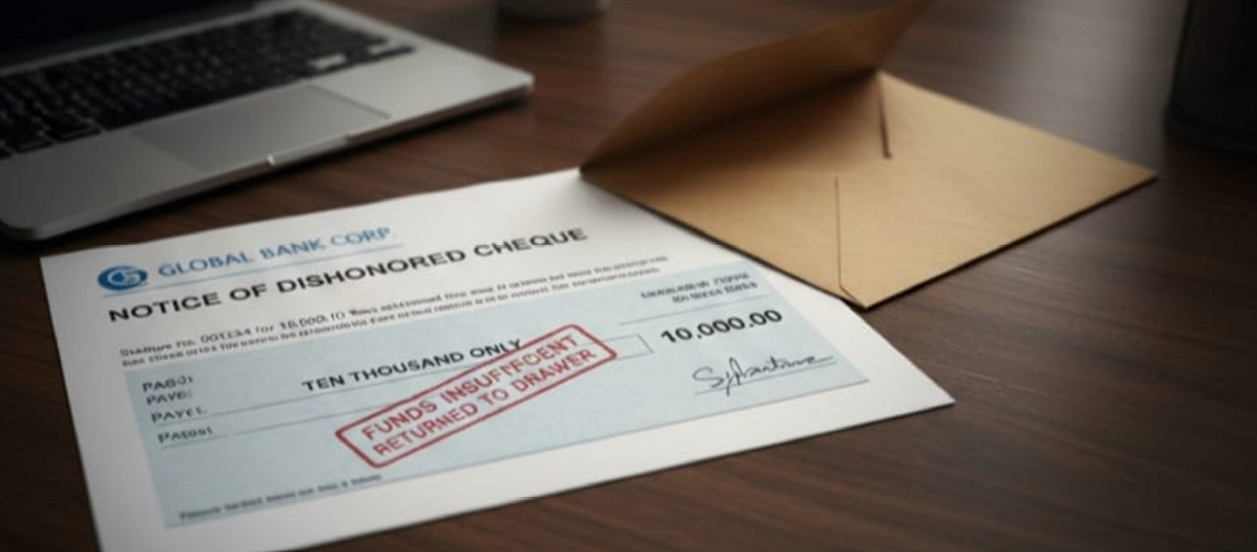
    Cheque Bounce (or dishonor of cheque) comes under section 138 of the Negotiable Instrument Act, 1881.

    This occurs when a cheque may bounce if it is being expired or there has been serious issue with the date. It usually happens when a bank refuses to pay a cheque usually due to insufficient funds.

    Section 138 Of Negotiable Instrument Act:

    It is essentially makes it an offense to issue a cheque that bounces, providing a legal recourse for the payee or holder in due course. There are three key aspects to it:

    • Dishonor Of Cheque This states when a cheque is drawn on an account which is maintained by the drawer for payment of a debt or liability is returned unpaid by the bank.
    • Cause Of Dishonor : The cheque can be returned unpaid due to insufficient funds in the account or because signature mismatch or it could be the amount exceeds the arrangement made with the bank.
    • Punishment: If the above following conditions are met, then the drawer of the cheques can be punished with the imprisonment which can extend upto 2 years or a fine which can lead to twice the amount of the cheque or both.
    Notice for cheque bounce
    Notice for cheque bounce

    What Is A Cheque?

    It is defined under Section 6 of the NI Act stating that a cheque as a Bill of exchange drawn on a specified banker and not expressed to be payable otherwise then on demand and it includes the electronic image and in an electronic form.

    A Cheque in the electronic form means a cheque drawn in the electronic form by using any computer resources and signed in a secure system with digital signature (with or without biometric signatures) and Asymmetric Crypto System or with electronic signatures.

    What Is The Due Date For Clearance?

    Key Essential Features Under Section 138 NI Act:

    NI Act penalizes the dishonor of a cheque, however dishonor of a cheque is by itself if the following ingredients have to be fulfilled.

    • Drawing of the cheque.
    • Presentation of the cheque of the Bank.
    • Return of the cheque unpaid by the drawee bank.
    • Issuance of the notice in the writing to the drawer of the cheque demanding payment of the cheque amount.
    • Failure of the drawer to make the payment within 15 days of receipt of the notice.

    Legal Process For The Dishonor Of Cheque Or Cheque Bounce:

    1) Drawing of the Cheque : The Cheque is created by the drawer.

    2) Presentation to the Bank: The Cheque is to submitted to the bank for
    payment.

    3) Issuance of Notice: The holder in due course must send a written legal
    demand notice to the drawer within 30days.

    4) Return unpaid: A notice period of 15 days is given to the drawer to make the payment , if not given then the action arises.

    5) Filling of complaint: If the drawer fails to pay within 15 days , then as it is a criminal act intent , so a criminal complaint will be lodged against the drawer within the 30 days before the Judicial Magistrate of First class.

    A Limitation For Filing A Complaint In Respect Of The
    Offence Under Section 138 NI Act:

    Section 142 NI Act prescribed an outer limit of one month for filing of a complaint from the data of the cause of action arises.

    Recent Guidelines By Supreme Court Of India On Cheque Bounce:

    • The Supreme Court of India has issued a fresh guidelines to ensure a speedy procedure regarding the cheque bounces cases which has created a lot of backlogs.
    • Dishonor of cheque under Section 138 of Negotiable Instruments Act which accounts for upto 50% of pending cases
    • As per the new directions that has been issued by the Supreme Court the cheque bounces cases are now to be served only in person by through digital medium that is via Email and Whatsapp.
    • Complainants are there to provide there necessary details for quick response.
    • These creates and facilitates to provide early dispute towards such issues.

    Conclusion:

    Thus we conclude, the statutory framework relating to cheque dishonor ensures financial discipline towards by providing an effective legal remedy against the defaulters which creates a strong financial instruments by strong legal framework.

    In essence with that it creates striking balance in reinforcement and safeguards regarding the dishonor of payment.

    If a cheque issued to you has dishonoured, time is of the essence. You must send a statutory legal notice within the stipulated timeline to recover your dues or initiate criminal proceedings against the defaulter.

    Send a Legal Notice Today:

    Frequently Asked Questions:

    Q1. What are the documents needed for cheque bounce case?

    Ans: To file a case under Section 138, you must submit the original dishonored cheque and the bank’s return memo stating the reason for rejection. You also need a copy of the legal notice sent to the defaulter within 30 days, the postal proof of service or delivery report, and the formal complaint petition supported by a sworn affidavit. Invoices or agreements proving the debt are also recommended.

    Q2. Can a company be held liable for cheque bounce?

    Ans: Yes, under Section 141 of the NI Act, a company is a legal entity and can be prosecuted. Along with the company, every person (like a Director or Manager) who was “in charge of and responsible for” the business at the time of the offense is vicariously liable.
    However, you must arraign the company itself as an accused; suing only the directors is not legally maintainable.

    Q3. Can multiple cheque bounce may lead to multiple case?

    Ans: Yes, but the law allows grouping them. Under Section 219 of the CrPC, up to three offenses of the same kind committed by the same person within 12 months can be tried together in a single trial.
    A single legal notice can also cover multiple dishonored cheques if they relate to the same transaction. Courts are now encouraged to hold joint trials to expedite these cases.

    Q4. What is the due date for clearance?

    Ans: Legally, a cheque is valid for presentation and clearance for 3 months from the date issued.
    Regarding bank processing speed, current RBI guidelines under the Cheque Truncation System (CTS) ensure that cheques deposited by 4:00 PM are cleared and settled by the same day or the next working day.
    New “Continuous Clearing” measures are further reducing this time to just a few hours.