Category: Lawizer’s Services

  • Drafting Virtual Contracts: Legal Validity in the Indian Market (2026)

    Drafting Virtual Contracts: Legal Validity in the Indian Market (2026)

    Introduction

    In the rapid-fire world of the Indian startup ecosystem, the traditional “wet ink” signature is fast becoming a relic of the past. From SaaS subscriptions to high-stake founder agreements, the Virtual Contract is now the primary vehicle for commerce.

    However, as we move through 2026, a critical question remains: Is a digital agreement truly as enforceable as a paper one in an Indian court?

    The answer is a resounding yes, provided you navigate the specific intersection of the IT Act and the Indian Evidence Act correctly.


    The Legal Pillars: IT Act, 2000 and Beyond

    The bedrock of virtual contracting in India is the Information Technology Act, 2000. Section 10A of the Act specifically grants legal recognition to contracts formed through electronic means.

    What Constitutes a Valid Virtual Contract?

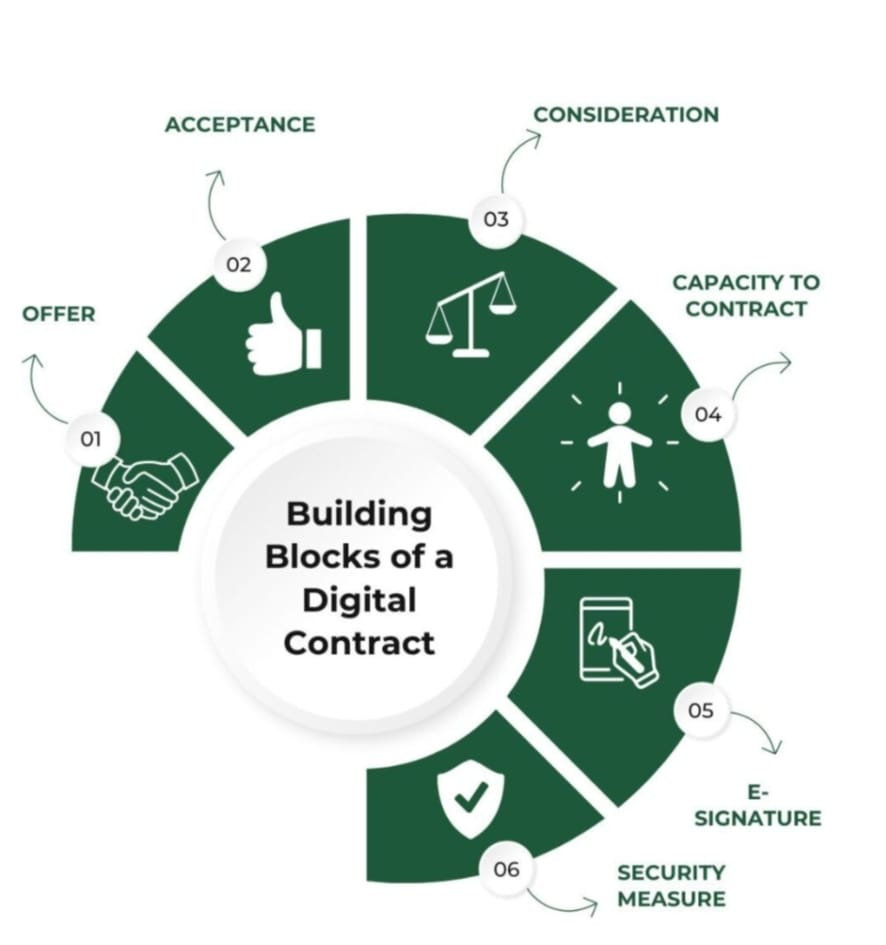
    Under Indian law, a contract is formed when an offer is made and accepted with lawful consideration. In the digital realm, this typically happens through:

    • Click-wrap Agreements: The ubiquitous “I Agree” checkboxes.
    • Browse-wrap Agreements: Terms linked at the footer of a website.
    • E-Signatures: Documents signed via Aadhaar-based eSign or digital signature certificates (DSC).

    The Admissibility of Electronic Records
    In 2026, judicial scrutiny of digital evidence is highly sophisticated. For a virtual contract to hold up during litigation, it must comply with Section 65B of the Indian Evidence Act, 1872 (now integrated into the Bharatiya Sakshya Adhiniyam).

    The Certificate Requirement

    To present a virtual contract as evidence, a business must produce a Section 65B Certificate. This document certifies the authenticity of the computer output and ensures the electronic record has not been tampered with.

    Pro Tip: Courts now demand “Audit Trails”—digital logs showing the exact timestamp, IP address, and device ID of the signer.


    The “Stamping” Hurdle: Can Digital Be Stamped?

    A common pitfall in drafting virtual contracts is the payment of Stamp Duty. Under the Indian Stamp Act, 1899, an unstamped contract is generally inadmissible in court.

    E-Stamping in 2026

    Most Indian states have now integrated e-Stamping services. For a virtual contract to be “bulletproof,” the digital document should be associated with an e-Stamp certificate. Failing to do this can lead to penalties—often up to 10 times the original stamp duty amount.


    Specific Exclusions: When Digital is Not Enough

    Despite the digital push, certain documents cannot be executed virtually in India:

    1. Negotiable Instruments: Such as Promissory Notes (excluding cheques).
    2. Power of Attorney: Generally requires physical execution.
    3. Trust Deeds and Wills: These necessitate physical “wet” signatures.
    4. Real Estate Transfers: Sale deeds still require physical registration at the Sub-Registrar’s Office.

    How Lawizer Secures Your Virtual Agreements

    Drafting a contract is only half the battle; ensuring its “evidentiary weight” is the other half. Lawizer, a premier legal-tech firm, transforms your digital workflow into a secure legal asset.

    Lawizer’s “Smart-Contract” Suite Offers

    • Automated Audit Trails: Captures comprehensive metadata for every signature, auto-generating required legal certificates.
    • Integrated E-Stamping: Seamlessly procure and attach e-Stamps within the platform.
    • Aadhaar e-Sign Integration: Uses the UIDAI framework for secure authentication.

    Make your digital agreements legally strong and court-ready with Lawizer.


    Conclusion: Designing for Defensibility

    In 2026, the validity of a virtual contract depends on the infrastructure behind it.

    By combining sound legal drafting with robust technical verification, businesses can significantly reduce litigation risk.

    Partnering with tech-legal platforms like Lawizer ensures your digital agreements are as enforceable as traditional contracts.


    Frequently Asked Questions

    Is an email exchange a valid contract in India?

    A: Yes, provided essential contract elements exist. However, proving identity is harder without formal e-signature tools.

    Are “I Agree” checkboxes legally binding?

    A: Yes, click-wrap agreements are valid if terms are clearly communicated.

    What is the difference between an E-signature and a Digital Signature?

    A: An E-signature is a broad category (like Aadhaar eSign), while a Digital Signature (DSC) is a secure, certificate-based signature issued by a Certifying Authority (CA).


  • What to Do If Your Cheque Bounces: Legal Steps Under Section 138 NI Act

    What to Do If Your Cheque Bounces: Legal Steps Under Section 138 NI Act

    Introduction

    Dealing with a bounced cheque can be a highly frustrating experience. Whether you are a business owner waiting on a critical client payment, a landlord collecting rent, or an individual expecting the repayment of a friendly loan, an unpaid cheque disrupts your cash flow and breaches your trust.

    However, Indian law provides a robust mechanism to protect payees and penalize defaulters.

    If you are wondering exactly what to do if your cheque bounces, the Negotiable Instruments (NI) Act, 1881, specifically Section 138, is your primary legal weapon.

    Navigating this process requires strict adherence to timelines and procedures.

    In this article, we will discuss everything related to cheque bounce cases and how Lawizer helps simplify this process, making it easier for you to draft your legal notice and take swift action.


    What is Cheque Dishonour and Why is it a Criminal Offence in India?

    A cheque is said to be “dishonoured” or “bounced” when a bank refuses to pay the amount mentioned on the cheque to the payee.

    The bank returns the cheque along with a “Cheque Return Memo” stating the specific reason for the bounce. Common reasons include:

    • Insufficient funds
    • Signature mismatch
    • Account closed
    • Payment stopped by the drawer

    Historically, cheque bounce cases were treated as civil disputes, leading to long delays in recovery.

    To address this, Section 138 of the Negotiable Instruments Act was introduced, making cheque dishonour a criminal offence under specific conditions.


    Why is Cheque Bounce a Criminal Offence?

    The objective behind criminalizing cheque bounce is to maintain trust in financial transactions and ensure smooth business operations.

    The law imposes strict liability, meaning the burden of proof lies on the drawer if the cheque bounces due to insufficient funds.

    This discourages misuse of cheques and ensures accountability in financial dealings.


    The 30-15-30 Rule You Must Follow

    Time is critical in cheque bounce cases. Missing deadlines can weaken your case significantly.

    1. 30-Day Notice Period

    You must send a legal notice within 30 days from receiving the cheque return memo.

    2. 15-Day Payment Window

    The drawer gets 15 days to make payment after receiving the notice.

    3. 30-Day Court Filing Window

    If payment is not made, you must file a case within 30 days after the 15-day period expires.


    Example Timeline

    • March 1: Return memo received
    • March 20: Legal notice sent
    • March 25: Notice received
    • April 9: Payment deadline ends
    • May 9: Last date to file case

    How to Draft a Legal Notice for Cheque Bounce

    A legal notice is the foundation of your case. Any error can weaken your claim.

    Key Elements to Include

    • Transaction details
    • Cheque details
    • Reason for dishonour
    • Demand for payment
    • Legal warning

    How to Send the Notice

    Always send the notice via Registered Post or Speed Post to ensure proof of delivery.


    Filing a Case Under Section 138

    If payment is not made, you can file a criminal complaint before the Magistrate.

    Jurisdiction

    The case must be filed where your bank branch is located.

    Required Documents

    • Original cheque
    • Cheque return memo
    • Legal notice copy
    • Proof of delivery
    • Supporting documents

    What Relief Can You Get?

    • Imprisonment: Up to 2 years
    • Fine: Up to twice the cheque amount
    • Interim Compensation: Up to 20% during trial

    Out-of-Court Settlement Options

    Cheque bounce cases can be settled outside court as they are compoundable offences.

    • Mediation and Lok Adalat settlements
    • Mutual agreement between parties
    • Payment with interest or legal costs

    How Lawizer Helps You

    Lawizer simplifies cheque bounce cases by connecting you with verified legal professionals.

    Why Choose Lawizer?

    • Expert legal notice drafting
    • Verified lawyers
    • End-to-end case support
    • Affordable pricing
    • Quick turnaround

    Take action today and recover your money faster.


    Conclusion

    A bounced cheque is not just an inconvenience—it is a serious financial issue.

    By following the legal process and acting within deadlines, you can effectively recover your money.

    Taking timely legal action ensures accountability and protects your financial interests.

    Take control of the situation and act swiftly with Lawizer.


    Frequently Asked Questions

    Is Lawizer a legit company?

    A: Yes, Lawizer is a legitimate legal-tech platform in India.

    Is Lawizer a law firm?

    A: No, it is a legal-tech platform connecting users with lawyers.

    Can I file a case if I miss the 30-day notice deadline?

    A: No, but you can still pursue a civil case for recovery.

    What if partial payment is made?

    A: You can proceed legally for the remaining amount.

    Will the bank take legal action for me?

    A: No, you must initiate legal proceedings yourself.

    Will the defaulter go to jail immediately?

    A: No, imprisonment happens only after trial and conviction.

  • How to Recover Money from a UPI Scam in India: A Step-by-Step Guide

    How to Recover Money from a UPI Scam in India: A Step-by-Step Guide

    Introduction

    India’s rapid adoption of digital payments has made transferring money as easy as sending a text. Unfortunately, scammers have also levelled up their game.

    If you have just realized that you are the victim of a UPI fraud, take a deep breath. Panic is a natural reaction, but acting swiftly and methodically is your best weapon.

    Time is the most critical factor in recovering stolen funds. Here is a complete guide on what to do, your rights under the law, and how to navigate the recovery process with the help of Lawizer.


    How Common UPI Scams Work

    Scammers constantly invent new ways to trick victims, but most UPI frauds fall into common patterns:

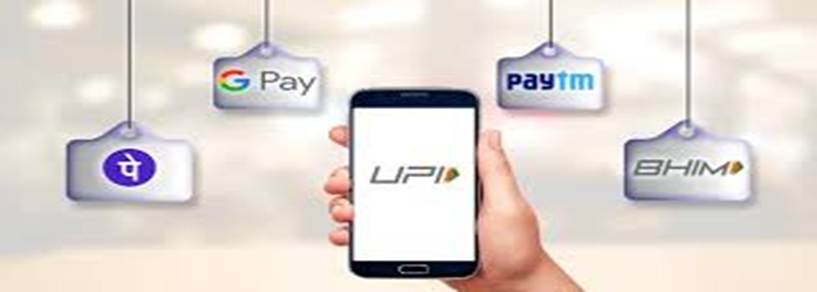
    • Fake QR Codes: Fraudsters send QR codes claiming money will be credited. In reality, scanning it initiates a payment.
    • Rule of Thumb: You never need to scan a QR code or enter your UPI PIN to receive money.
    • Screen Sharing Apps: Scammers posing as customer support ask you to install apps like AnyDesk or TeamViewer, gaining access to OTPs and sensitive data.
    • Vishing (Voice Phishing): Fraudsters impersonate bank officials or authorities to trick you into revealing your UPI PIN or OTP.

    Immediate Steps to Take Within the First Hour

    The first 60 minutes after a scam are often referred to as the “Golden Hour.” Acting quickly significantly improves your chances of recovery.

    1. Block Your Account: Contact your bank immediately to freeze your account and disable your UPI ID.
    2. Call the Helpline (1930): Report the fraud to the national cybercrime helpline. Authorities may freeze the scammer’s account if the funds are still in transit.
    3. Seek Immediate Guidance: Use the Lawizer SOS button for instant legal and financial assistance.


    How to File a Complaint on the Cybercrime Portal

    Once your accounts are secure, filing an official complaint is essential.

    1. Visit the official portal: cybercrime.gov.in.
    2. Create an account using your mobile number.
    3. Provide detailed information including transaction ID (UTR), date, time, and supporting evidence.
    4. Submit the complaint and save the acknowledgment number.

    RBI Guidelines on Fraud Liability

    The Reserve Bank of India (RBI) provides protection for victims of unauthorized electronic transactions.

    If you report fraud within 3 working days, your liability is zero, and the bank must compensate the loss.

    If reported within 4 to 7 working days, liability is limited (typically ₹10,000–₹25,000 depending on account type).


    Filing an FIR: What to Include and Why it Matters

    In addition to the cybercrime portal, filing an FIR at your local police station or cyber cell strengthens your case.

    Include the following details:

    • Timeline of events
    • Transaction IDs and bank details
    • Scammer’s phone number or UPI ID
    • Screenshots and supporting evidence

    A well-drafted FIR ensures your complaint is taken seriously and avoids delays.


    How to Escalate if the Bank Doesn’t Cooperate

    If your bank fails to resolve the issue within 30 days or rejects your complaint unfairly, you can escalate the matter.

    File a complaint with the RBI Banking Ombudsman through the CMS portal.


    How Lawizer Helps with Cybercrime Complaints

    Navigating police procedures and bank systems can be overwhelming. Lawizer simplifies the process by providing expert legal assistance.

    Why Choose Lawizer?

    • 24/7 SOS Emergency Support
    • Free Initial Legal Consultation
    • Expert FIR & Complaint Drafting
    • Digital Case Tracking Dashboard
    • Verified Legal Experts
    • Transparent Pricing

    Get expert help and improve your chances of recovering lost funds.


    Conclusion

    Losing money to a UPI scam is stressful, but quick action can significantly improve recovery chances.

    By securing your accounts, reporting immediately, leveraging RBI protections, and seeking professional support, you can take control of the situation.

    With the right steps and tools, fighting back against fraud is possible.


    Frequently Asked Questions

    What exactly is Lawizer?

    A: Lawizer is a legal-tech platform that helps individuals handle legal issues like cyber fraud with expert support.

    Is Lawizer a legitimate platform?

    A: Yes, it is a reliable and transparent legal-tech solution.

    Is Lawizer a law firm?

    A: No, it is a technology platform that simplifies legal processes.

    How do I reset a forgotten UPI PIN?

    A: Use your UPI app to reset your PIN via debit card or Aadhaar authentication with OTP verification.

  • Non-disclosure agreement (NDA) India: When you need one and what to include

    Non-disclosure agreement (NDA) India: When you need one and what to include

    Introduction

    In today’s hyper-competitive business landscape, your ideas, data, and processes are your most valuable currency.

    Whether you are pitching a revolutionary app to an investor, hiring a new lead developer, or onboarding a manufacturing vendor, you have to share sensitive information to move forward.

    But how do you ensure the other party doesn’t steal your idea or leak your data to a competitor?

    This is where a Non-Disclosure Agreement (NDA) becomes your first line of defense.

    An NDA is a legally binding contract that establishes a confidential relationship between parties. It ensures that sensitive information shared for a specific purpose is not disclosed to unauthorized third parties.

    In this comprehensive guide, we will break down how NDAs work in India, when you need one, what clauses are non-negotiable, and how to enforce them if things go wrong. We will also see how Lawizer can help.


    What an NDA Protects and Its Legal Enforceability in India

    An NDA acts as a protective shield for anything that gives your business a competitive edge. This typically includes:

    • Trade Secrets: Algorithms, manufacturing processes, and formulas.
    • Business Information: Client lists, pricing strategies, financial records, and marketing plans.
    • Intellectual Property (IP): Unpublished patent applications, source code, and design prototypes.

    Is it legally enforceable in India? Yes. In India, NDAs are governed primarily by the Indian Contract Act, 1872.

    For an NDA to be valid, it must meet standard contract requirements: offer, acceptance, lawful object, consideration, and free consent.

    However, Section 27 restricts agreements that restrain trade or profession. Overly broad or unfair NDAs may be struck down.

    To be enforceable, confidentiality obligations must be reasonable in scope and duration.


    One-Way vs Mutual NDA

    1. One-Way (Unilateral) NDA

    Only one party shares confidential information.

    • Used for: Hiring employees, freelancers, consultants, or pitching ideas.

    2. Mutual (Bilateral) NDA

    Both parties share sensitive information.

    • Used for: Partnerships, joint ventures, mergers, and co-founder agreements.

    Key Clauses to Include in an NDA

    1. Definition of Confidential Information

    Clearly define what information is protected, such as source code, financial data, or client databases.

    2. Exclusions

    Specify what is not confidential:

    • Public domain information
    • Previously known information
    • Independently developed data
    • Legally required disclosures

    3. Duration

    Most NDAs last between 2 to 5 years. Perpetual clauses are usually not enforceable.

    4. Consequences of Breach

    Include rights to injunctions and monetary damages in case of violation.


    Common NDA Mistakes

    • Overly Broad Clauses: Makes agreement unenforceable.
    • No Stamp Duty: Must be executed on valid stamp paper.
    • Unclear Jurisdiction: Always define governing law and court location.

    Industries Where NDAs Are Essential

    • Tech & IT: Protect code and algorithms.
    • Healthcare: Secure patient and research data.
    • Manufacturing: Safeguard processes and designs.
    • Startups: Protect pitch decks and financial models.

    How to Enforce an NDA in India

    1. Gather Evidence: Document the breach.
    2. Send Legal Notice: Demand immediate action.
    3. Seek Injunction: Stop further disclosure.
    4. Claim Damages: Recover financial losses.

    Get a Custom NDA Drafted with Lawizer

    Using generic templates can expose your business to risks.

    Lawizer provides expert-drafted, customized NDAs tailored to Indian laws.

    Why Choose Lawizer?

    • India-Compliant Drafting
    • Customized Agreements
    • Strong Legal Protection
    • Fast Turnaround

    Protect your ideas before you share them.


    Conclusion

    An NDA is not just a formality—it is essential for protecting your business assets.

    Whether you are a startup or an established business, a well-drafted NDA ensures your confidential information remains secure.

    With proper legal support, you can collaborate and grow without fear.


    Frequently Asked Questions

    Is notarization mandatory for an NDA in India?

    A: No, but it must be executed on proper stamp paper.

    Can an NDA stop someone from joining a competitor?

    A: No, it only protects confidential information.

    Does an NDA cover verbal information?

    A: Yes, if documented later in writing.

    What is Lawizer?

    A: Lawizer is a legal-tech platform simplifying legal documentation.

    Is Lawizer legitimate?

    A: Yes, it is a trusted legal-tech solution.

    Is Lawizer a law firm?

    A: No, it is a legal-tech platform, not a law firm.

  • Legal Consultation Online: How Lawizer Connects You to Experts 24/7

    Introduction

    Online legal consultation has witnessed tremendous growth, especially in India, where digital adoption continues to rise rapidly.

    The legal industry has undergone a major transformation in recent years. What was once considered traditional and conservative has now evolved into a more accessible, approachable, and affordable model.

    Today, individuals and businesses prefer quick, remote, and secure legal advice over traditional in-office visits. This shift has reshaped how legal services are delivered.


    What is Online Legal Consultation?

    Online legal consultation refers to seeking legal advice, document review, or case strategy guidance through digital platforms.

    This may include:

    • Video consultations
    • Phone consultations
    • Chat-based legal advice
    • Email-based legal opinions
    • Digital document review

    Instead of physically visiting a lawyer’s office, clients can now access professional legal support remotely through legal-tech platforms and law firm websites.


    Why Online Legal Consultation Has Escalated Over Time

    1. Increased Legal Awareness

    More individuals are aware of their legal rights and prefer taking preliminary advice before escalating disputes. This proactive approach has increased demand for quick consultations.


    2. Startup & MSME Growth

    The rise of startups and MSMEs has significantly increased the need for affordable legal advice related to:

    • Contracts
    • Compliance
    • Business incorporation
    • Regulatory filings

    Entrepreneurs now seek faster legal clarity without long appointment delays.


    3. Digital Trust & Security

    Secure payment gateways, encrypted communication systems, and verified lawyer networks have strengthened public trust in online legal services.


    4. Government Digital Integration

    Digital filings under the Ministry of Corporate Affairs and the expansion of e-court initiatives have supported the growth of online legal consultation.

    Legal processes are becoming increasingly technology-driven, making remote consultation more practical than ever.


    The Future of Online Legal Consultation

    Online legal services are expected to integrate advanced technologies such as:

    • AI-powered legal assistance
    • Automated document drafting
    • Predictive case analysis
    • Blockchain-based documentation security

    The legal profession is steadily transitioning into a tech-enabled service ecosystem.


    How Lawizer Connects You to Legal Experts 24/7

    Legal issues don’t arise only during office hours. Whether it’s a compliance concern, police-related matter, contract dispute, or women’s safety issue, timely legal advice is critical.

    Lawizer bridges this gap by offering 24/7 digital connectivity to verified legal experts.

    Here’s how the system works:


    1. Instant Digital Access

    Lawizer allows users to raise legal queries anytime—day or night.

    Users can:

    • Submit their issue online
    • Select consultation type
    • Request immediate assistance

    This removes geographical and time barriers completely.


    2. Verified Expert Network

    Lawizer connects clients with verified and experienced lawyers across practice areas such as:

    • Criminal law
    • Family law
    • Corporate compliance
    • Property disputes
    • Women-centric legal matters

    Every expert is vetted before onboarding to ensure professional reliability.


    3. Smart Case Matching System

    Once a user submits a query, the platform categorizes it based on legal domain and urgency.

    The case is routed to the most suitable expert, ensuring:

    • Faster response time
    • Domain-specific advice
    • Accurate legal direction

    This eliminates random allocation and improves consultation efficiency.


    4. Multiple Consultation Modes

    To maintain 24/7 availability, Lawizer offers flexible communication options:

    • Call consultations
    • Video meetings
    • Chat-based advisory
    • Document review support

    Users can choose the format that suits their urgency and comfort.


    5. Immediate Response for Urgent Matters

    For emergencies such as police involvement, threats, or sensitive disputes, Lawizer prioritizes rapid lawyer connection.

    This ensures users receive immediate legal clarity when time is critical.


    6. Transparent and Structured Process

    From booking to payment and follow-ups, the system is fully digital and streamlined.

    This reduces delays and ensures smooth communication between clients and legal experts.


    7. Continuous Support Model

    Unlike traditional systems restricted to office hours, Lawizer’s digital-first structure ensures legal assistance remains accessible round the clock.


    Conclusion

    Online legal consultation has evolved from a convenience-based alternative into a mainstream legal service model.

    Lawizer connects users to legal experts 24/7 through digital accessibility, verified professionals, smart case allocation, and flexible consultation modes.

    By eliminating time and location barriers, it ensures that professional legal support is always within reach—whenever it is needed most.


    Frequently Asked Questions

    What is online legal consultation?

    Answer: It is the process of seeking legal advice digitally through calls, video meetings, chat, or document review.

    Is online legal consultation reliable?

    Answer: Yes, when conducted through verified platforms like Lawizer with vetted legal professionals.

    How quickly can I connect with a lawyer on Lawizer?

    Answer: Users can raise queries instantly and get connected based on urgency and case type.

    Is online legal advice confidential?

    Answer: Yes, consultations are conducted through secure and encrypted communication systems.

    Can businesses use Lawizer for compliance support?

    Answer: Yes, startups and MSMEs can seek assistance for contracts, incorporation, and regulatory compliance.


  • How to Use Lawizer’s SOS Button for Legal Emergencies in India

    How to Use Lawizer’s SOS Button for Legal Emergencies in India

    In India, finding legal help can be a challenge, especially during a crisis.

    Whether you are dealing with a wrongfully issued traffic challan, a cybercrime situation, or a threat to women’s safety, immediate access to professional counsel is vital.

    Lawizer is designed to provide that instant support.

    By bridging the gap between technology and the legal profession, it offers a real-time solution for those who need an emergency legal aid application or immediate advocate support when every second counts.

    What is Lawizer?

    Lawizer is a next-generation digital legal platform that makes legal support fast, simple, and affordable for individuals and startups.

    It is important to note that Lawizer is not a law firm and does not provide legal advice directly.

    Instead, it functions as a secure bridge connecting users with verified advocates before minor problems escalate into major legal battles.

    Key Features:

    • 24/7 Legal SOS Button: For urgent, real-time action.
    • Transparent Pricing: Zero hidden fees and a free first consultation.
    • Verified Experts: Choose advocates based on experience, language, and credentials.

    Steps to Use Lawizer’s SOS Emergency Button:

    The SOS feature acts as a “panic button,” connecting you with a legal expert within minutes. Follow these steps to get help:

    Step 1: Visit the Website:

    Use your mobile browser to search for Lawizer and open the official website.

    Step 2: Click the SOS Button:

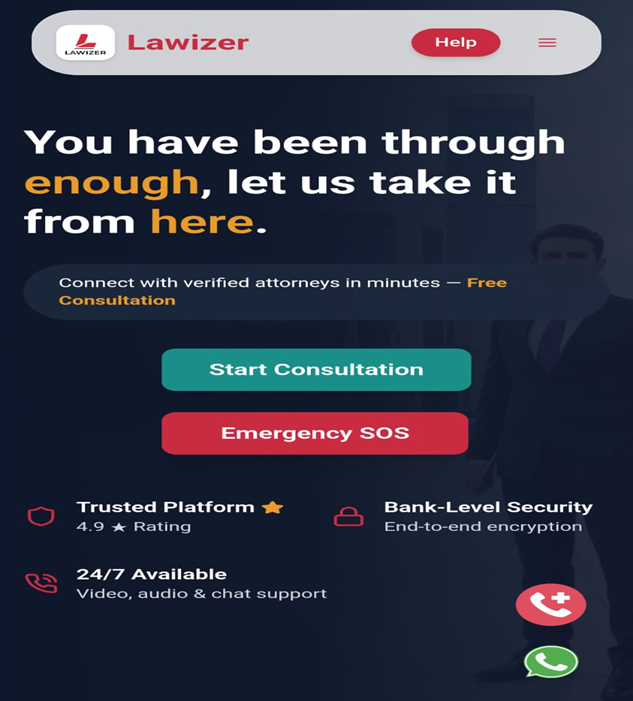
    On the homepage, locate and click the “Emergency SOS Button.”

    Step 3: Sign In or Register:

    You will be prompted to sign in. If you are a new user, enter your name, email, phone number, and a secure password.

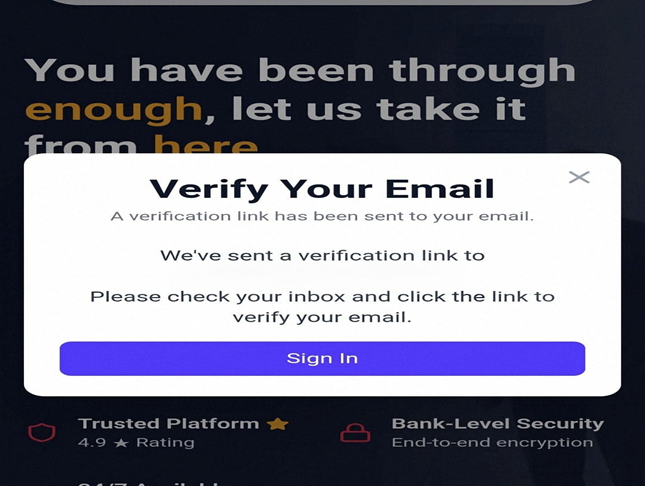
    Step 4: Verify Your Email:

    Check your mailbox for a verification link to activate your account. This step is crucial for security.

    Step 5: Complete Your Profile:

    Log in and update your details, including your State and City. This helps the platform match you with a lawyer who understands your local jurisdiction.

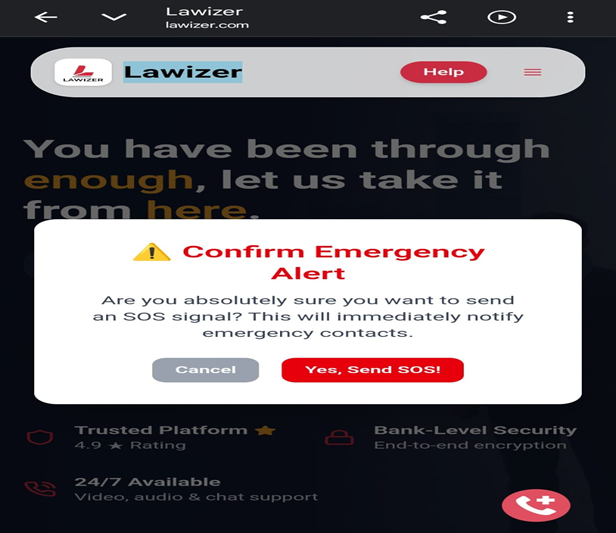
    Step 6: Confirm the SOS Call:

    Click the Emergency SOS button once more to confirm. A phone number will appear on your dial pad. Call this number to be connected to an expert in 2–3 minutes.

    Tips for Efficient Communication During a Legal Crisis:

    When you are connected to a lawyer, providing structured information helps them protect you faster.

    1. Be Precise and Factual: Stick to the facts of the current situation.
    2. Share Evidence: Have your receipts, challans, or digital documents ready to share.
    3. Identify the Category: Specify if your issue is related to Criminal, Civil, Property, or Business law to bypass guesswork.
    4. Ask About Fees: While the first consultation is free, discuss future fee structures early to keep the process transparent.

    Conclusion:

    Lawizer’s 24/7 Legal SOS button empowers every Indian citizen to act with confidence during a crisis.

    By leveraging technology to provide real-time responses from verified experts, the platform ensures that help is always just a click away.

    Frequently Asked Questions (FAQs):

    Q1. Is Lawizer a legitimate company?

    A: Yes, Lawizer is an initiative of Zeptus Private Limited, registered in West Bengal, India.

    Q2. Is the first consultation really free?

    A: Yes. Lawizer offers the first consultation for free because they believe legal clarity should always come before cost.

    Q3. Can Lawizer help with cyber complaints or traffic police?

    A: Absolutely. The platform connects you with specialized lawyers for cybercrimes, traffic disputes, and general civil matters.