Category: New-Age Founders

  • Building a D2C Brand in India? Here Are the 6Legal Boxes You Must Tick First:

    Building a D2C Brand in India? Here Are the 6Legal Boxes You Must Tick First:


    India’s D2C market crossed $60 billion in 2025. Mamaearth, boAt, Lenskart — the proof of concept is well-established. What’s less discussed is the compliance stack sitting beneath every one of those brands, and what happens when a new founder skips it.

    The answer: seized shipments, forced rebrands, marketplace de-listings, and penalty notices that arrive long after your first sale. The six requirements below aren’t optional extras — they’re the legal floor your D2C brand must be built on before the first order ships.


    📌 TL;DR: Every D2C brand operating in India needs a registered business entity, GST registration, a trademark application, product-specific licences (FSSAI, BIS, or CDSCO depending on your category), Legal Metrology-compliant labelling, and Consumer Protection E-Commerce Rules compliance. Miss any one of these and you’re trading on borrowed time. Lawizer helps D2C founders get all of it done — fully online, from incorporation to trademark — without needing a CA in the room.


    What You’ll Learn

    • Why GST registration is mandatory even if your turnover is ₹0
    • What the Legal Metrology Act means for your product packaging and your website listing
    • Which product-specific licence your category actually needs
    • How the DPDP Act, 2023 changes what your checkout page must look like
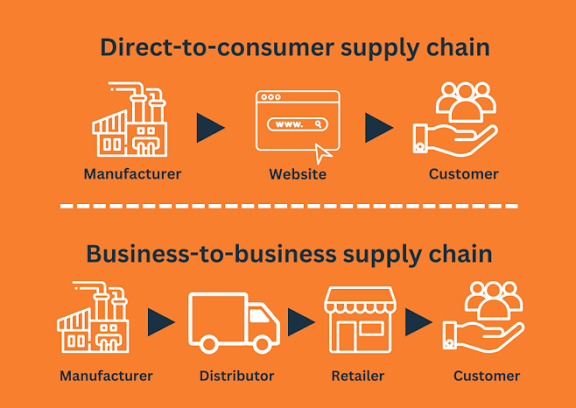
    Is Direct-to-Consumer (D2C) the only way to go in 2024? -

    Box 1: Register the Right Business Entity

    Most D2C founders start as sole proprietors and immediately run into a wall — payment gateways require a registered entity, marketplace onboarding is smoother with a PAN in the company’s name, and investors won’t touch a proprietorship.

    A Private Limited Company is the recommended structure for any D2C brand with growth ambitions. It gives you limited liability, a clean cap table for future fundraising, and immediate credibility with marketplace category managers.

    If you’re a bootstrapped solo founder testing a single SKU category, an LLP is a leaner starting point — lower compliance cost than a Pvt Ltd, more structure than a proprietorship. Either way, registration happens through the MCA’s SPICe+ form and typically takes 10–15 working days. This is always Step 1 because every subsequent registration — GST, trademark, bank account, payment gateway — flows from your Certificate of Incorporation and company PAN.

    Lawizer handles startup and business legal registration end-to-end, including entity structuring advice if you’re undecided between Pvt Ltd and LLP.


    Box 2: GST Registration — Mandatory from Sale Day One

    Here’s the rule most D2C founders get wrong: the ₹40 lakh turnover threshold that exempts small businesses from GST does not apply to e-commerce sellers. Under Section 24 of the CGST Act, 2017, every person supplying goods through an e-commerce operator must register for GST regardless of turnover. If you’re selling on Amazon, Flipkart, Nykaa, or Meesho — even if you’ve made zero sales — you need a GSTIN before your first listing goes live.

    If you sell only through your own D2C website with turnover under the threshold, the exemption technically applies — but the moment you list on any third-party marketplace, that window closes. Given that most D2C brands use a mix of owned and marketplace channels, the practical answer is: register for GST immediately after incorporation.

    Your ongoing GST obligations include filing GSTR-1 (outward supply details), GSTR-3B (monthly summary return), and GSTR-9 (annual return), plus reconciling platform TCS (Tax Collected at Source) deductions from marketplaces against your actual liability. If your D2C brand stores inventory in warehouses across multiple states, you’ll also need GST registrations in each of those states — a requirement that catches fast-scaling brands off-guard.


    Box 3: File Your Trademark Early

    A trademark is the cheapest insurance a D2C brand can buy. At ₹4,500 per class for small enterprises (under the current fee schedule), it protects your brand name and logo from being registered by a competitor — and in the D2C world, copycats move fast. Beyond legal protection, a registered trademark (or even a pending application with an acknowledgment number) is required for Amazon Brand Registry, which unlocks A+ content, brand analytics, and counter-counterfeiting tools that directly affect your conversion rate.

    File in the right classes from day one. Common classes for D2C brands: Class 25 (clothing and footwear), Class 30 (food and beverages), Class 3 (cosmetics and personal care), Class 35 (online retail services). Most D2C brands need at least two classes — one for the product category and one for retail services. Registration takes 6–18 months from filing, but your protection date runs from the application date, not the registration date. File now.
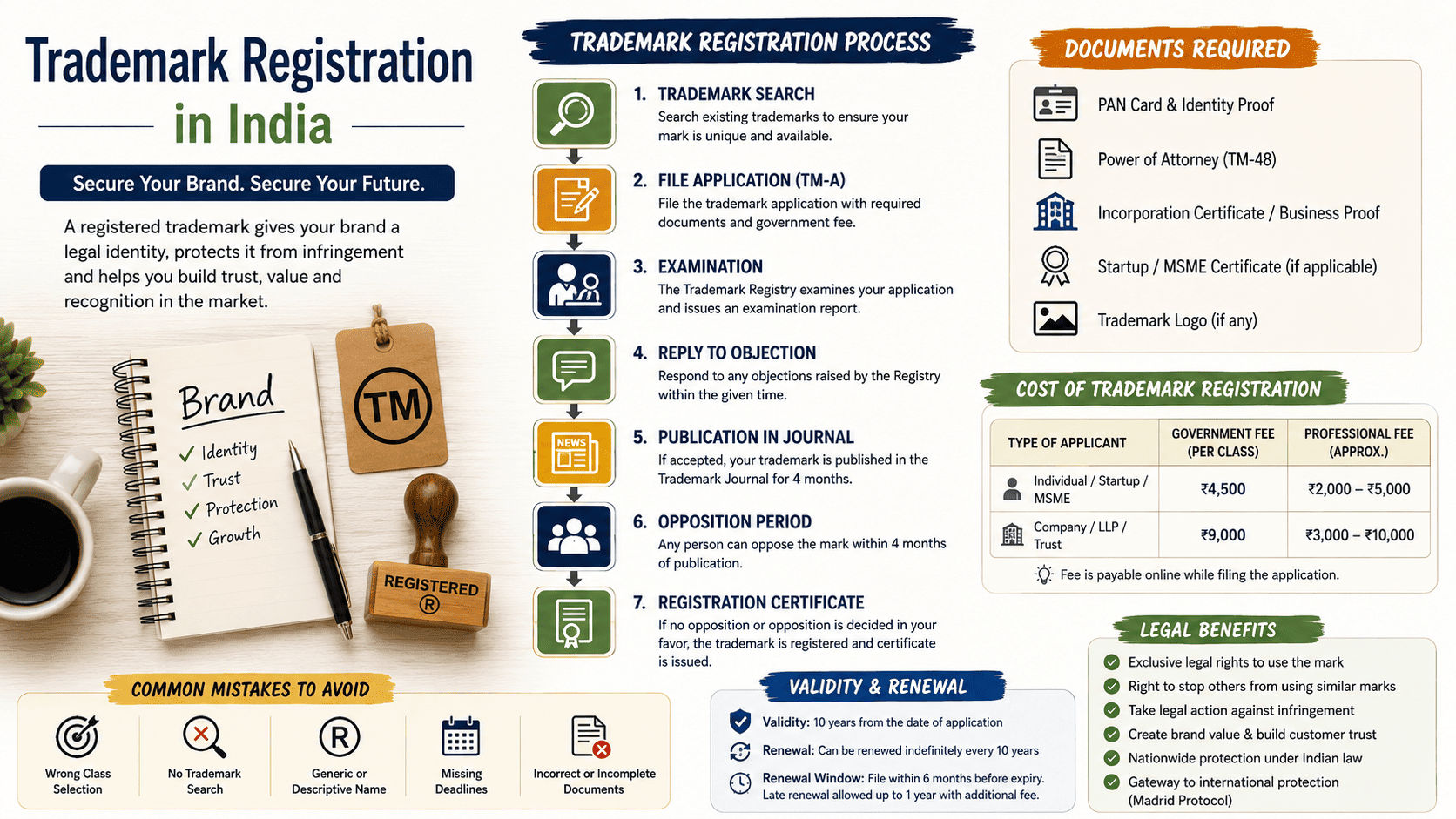
    Trademark Registration in India

    Box 4: Product-Specific Licences — FSSAI, BIS, CDSCO

    This is where D2C founders most often underestimate their compliance surface area.

    FSSAI licence — mandatory for any brand selling food, beverages, dietary supplements, protein powders, health drinks, nutraceuticals, or even pet food. The licence tier depends on your annual turnover: registration for businesses up to ₹12 lakh turnover, state licence for ₹12 lakh to ₹20 crore, and central licence for above ₹20 crore or cross-state e-commerce. Operating without an FSSAI licence attracts a penalty of up to ₹5 lakh under Section 63 of the Food Safety and Standards Act, 2006. The 14-digit FSSAI licence number must appear on every product label and your website.

    BIS certification — required for electronics, electrical goods, and certain consumer products covered under mandatory BIS product orders. If your D2C brand sells LED lights, power banks, helmets, or kitchen appliances, BIS certification (and the ISI mark) is non-negotiable before you list a single unit.

    CDSCO approval — required for cosmetics under the Drugs and Cosmetics Act, 1940, as amended by the Cosmetics Rules, 2020. The key risk here: the moment your product makes a therapeutic claim (“reduces melanin production,” “treats acne”), it crosses from cosmetic to drug territory — triggering stricter regulations, and penalties including product seizure and imprisonment up to one year for misclassification.


    Box 5: Legal Metrology Act Compliance — The One Every Category Misses

    Most D2C founders associate compliance with the licences above. The Legal Metrology (Packaged Commodities) Rules, 2011 apply to every pre-packaged product sold in India — food, skincare, electronics, clothing, home décor, stationery, pet products. There are no exceptions for small businesses or D2C brands.

    Every product package must display: product name, net quantity in standard units, MRP inclusive of all taxes (preceded by “MRP ₹”), manufacturer or packer name and registered address, month and year of manufacture, consumer care contact details (name, address, phone, and email), and country of origin for imported goods.

    Critically, for e-commerce sellers, these declarations must appear not just on the physical packaging but also on the product listing page itself. Non-compliance carries a penalty of ₹25,000 to ₹50,000 per offence — and legal metrology officers can and do inspect marketplace listings.

    One additional obligation that’s quietly become an enforcement focus in 2025: Extended Producer Responsibility (EPR) registration under plastic and e-waste rules. If your D2C brand uses plastic packaging, your EPR registration number must appear on the packaging. Failure to register is treated as a serious violation under solid waste and plastic management rules.


    Box 6: Consumer Protection E-Commerce Rules, 2020 — and the DPDP Act, 2023

    The Consumer Protection (E-Commerce) Rules, 2020 apply to every D2C brand selling online. Your website or app must display: complete product details with a total price breakdown (no hidden fees), your return and refund policy, cancellation terms, delivery timelines, and seller identity.

    You are required to appoint a Grievance Officer, display that officer’s name and contact details on your platform, and resolve consumer complaints within 30 days. Violation attracts penalties under the Consumer Protection Act, 2019.

    Layered on top of this is the Digital Personal Data Protection (DPDP) Act, 2023 — which changes what your checkout and data collection flows must look like. D2C brands collect significant customer data: names, addresses, payment information, browsing behaviour.

    Under the DPDP Act, you must collect only what is necessary, provide a clear privacy policy, obtain explicit consent before collecting data, and enable customers to request data deletion. The penalty for non-compliance scales up to ₹250 crore — which is why building DPDP-compliant data practices into your website from launch is far cheaper than retrofitting them after a notice.

    MSME or Udyam registration is also worth completing at this stage — it’s quick, free, and unlocks priority credit, marketplace benefits, and government tender eligibility as your brand scales.
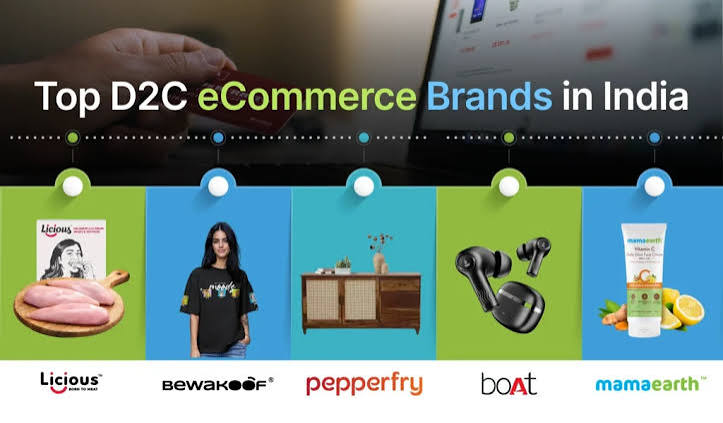
    Top D2C ECommerce Brands In India - A Case Study

    How Long Does This All Take?

    Company incorporation, GST, and Udyam registration can run in parallel — typically 15–20 working days combined. File your trademark application the same week as incorporation. Product-specific licences (FSSAI, BIS) run concurrently but may take longer depending on your category.

    Total time from zero to first compliant sale: 30–60 days, with a total compliance cost typically between ₹15,000 and ₹50,000 depending on the entity structure and licences required.

    The brands that build this foundation correctly don’t just avoid penalties — they get marketplace approvals faster, onboard payment gateways without delays, and walk into investor conversations with clean corporate records.


    Frequently Asked Questions

    Q: Is GST registration mandatory for a D2C brand that hasn’t made any sales yet? A: Yes, if you intend to sell through any third-party e-commerce platform. Section 24 of the CGST Act removes the turnover exemption for e-commerce sellers entirely. You need a GSTIN before your first listing goes live on any marketplace, regardless of whether any sales have occurred.

    Q: Do I need a trademark even if I’m just starting out and unsure the brand will succeed? A: Yes — and the earlier the better. Trademark protection dates back to your application date, not your registration date. Filing early costs the same as filing later, but protects you from a copycat who registers your brand name while you’re waiting to see traction. An acknowledgment number from the IP India portal is also sufficient for Amazon Brand Registry.

    Q: My D2C brand sells skincare. Do I need CDSCO approval or FSSAI? A: CDSCO (under the Drugs and Cosmetics Act, 1940 and Cosmetics Rules, 2020) governs cosmetics like serums, creams, and shampoos. FSSAI governs edible products. The critical line: if your skincare product makes a therapeutic claim (treats a condition, alters a biological process), it shifts from cosmetic to drug regulation — with significantly higher compliance requirements and penalties for misclassification.

    Q: Does the Legal Metrology Act apply to my D2C website listing, or just the physical packaging? A: Both. Under amendments to the Legal Metrology (Packaged Commodities) Rules, e-commerce entities must display all mandatory declarations — MRP, net quantity, manufacturer details, and consumer care contacts — on the product listing page itself, not just on the physical label. Marketplace listings that omit these are actively flagged during inspections.

    Q: What does the DPDP Act, 2023 require from a D2C brand’s website? A: The Digital Personal Data Protection Act, 2023 requires D2C brands to collect only data that is necessary for the stated purpose, display a clear and accessible privacy policy, obtain explicit consent before collecting personal data, and provide customers with a mechanism to request correction or deletion of their data. Non-compliance penalties scale up to ₹250 crore — making early implementation far more cost-effective than corrective compliance after a notice.

    Q: Can Lawizer handle all six of these registrations as a single project? A: Yes. Lawizer handles company incorporation, GST registration, trademark filing, FSSAI licensing, and Udyam registration — fully online, with no CA visit required. Starting your business registration correctly from day one means you’re eligible for marketplace onboarding, payment gateway integration, and investor due diligence from launch.


    Ready to launch your D2C brand on solid legal ground? Lawizer gets your company registered, GST filed, trademark applied, and sector licences in place — fully online, starting at ₹4,999. No office visits, no missed boxes.

    Start your D2C brand registration →

  • India’s Creator Economy and the Law: What YouTubers and Influencers Must Register

    India’s Creator Economy and the Law: What YouTubers and Influencers Must Register

    India added roughly 4 million creators between 2020 and 2024. That marks a 322% increase. Many learned about their legal obligations the hard way. Some received GST notices. Others found TDS mismatches in Form 26AS. Many also saw brand deals stall because they had no invoice to raise.

    Creator economy law in India isn’t optional paperwork anymore. It’s the difference between a channel that scales and one that gets an income tax notice mid-growth.

    Here’s the thing: nobody hands new creators a checklist. Brands, MCNs, and even CAs assume you already know what to register. You don’t have to guess.

    📌 TL;DR: Under creator economy law in India, YouTubers and influencers must register for GST once turnover crosses ₹20 lakh (₹10 lakh in special category states), file ITR-3 or ITR-4 using profession code 16021, and follow ASCI disclosure rules on every paid post. Brands also deduct TDS under Sections 194R, 194J, or 194C depending on the deal structure. Lawizer handles GST, MSME (Udyam), and trademark registration for creators end-to-end, online.

    What You’ll Learn

    • When GST registration becomes mandatory for creators, and how the 18% rate applies
    • How TDS under Sections 194R, 194J, and 194C hits your brand deal payouts
    • Why trademarking your channel name protects your personal brand
    • When Udyam (MSME) registration and even a Private Limited company make sense

    GST Registration: The First Real Compliance Trigger

    The moment your annual turnover from brand deals, ad revenue, affiliate income, and even bartered products crosses ₹20 lakh (₹10 lakh in special category states like Assam or Himachal Pradesh), GST registration under the GSTN portal stops being optional. Content creation is classified as a supply of service under the CGST Act, and it attracts 18% GST — same rate as most professional services.

    Most founders overlook one important rule. GST turnover includes non-cash income. A ₹2 lakh gadget hamper counts at its market value. It counts even if no money changes hands. That value also contributes to your GST registration threshold.

    That value contributes to your GST registration threshold. After registering, you must issue GST-compliant tax invoices for every brand collaboration. Many brands now require these invoices before releasing payment.

    • Brand deals with foreign companies can qualify as “export of services” — zero-rated GST, if you file a Letter of Undertaking (LUT)
    • Once registered, you can claim Input Tax Credit (ITC) on equipment, software, and studio expenses.
    • Missing GST invoices on brand collaborations risks penalties during scrutiny

    Founders juggling multiple income streams — YouTube AdSense, Instagram deals, coaching — often set up their business registration at the same time as GST, since lenders and brands both ask for it.

    TDS: What Gets Deducted Before You See the Money

    The short answer: it depends on how the brand structures the deal. Section 194J applies 10% TDS on professional fees — the most common category for sponsored posts and endorsements. Section 194C applies a lower 1-2% TDS when you’re treated as a contractor executing a defined project.

    Section 194R is the one that catches creators off guard: if a brand gives you products, hotel stays, or gadgets worth more than ₹20,000 in a year, they must deduct 10% TDS on the fair market value — even though you never received cash.

    Profession Code 16021 in ITR Filing: How to Choose the Right ITR Form

    From FY 2024-25 (Assessment Year 2025-26) onward, the Income Tax Department introduced a dedicated profession code — 16021 — specifically for social media influencers and content creators. If you’re filing under this code with detailed books of accounts, ITR-3 is the correct form.

    If you’d rather declare a fixed percentage of income under presumptive taxation instead of maintaining detailed books, ITR-4 (Sugam) applies.

    What most founders miss here: mixing personal and business expenses is the fastest way to draw scrutiny. Only expenses directly tied to content creation — camera gear, editing software, internet bills, studio rent — qualify as deductions. A family vacation dressed up as a “travel content shoot” won’t survive an audit.

    • Foreign income (YouTube AdSense in USD, international brand deals) must be reported under Schedule FA
    • Late filing attracts a flat ₹5,000 penalty under Section 234F
    • Under-reported income can attract a 50-200% penalty under Section 270A

    Creators who also run e-commerce alongside content — merch, digital courses — often benefit from lining up their income tax return filing with proper business registration from the start, rather than retrofitting compliance after brands start asking for GSTINs and PANs.

    Trademark Your Channel Name Before Someone Else Does

    Here’s what catches creators off guard: your channel name, logo, or catchphrase isn’t automatically yours in law just because you built the audience.

    Anyone can file for trademark registration with the CGPDTM (Controller General of Patents, Designs and Trademarks) on an identical or similar name, and if they register first, you could be the one forced to rebrand — after years of building recognition.

    This matters more once merchandise, digital products, or a personal app enters the picture. A registered trademark also strengthens your position in brand negotiations and licensing deals, since it proves exclusive ownership over your name and likeness in commerce.

    Creators expanding into merch or courses typically pair trademark registration with their channel launch rather than waiting until a copycat account forces the issue.

    MSME (Udyam) Registration and When to Incorporate

    Once you’re running a studio, employing editors, or operating as a small media business rather than a solo creator, Udyam (MSME) registration opens up collateral-free loans, priority payment protections against brands, and government tender eligibility. It’s free, done entirely online through the Udyam portal, and takes minutes once your PAN and Aadhaar are ready.

    When creators should consider incorporating a company

    What most founders miss: at a certain income level, operating as an individual professional starts costing more in tax than incorporating a Private Limited company or LLP under the Companies Act, 2013. Incorporation also separates personal liability from business liability — useful once you’re signing large brand contracts, hiring a team, or bringing in investors for a media business.

    • Udyam registration: ideal for solo creators scaling into a small studio or team
    • Private Limited/LLP: better once annual income consistently crosses ₹50-75 lakh or you’re hiring full-time staff

    Founders scaling past solo-creator income levels often register through MSME Udyam registration before they need it, so brand contracts and bank credit lines aren’t held up later.

    ASCI Disclosure Rules: Compliance Requirements for Brands

    The Advertising Standards Council of India (ASCI) processed over 1,400 influencer violations through November 2025, with 94% involving disclosure failures — undisclosed paid posts hidden behind a dozen unrelated hashtags.

    ASCI’s April 2025 update tightened these rules across all categories. The Consumer Protection Act now enforces them with government penalties, not just industry warnings.

    Let’s break this down: if you receive cash, free products, travel, or even an affiliate commission for content, disclosure is mandatory — prominent, immediate, and impossible to miss, not buried in a caption.

    Finance and health creators face an even stricter Addendum 2: finfluencers must display SEBI registration or CA credentials, and health influencers must show their medical qualifications, or stick to personal experience with a clear disclaimer.

    Non-compliance carries serious risks. Brands may withhold payment or end contracts. They may also flag violations, making future partnerships harder to secure.

    Frequently Asked Questions

    Q: Do I need GST registration if I only make money from YouTube AdSense?

    A: Yes, once your total annual turnover — including AdSense, brand deals, and affiliate income combined — crosses ₹20 lakh (₹10 lakh in special category states). AdSense income counts toward this threshold the same as any other revenue stream.

    Q: What happens if a brand sends free products instead of paying cash?

    A: If the products are worth more than ₹20,000 in a financial year, the brand must deduct 10% TDS under Section 194R based on the fair market value. You’ll also need to declare this as taxable income, even though you didn’t receive cash.

    Q: Which ITR form should influencers file?

    A: Most creators file ITR-3 using profession code 16021, especially if they maintain detailed books of accounts. If you prefer the presumptive taxation scheme under Section 44AD instead of maintaining full books, ITR-4 (Sugam) applies.

    Q: Can someone else trademark my channel name if I haven’t registered it?

    A: Yes. Trademark rights in India generally go to whoever files first, not whoever built the audience first. Registering early with the CGPDTM protects your channel name, logo, and tagline from being claimed by someone else.

    Q: Do I need to disclose every sponsored post, even small gifting collaborations?

    A: Yes. Under ASCI guidelines, disclosure is required whenever you receive any benefit — cash, free products, travel, or affiliate commission — in exchange for content, regardless of follower count or the size of the deal.

    Ready to formalize your creator business?
    Lawizer’s experts handle everything — GST registration, MSME Udyam registration, and trademark filing for your channel — fully online, starting at just ₹999. No CA visit needed.

    Get Your Creator Compliance Sorted →

  • Solopreneur to Startup: When Exactly Should You Formally Incorporate?

    Solopreneur to Startup: When Exactly Should You Formally Incorporate?

    Most Indian freelancers cross ₹20 lakh in billings before they’ve even opened a current account for the business. That’s the exact point the law starts asking questions — and it’s usually the point founders start googling “when to incorporate company in India” at 1 a.m.

    Here’s the thing. Incorporating too early wastes money on compliance for a business that hasn’t proven itself. Incorporating too late costs you a client, a co-founder, or an investor. There’s a narrow window where it actually makes sense — and it’s rarely “day one.”

    📌 TL;DR: You don’t need to incorporate on day one — a sole proprietorship is legal, requires no registration, and works fine until you hit specific triggers: ₹20 lakh in annual turnover (GST becomes mandatory), an investor writing a cheque, a co-founder wanting a formal equity split, or an enterprise client demanding a company PAN. Below that point, incorporating a private limited company just adds ₹35,000–₹60,000 a year in compliance cost for a business that hasn’t earned it yet. Lawizer can set up the right structure — Pvt Ltd, OPC, or LLP — once you actually hit one of these signals.

    What You’ll Learn

    • Why registering a Pvt Ltd too early actually costs you money
    • The exact revenue, client, and funding signals that mean it’s time
    • Sole proprietorship vs OPC vs LLP vs Pvt Ltd — which fits your stage
    • Where GST and MSME registration fit into this timeline

    The Real Cost of Incorporating Too Early

    A lot of first-time founders register a Private Limited Company (a separate legal entity recognised by the Ministry of Corporate Affairs, or MCA) in their very first month, often because a CA friend suggested it or a WhatsApp forward made proprietorships sound risky.

    What most founders miss: a Pvt Ltd requires a statutory auditor from day one, annual ROC filings, ITR-6 returns, and DIN renewal — regardless of whether the company made ₹5 lakh or ₹0 in revenue that year.

    Realistic annual compliance for a small Pvt Ltd runs close to ₹35,000–₹60,000, even before you’ve validated whether anyone wants what you’re building. Compare that to a sole proprietorship, which needs no formal registration at all — you can start invoicing clients under your own PAN the same day you decide to freelance seriously.

    The short answer: build first, prove the business works, then incorporate. A structure doesn’t make a business real — revenue does.

    The Signals That Actually Mean It’s Time

    Instead of a calendar date, use triggers. Here’s what most founders who incorporate at the right time have in common:

    • You’re nearing ₹20 lakh in annual turnover. That’s the GST registration threshold for service providers in most states (₹40 lakh for goods, ₹10 lakh in special category states). Past this point, you’re a taxable entity whether or not you’ve incorporated.
    • A co-founder wants a documented equity split. You can’t issue shares without a company. This is the single most common reason two-person teams incorporate earlier than solo founders.
    • An investor is ready to wire money. Angel or institutional investors need a company bank account and a cap table — neither exists without incorporation.
    • An enterprise client’s procurement team asks for a “company PAN.” Large B2B buyers frequently can’t onboard an individual vendor, regardless of your Udyam or GST status.
    • You’re hiring employee #1 and want to offer ESOPs. Employee stock options only exist within a company structure.

    Notice what’s not on this list: having an idea, building an MVP, or making your first few sales. None of that requires a registered entity yet.

    Sole Proprietorship, OPC, LLP, or Pvt Ltd — Which Fits Your Stage

    Let’s break this down by what you’re actually doing right now, not what you plan to do eventually.

    Solo, under ₹20 lakh, no funding plans

    Stay a sole proprietor. You pay tax under your individual slab rate, not a flat corporate rate, and there’s no separate compliance calendar to track. A Udyam (MSME) registration is worth getting even at this stage — it costs almost nothing, helps you open a current account, and qualifies you for priority-sector lending later.

    Solo, corporate or international clients, liability-sensitive work

    Consider a One Person Company (OPC) — a company structure built specifically for single founders that still gives you limited liability and a distinct legal identity. IT consultants, SaaS builders, and agency owners working with larger clients often move here before they ever bring on a co-founder.

    Two or more founders, no funding yet

    An LLP (Limited Liability Partnership) is usually the better first move. It gives you a formal ownership split and limited liability without the statutory audit requirement that applies to Pvt Ltds from day one — LLPs only need an audit once turnover crosses ₹40 lakh.

    Raising money or planning to issue ESOPs

    This is when a Private Limited Company earns its cost. It’s the only structure investors will fund, the only one that supports employee stock options cleanly, and it comes with a genuine tax upside: domestic companies opting for the concessional regime under Section 115BAA of the Income Tax Act pay an effective rate of 25.17%, against individual slab rates that hit 30% plus cess well before ₹15 lakh in profit.

    Where GST and MSME Registration Fit In

    Incorporation and tax registration aren’t the same decision, and mixing them up is where a lot of founders get confused. You need GST registration once your turnover crosses ₹20 lakh (₹10 lakh in special category states) for services, regardless of whether you’re a proprietor, an LLP, or a Pvt Ltd.

    MSME (Udyam) registration is separate again — it’s not mandatory, but it’s fast, free, and worth doing early since it plugs into your income tax filings automatically.

    If you’re planning to apply for DPIIT recognition under the Startup India scheme — for the three-year tax exemption under Section 80IAC, or access to the Seed Fund Scheme — note that only Private Limited Companies and LLPs are eligible.

    Sole proprietorships and OPCs don’t qualify for this particular benefit, which is worth factoring in if government schemes are part of your growth plan.

    Making the Switch Without Losing Time

    Once you’ve hit a genuine trigger, converting from proprietor to a registered company isn’t a same-day process — it typically takes 7 to 21 business days depending on name approval and documentation.

    The company needs to formally take over your existing contracts, assets, and client relationships through a business transfer agreement, and your GST, PAN, and bank accounts all need updating to the new entity’s name.

    What most founders miss here: starting this conversion a few weeks before you actually need it — before the investor’s cheque is due, before the enterprise contract’s start date — saves you from scrambling. A company incorporation that’s rushed under deadline pressure is where documentation errors creep in.

    Frequently Asked Questions

    Q: Do I need to register my business before I start freelancing in India?

    A: No. You can invoice clients, accept payments, and pay income tax under your own PAN as a sole proprietor without any formal registration. You only need to register for GST once your turnover crosses ₹20 lakh a year (₹10 lakh in a few special category states).

    Q: What’s the minimum revenue before I should think about a Pvt Ltd?

    A: There’s no fixed number, but most founders find it makes sense once they’re consistently earning ₹1–1.5 lakh a month, are approaching the ₹20 lakh GST threshold, or have a specific trigger like investor funding or an enterprise contract. Below that, a Pvt Ltd’s compliance cost usually outweighs the benefit.

    Q: Can I convert my sole proprietorship into a private limited company later?

    A: Yes. You incorporate a new Pvt Ltd and then transfer the existing business’s assets, liabilities, and contracts to it through a business transfer agreement. The process usually takes 7–21 business days, and losses from the proprietorship generally can’t be carried forward into the new company.

    Q: Is a one person company (OPC) better than a sole proprietorship?

    A: An OPC gives you limited liability and a separate legal identity, which a sole proprietorship doesn’t — useful if you work with corporate clients or carry contractual risk. But it comes with more compliance than a proprietorship, so it’s usually a step you take once liability protection actually matters to your business.

    Ready to incorporate at the right time?
    Lawizer’s experts handle Pvt Ltd, OPC, and LLP incorporation, GST registration, and MSME/Udyam registration — fully online, starting at just ₹1,999. No CA visit needed.

    Get your business incorporated →