Tag: brand protection India

  • GST, MSME & Trademark Together: The Founder’s Compliance Bundle :-

    GST, MSME & Trademark Together: The Founder’s Compliance Bundle :-

    Most Indian founders register their GST when they have to, file for MSME when someone tells them to, and think about trademark “later.” By the time “later” arrives, a competitor has already filed your brand name. In 2024 alone, India saw over 5.4 lakh trademark applications — a 9.3% jump year-on-year — and a growing share of those are from D2C brands and small businesses who finally woke up to brand theft.

    Here’s what nobody tells you: GST registration, MSME Udyam registration, and trademark filing aren’t three separate tasks. They’re one bundle — and doing them together saves you money, time, and a whole lot of future pain.

    📌 TL;DR: Indian founders who complete GST registration, MSME Udyam registration, and trademark filing together unlock a 50% discount on trademark government fees (₹4,500 per class instead of ₹9,000), reduced GST thresholds, and full legal protection for their brand from day one. This GST-MSME-trademark compliance bundle is the smartest first move any startup founder can make in India — and Lawizer helps you do all three online without a CA visit.

    What You’ll Learn

    • Why GST, MSME, and trademark work better as a bundle than as separate registrations
    • The exact 50% trademark fee concession you get as an MSME — and how to claim it
    • Step-by-step: what to do first, second, and third
    • The real costs involved in 2025, with no surprises
    • Answers to the most common founder questions about this compliance bundle

    Why These Three Registrations Belong Together

    Let’s break this down. Most founders treat compliance as a checklist — get GST when the accountant says so, register MSME someday, trademark when the budget allows. That approach costs you more in the long run.

    Here’s the thing: your MSME Udyam Registration Certificate is the key that unlocks a 50% discount on trademark government fees. Without it, a private limited company pays ₹9,000 per trademark class. With a valid Udyam certificate, that drops to ₹4,500 per class.

    File two classes for your brand name and logo — which most founders need — and you’ve saved ₹9,000 in government fees alone, just by getting MSME done first.

    GST registration matters too, not just for tax compliance. When you file for MSME Udyam registration, the portal asks for your GSTIN (GST Identification Number). It isn’t always mandatory for businesses below the threshold, but having it makes the Udyam process smoother and positions your business as a credible, tax-compliant entity — something that matters when you’re applying for loans, government tenders, or payment gateway accounts with platforms like Razorpay.

    The three registrations also reinforce each other for brand protection. Your GST certificate proves business existence. Your MSME certificate reduces your trademark filing cost. Your trademark protects the brand you’ve built. That’s the full compliance bundle — and it’s most powerful when done in order.

    Step 1: GST Registration — What You Actually Need to Know

    GST (Goods and Services Tax) is India’s unified indirect tax, introduced on 1 July 2017, replacing a maze of earlier taxes including VAT, service tax, and excise duty. If you’re selling goods or services in India beyond a certain threshold, you need to register on the GSTN (GST Network) portal.

    As of 2025, the GST Council revised the mandatory registration threshold upward: ₹50 lakhs annual turnover for goods (previously ₹40 lakhs) and ₹25 lakhs for services (previously ₹20 lakhs). This change is expected to benefit over 1.2 million small businesses that previously had to comply unnecessarily.

    That said, voluntary registration is often smart — it lets you claim input tax credit and signal credibility to B2B clients.

    What most founders miss: even if you’re below the threshold, registering voluntarily gives your business a GSTIN, which makes the Udyam registration process cleaner, and signals to larger buyers and marketplaces that you’re a formal business.

    You’ll need your PAN, Aadhaar, proof of business address, and bank account details to apply through the GST portal.

    The Composition Scheme is also worth knowing: businesses with turnover up to ₹2 crore can now file returns annually instead of quarterly, reducing compliance load significantly. If you’re an early-stage founder in Bengaluru or Mumbai running a product business, this can save you hours every quarter. Lawizer’s compliance team handles GST registration and filing — from application to return filing — fully online.

    How to Register a Startup in India: Step-by-Step Guide

    Step 2: MSME Udyam Registration — Your Compliance Multiplier

    MSME stands for Micro, Small, and Medium Enterprise — a classification under the MSMED Act, 2006. As of 1 April 2025, the revised thresholds under Notification S.O. 1364(E) are as follows:

    • Micro Enterprise: Investment up to ₹2.5 crore and annual turnover up to ₹10 crore
    • Small Enterprise: Investment up to ₹25 crore and annual turnover up to ₹100 crore
    • Medium Enterprise: Investment up to ₹125 crore and annual turnover up to ₹500 crore

    Both the investment and turnover conditions must be met at the same time. Exceed either, and you lose MSME classification — along with its benefits. Registration happens through the Udyam Registration portal and is completely free of cost. You’ll need your Aadhaar, PAN, and GSTIN. The certificate is valid indefinitely and doesn’t need annual renewal.

    A quick example: a D2C skincare startup in Kolkata with ₹15 lakh investment and ₹60 lakh annual turnover qualifies as a Micro Enterprise. Registering takes under 30 minutes online and immediately unlocks priority lending from banks, protection against delayed payments under the MSMED Act, and — crucially — the 50% trademark fee concession.

    What most founders miss: Udyog Aadhaar (the older system, discontinued in 2020) does not qualify for the trademark fee concession. You need the Udyam Registration Certificate specifically. If you registered under the old system, migrate on the Udyam portal before you file your trademark. You can complete your MSME Udyam registration through Lawizer’s guided process — document collection, form filling, and certificate in hand, fully online.

    Step 3: Trademark Registration — Protect What’s Yours at Half the Cost

    A trademark is the exclusive legal right to your brand name, logo, tagline, or any unique identifier — granted under the Trade Marks Act, 1999 and regulated by the CGPDTM (Controller General of Patents, Designs and Trade Marks) through the IP India portal. Here’s where your MSME certificate earns its keep.

    Trademark Fee: MSME vs. Non-MSME (2025)

    • With MSME/Udyam certificate: ₹4,500 per class (e-filing)
    • Without MSME (Pvt Ltd, LLP, Partnership): ₹9,000 per class (e-filing)

    That’s a straight 50% saving on government fees — applied at the time of filing, not as a reimbursement. You simply attach your Udyam certificate when submitting Form TM-A on the IP India portal. Let’s say you’re a food brand in Delhi filing under Class 29 (processed foods) and Class 30 (spices). With MSME: ₹4,500 × 2 = ₹9,000 in government fees. Without MSME: ₹9,000 × 2 = ₹18,000. Same protection, half the cost.

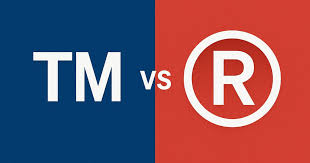
    The TM symbol (™) can be used from the day you file. The ® symbol is only permitted after the registration certificate is issued — typically 18 to 24 months after filing under 2025 timelines, subject to examination and opposition. Note: professional fees charged by trademark agents are subject to 18% GST. Always confirm whether a service provider’s quoted price is GST-inclusive or GST-exclusive. For end-to-end filing, explore Lawizer’s trademark registration service — class selection, filing, and objection response included.
    Trademark Registration in India

    The Right Order: What to Do First, Second, Third

    Sequence matters. Here’s the order that makes the most financial and legal sense:

    • First — Get GST registration. Even if voluntary, your GSTIN is needed for cleaner Udyam filing and signals business formality to banks and buyers.
    • Second — Get MSME Udyam registration. Free, takes under 30 minutes, and unlocks your 50% trademark fee concession. You need this certificate in hand before you file your trademark.
    • Third — File your trademark. With your Udyam certificate attached, you file at ₹4,500 per class instead of ₹9,000. Legal protection for your brand name dates back to the day of filing.

    The entire bundle — GST + MSME + Trademark — can be completed in under a week if your documents are in order. Documents you’ll need across the three: PAN card, Aadhaar card, bank account details, proof of business address, and a clear JPEG or PNG of your logo (for trademark filing).

    Frequently Asked Questions

    Q: Do I need GST registration before I can apply for MSME Udyam?

    A: GST registration is not strictly mandatory for Udyam registration, especially if your turnover is below the GST threshold of ₹50 lakhs (goods) or ₹25 lakhs (services). However, having a GSTIN makes the Udyam application smoother and more complete. Voluntarily registering for GST before filing Udyam is strongly recommended, especially if you plan to file a trademark next.

    Q: How much does the MSME trademark fee discount actually save me?

    A: The discount cuts the government filing fee from ₹9,000 to ₹4,500 per trademark class for MSME-registered businesses. If you’re filing in two classes — which most brands need for their name and logo — that’s a direct saving of ₹9,000. The concession is applied at the time of filing Form TM-A by attaching your Udyam Registration Certificate.

    Q: Can a private limited company get the MSME trademark fee discount?

    A: Yes — if the company holds a valid Udyam Registration Certificate and its investment and turnover fall within the MSME classification thresholds. Entity type alone doesn’t determine eligibility; the Udyam certificate does. A private limited company that qualifies as a small enterprise under the MSMED Act 2006 is entitled to the ₹4,500 e-filing rate per class.

    Q: What happens if I file a trademark without MSME registration?

    A: You pay the full ₹9,000 government fee per class instead of ₹4,500. There’s no way to claim a retroactive refund on this difference after filing. Get your Udyam certificate first — it’s free, fast, and the savings on trademark fees alone justify the effort.

    Q: How long does the entire GST + MSME + Trademark bundle take?

    A: GST registration typically takes 7–10 working days after document submission. Udyam registration is almost instantaneous — the certificate is generated on the same day in most cases. Trademark filing can be done within a day of Udyam certificate receipt. The TM symbol is available from the day you file. Full trademark registration takes 18–24 months depending on examination and opposition, but your legal rights date back to the filing date.

    Q: Is there any government subsidy for MSME trademark fees beyond the 50% discount?

    A: Yes. The MSME IPR (Intellectual Property Rights) scheme provides reimbursement of 50% of the official filing fee actually paid, up to a specified ceiling. This is separate from the reduced fee concession and is not automatic — you need to submit a separate application with your fee receipt. Many founders miss this because they aren’t aware it exists. Check the MSME Ministry’s current scheme notifications for the latest ceiling amounts.

    Ready to complete your compliance bundle in one go?
    Lawizer’s experts handle everything — GST registration, MSME Udyam filing, and trademark registration — fully online, starting at just ₹999. No CA visit needed.

    Get your GST + MSME + Trademark bundle done today →

  • Trademark Registration in India: Cost, Process, and Timeline.

    Trademark Registration in India: Cost, Process, and Timeline.

    Over 5.5 lakh trademark applications were filed in India in FY 2024–25 — a 20% jump from the previous year, according to the CGPDTM’s own Annual Report. That number tells you something: founders across Bengaluru, Mumbai, Delhi, and Kolkata have figured out that a brand without a registered trademark is a brand anyone can copy.

    Here’s the thing. Most founders assume trademark registration is expensive, slow, or something to sort out “later.” This guide will show you exactly why later is the wrong answer — and precisely what it costs, how the process works, and how long you’re actually looking at.

    📌 TL;DR: Trademark registration in India costs ₹4,500 per class for individuals and startups, and ₹9,000 per class for companies and LLPs, under the Trade Marks Act, 1999. The full process — from filing on the CGPDTM portal to receiving your registration certificate — takes 12 to 18 months under standard examination, or under a year with expedited processing. Lawizer’s trademark service handles the entire filing and follow-up online, with no CA visit required.

    What You’ll Learn

    • Exactly what trademark registration costs in 2025, broken down by applicant type
    • The step-by-step process from trademark search to certificate issuance
    • How long each stage takes — and how to speed things up
    • What TM ™ vs ® actually means for your brand legally
    • The most common mistakes founders make when filing

    [H2] What Is a Trademark — and Why Does Registration Matter?

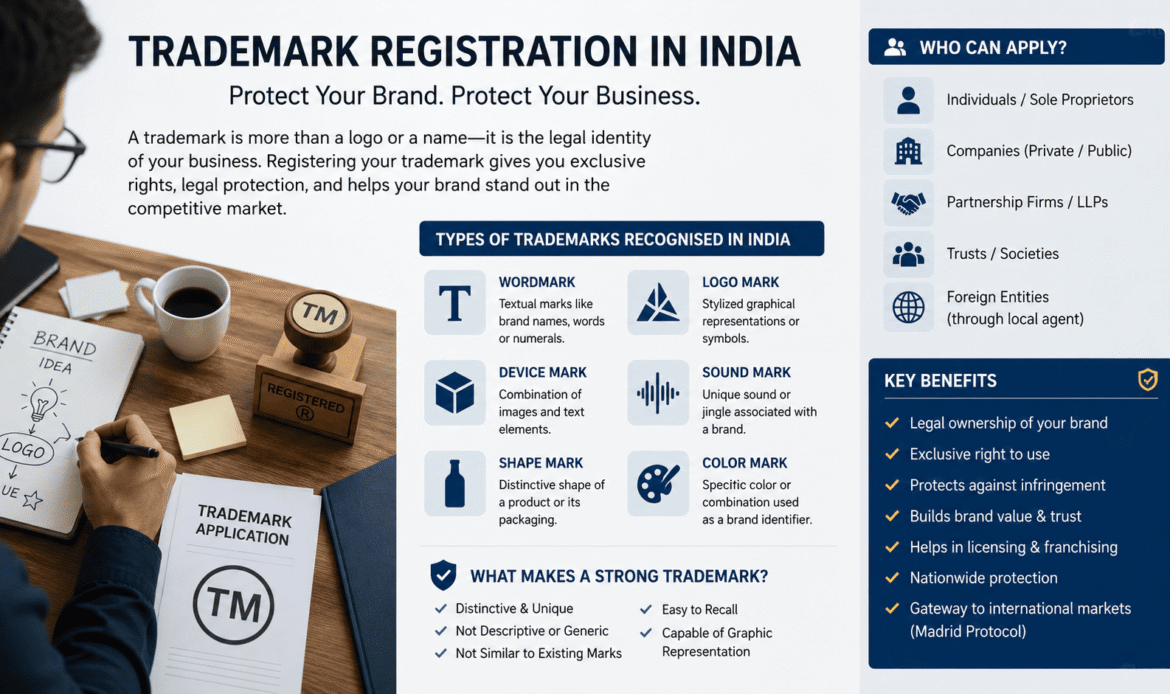
    A trademark is any mark — a name, logo, slogan, colour, or even a sound — that distinguishes your goods or services from someone else’s. Think of the word “Swiggy,” the orange of Zomato’s branding, or the tagline “Daag Acche Hain.” These aren’t just design choices; they’re legally protected assets.

    Under the Trade Marks Act, 1999 (the primary statute governing trademarks in India), registration gives you exclusive rights to use that mark for the goods or services in the class you’ve registered it under. Without registration, you technically have some common law rights if you’ve been using the mark long enough — but enforcing them is expensive, uncertain, and practically very difficult. A registered trademark, on the other hand, lets you sue for infringement directly, seek damages, and even have customs authorities block counterfeit imports at the border.

    What most founders miss: the TM symbol (™) you see on unregistered marks is just a claim of ownership — it has no legal backing. The ® symbol, which stands for “Registered Trademark,” is what you’re entitled to use only after your mark is officially registered by the Registrar of Trade Marks under the CGPDTM (Controller General of Patents, Designs and Trade Marks). Using ® before registration is actually a criminal offence under Section 107 of the Trade Marks Act.

    Another thing worth knowing: trademark protection lasts 10 years from the date of filing and is renewable indefinitely every decade. It doesn’t expire the way some founders assume it does.


    Trademark Registration Cost in India (2025)

    Let’s break this down. The government fee structure is straightforward — it’s the professional fee that varies depending on who you go to.

    Government Fees (Official, 2025)

    For Individuals, Startups, and Small Enterprises (proprietorships, partnership firms, or companies registered under the Startup India scheme): ₹4,500 per class, per application, when filed online. The physical filing fee is ₹5,000.

    For Companies, LLPs, and other entities that don’t qualify as startups or small enterprises: ₹9,000 per class, per application, when filed online. The physical filing fee is ₹10,000.

    The word “class” here is important. Trademarks in India are categorised into 45 classes under the Nice Classification system — Classes 1 to 34 cover physical goods, and Classes 35 to 45 cover services. If your business spans multiple categories — say, you sell clothing (Class 25) and also run an online retail platform (Class 35) — you need separate applications and separate fees for each class.

    Professional Fees

    Professional fees from trademark agents or online legal services typically range from ₹1,500 to ₹8,000 per application, depending on the complexity of your case and the service provider. Adding professional fees to the government fee, most founders registering a single-class trademark end up paying between ₹6,000 and ₹17,000 all-in.

    A quick example: a Bengaluru-based SaaS startup registering its brand name under Class 42 (software services) through Lawizer’s online trademark registration service would pay the ₹4,500 government fee plus a professional fee — no office visits, no notarised affidavits required upfront.

    It’s worth noting that some services advertise very low prices by separating out “additional” fees — always check whether the quoted price includes the government fee or is over and above it.

    How to Start a Startup in India: Step-by-Step Guide for New Entrepreneurs

    The Trademark Registration Process in India — Step by Step

    The entire process runs through the CGPDTM’s online portal at ipindia.gov.in. Here’s what each stage looks like.

    Step 1: Trademark Search

    Before you file, you need to check whether a similar or identical mark already exists in your class. You can do this for free on the Trade Marks Registry’s public search tool at ipindiaonline.gov.in. Search for your proposed name, logo, or tagline across the relevant class. This step saves you from filing an application that’s likely to be rejected at examination. A professional trademark search also looks for phonetically similar marks — not just exact matches — which is where most amateur searches fall short.

    Step 2: Filing the Application

    Applications are filed online via the CGPDTM portal using Form TM-A. You’ll need to provide the applicant’s details, a representation of the mark (logo file in JPEG format if it’s a device mark), the relevant class or classes, and a description of the goods or services. For startups, you’ll also need a certificate or declaration confirming your startup status to access the lower government fee. Once the application is submitted and the fee is paid, you receive an official filing receipt with your application number. From this point, you’re entitled to use the TM symbol next to your brand.

    Step 3: Examination

    After filing, the application is assigned to a trademark examiner at one of the five Trade Marks Registry offices — Mumbai (the head office), Delhi, Kolkata, Chennai, or Ahmedabad. The examiner reviews the mark for absolute grounds of refusal (marks that are descriptive, generic, or offensive) and relative grounds (conflict with existing registered or pending marks). An examination report is typically issued within a few months. If the examiner raises objections, you have one month to file a written reply. If the reply doesn’t satisfy the examiner, a hearing is scheduled.

    Step 4: Publication in the Trade Marks Journal

    If the mark clears examination (or after objections are resolved), the application is published in the Trade Marks Journal — the official weekly gazette of the Trademark Registry. This is a public notice period. Any third party who believes your mark conflicts with theirs has four months from the date of publication to file a Notice of Opposition.

    Step 5: Opposition (if any)

    If an opposition is filed, the Registry initiates opposition proceedings, which can be lengthy. Both parties submit evidence, file counter-statements, and may be called for hearings. Opposed applications can add a year or more to the overall timeline. If no opposition is filed within the four-month window, the application proceeds automatically.

    Step 6: Registration

    Once the opposition window passes without challenge (or if any challenge is successfully defeated), the Registrar issues the Registration Certificate. Your mark is now a registered trademark, indicated by the ® symbol, valid for 10 years from the original application date.


    Trademark Registration Timeline — What to Realistically Expect

    Here’s where a lot of founders get frustrated. The formal timeline sounds short on paper; the practical reality is longer.

    Under standard processing, the total time from filing to registration is typically 12 to 18 months if the application is uncomplicated — no objections at examination, no opposition during publication.

    In 2024 and 2025, however, the Trade Marks Registry faced significant staff shortages and administrative backlogs, which pushed examination timelines out considerably. Many applications filed in 2024 are still at the examination stage as of mid-2026.

    The good news: there’s a legal mechanism to speed this up. Under Rule 39 of the Trade Marks Rules, 2017, you can file for expedited examination by paying an additional fee. With expedited processing, examination typically happens within a few weeks — sometimes under a month — and the overall timeline to registration can come down to under a year, assuming no opposition.

    Let’s break this down stage by stage:

    • Trademark Search: 1 to 3 days (you can do it yourself for free, or get a professional search report within 24–48 hours)
    • Filing and receipt of application number: Same day (online filing is instant on the CGPDTM portal)
    • Examination and issuance of examination report: 3 to 6 months under standard processing; a few weeks under expedited
    • Response to examination objections (if raised): 1 month from date of report, extendable in some cases
    • Publication in the Trade Marks Journal: 1 to 3 months after acceptance
    • Opposition window: 4 months from the date of publication (mandatory waiting period)
    • Registration and certificate issuance: 1 to 2 months after the opposition window closes without a challenge
    • Total (uncomplicated application, standard processing): 12 to 18 months
    • Total (expedited, no opposition): 6 to 10 months

    One important point: from the moment you file, your trademark protection is backdated to the filing date. Even if registration takes 18 months, your rights are counted from Day 1. This is why filing early matters — and filing with accurate details matters even more.

    Document legalisation and certification - Lawfinity Solicitors

    Documents Required for Trademark Registration

    The documentation list for online trademark filing is shorter than most founders expect.

    For all applicants: a clear representation of the trademark (a JPEG file of the logo, or the word mark written out), the list of goods or services the mark covers, and the applicant’s name and address.

    For individuals and sole proprietorships: a copy of the applicant’s identity proof (Aadhaar, PAN, or passport).

    For companies and LLPs: incorporation certificate and authorisation letter or board resolution authorising the filing.

    For startups claiming the concessional ₹4,500 fee: a DPIIT (Department for Promotion of Industry and Internal Trade) recognition certificate under the Startup India scheme, or an MSME Udyam Registration Certificate.

    If you’re appointing a trademark agent or legal service to file on your behalf, you’ll also need to sign a Power of Attorney (Form TM-48), which is a straightforward one-page document.

    No notarisation is required for online filings, and you don’t need to submit original documents — scanned copies are accepted on the portal.


    Common Mistakes Founders Make — and How to Avoid Them

    Choosing a descriptive mark. A mark like “BestShoes.in” or “QuickDeliver” will almost certainly be rejected at examination because it merely describes the product or service. A trademark needs to be distinctive — either invented (like “Infosys” or “Flipkart”) or suggestive in a non-obvious way. If your proposed brand name describes exactly what you do, consider modifying it before filing.

    Filing in the wrong class. This is a costly error. If you run a food delivery platform and only register in Class 30 (food products) but not Class 43 (restaurant services) or Class 35 (advertising and business services), you’re not fully protected. Worse, you’ll have to file fresh applications and pay fresh fees to cover the missed classes — and competitors could potentially register in those classes before you do.

    Not filing early enough. Some founders wait until their business is generating revenue before registering. This is backwards. The earlier you file, the earlier your protection date. A competitor who files the same mark a week before you does gets priority, even if you’ve been using the name longer (with some common law exceptions).

    Ignoring the examination report. The Registry doesn’t chase you. If you miss the one-month window to respond to an examination report, your application is treated as abandoned. Set calendar reminders from the day you file — or work with a service provider who tracks this on your behalf.

    Filing without a prior art search. Skipping the search and filing directly is a gamble. A conflict with an existing mark doesn’t just result in rejection — it can also mean an opposition proceeding if the existing mark holder files against you, which can be expensive to defend.


    Frequently Asked Questions

    Q: How much does trademark registration cost in India in 2025?

    A: The government fee for trademark registration in India is ₹4,500 per class for individuals, startups, and small enterprises when filing online, and ₹9,000 per class for companies and LLPs. Adding professional or service fees, the all-in cost typically ranges from ₹6,000 to ₹17,000 per class depending on the service provider you use. Startups recognised under the DPIIT’s Startup India programme and MSME Udyam holders are eligible for the lower ₹4,500 rate.

    Q: How long does trademark registration take in India?

    A: Trademark registration in India takes 12 to 18 months under standard processing, assuming no examination objections and no opposition during the public notice period. With expedited examination (available under Rule 39 of the Trade Marks Rules, 2017), the overall timeline can be reduced to 6 to 10 months. Complications like an examiner’s objection or a third-party opposition can extend the timeline significantly — in some contested cases, the process can take 2 to 3 years.

    Q: Can I use the ™ symbol before my trademark is registered?

    A: Yes — you can use the TM (™) symbol as soon as you file your trademark application, or even if you’re simply claiming ownership of an unregistered mark. However, you can only use the ® (Registered Trademark) symbol after your application has been fully processed and a registration certificate has been issued by the Trade Marks Registry. Using ® before registration is an offence under Section 107 of the Trade Marks Act, 1999.

    Q: What classes should I register my trademark under?

    A: The class you register under depends on the nature of your business. Trademarks in India follow the Nice Classification system, which divides goods and services into 45 classes. Software and technology companies typically file under Class 42, retail businesses often need Class 35, food businesses may need Classes 29, 30, or 43, and apparel brands typically use Class 25. Many businesses need protection in more than one class. A trademark agent can help you identify the right classes for your specific business model before you file.

    Q: What happens if someone opposes my trademark application?

    A: If a third party files a Notice of Opposition within four months of your trademark’s publication in the Trade Marks Journal, the Registry initiates opposition proceedings. Both sides submit evidence, file counter-statements, and attend hearings before the Registrar. If your mark successfully survives the opposition, registration proceeds. If not, you may need to file a fresh application with amendments. Legal representation is strongly advisable in opposition proceedings.

    Q: Is trademark registration the same as copyright registration in India?

    A: No — trademark and copyright are different forms of intellectual property. A trademark protects brand identifiers like names, logos, and slogans in a specific class of goods or services. Copyright automatically subsists in original creative works (like written content, music, or software code) from the moment of creation, but registration under the Copyright Act, 1957 creates an official record of ownership and is useful in infringement proceedings. Most businesses need both — trademark protection for their brand identity and copyright protection for their creative output.


    Ready to protect your brand with a registered trademark?

    Lawizer’s experts handle the entire trademark registration process — from prior art search and application filing to examination responses and status tracking — fully online, starting at just ₹4,500 in government fees. No CA visit needed.

    👉 Start your trademark registration with Lawizer

  • Trademark Registration in India: A No-Jargon Guide for First-Time Founders

    Trademark Registration in India: A No-Jargon Guide for First-Time Founders

    ndia filed over 5.5 lakh trademark applications in FY 2024–25. This reflects a 20% jump compared to the previous year, according to the CGPDTM Annual Report 2024–25.

    Yet most first-time founders still don’t know whether their brand name is even available. Many also have no idea how the registration process actually works.

    If you’ve built something worth protecting, this guide gives you the full picture — no legalese, no guesswork.

    📌 TL;DR: Trademark registration in India protects your brand name, logo, or tagline from being copied or misused. You file the application through the IP India portal (ipindia.gov.in). The process is governed by the Trade Marks Act, 1999.It typically takes 12–18 months. For individuals and startups, the cost is ₹4,500–₹5,000 per class Lawizer helps founders complete the entire trademark registration process online — from availability search to filing — starting at ₹1,499.

    What You’ll Learn

    • What a trademark actually protects — and what it doesn’t
    • The step-by-step trademark registration process in India
    • How to pick the right trademark class (this is where most founders go wrong)
    • Exact fees, realistic timelines, and what TM™ vs ® actually means
    • What happens if you get an objection or opposition

    What Is a Trademark — And What Exactly Does It Protect?

    A trademark is any mark — a word, name, logo, slogan, colour, or even a sound — that distinguishes your goods or services from everyone else’s.

    Under the  Trade Marks Act, 1999, registering a trademark gives you exclusive rights to use it.
    You can use that mark only for your registered category of business.

    Here’s the thing: trademark protection is narrow by design. It doesn’t protect your entire business — it protects a specific mark in a specific category of goods or services.

    That’s why a clothing brand and a software company can both use the same word as their name.
    They just need to operate in different trademark classes.

    What a trademark does protect you against is someone else in your industry riding on your brand’s goodwill — copying your logo, launching a near-identical name, or confusing your customers. Once you register, you can sue for infringement, seek damages, and get counterfeit products seized at customs.

    TM™ vs ® — What’s the Difference?

    This confuses a lot of founders. The ™ symbol means you’re claiming rights over the mark — anyone can use it, even without registration.

    The ® symbol is legally reserved for marks that have received a registration certificate from the CGPDTM (Office of the Controller General of Patents, Designs and Trade Marks — the government body that manages all IP filings in India). Using ® before your registration is complete is actually a punishable offence under the Trade Marks Act.

    Step-by-Step: How Trademark Registration in India Works

    Let’s break this down. The process runs through five broad stages, and knowing each one helps you avoid the delays that catch most first-time applicants off guard.

    Step 1: Trademark Search

    Before you file anything, run a search on the IP India public search portal to check if your mark — or anything confusingly similar — is already registered or pending.

    What most founders miss: searching for an identical name isn’t enough. The Trade Marks Act also blocks marks that are “deceptively similar,” so a slight spelling variation or phonetically similar name can still get your application rejected.

    Step 2: Choose Your Trademark Class

    India follows the Nice Classification system — an international framework that divides all goods and services into 45 classes (Classes 1–34 for goods, Classes 35–45 for services). You must file your application under the specific class that covers what your business sells.

    A quick example: a SaaS startup would typically file under Class 42 (software and technology services), while a food brand would file under Class 30 or Class 43. Getting this wrong means your trademark won’t protect you where it actually matters.

    Step 3: File Your Application

    Applications are filed online through the IP India portal using Form TM-A. You’ll need your applicant details, a clear representation of the mark, the class(es) you’re applying under, and a list of goods or services.

    The fee is paid at the time of filing. The moment you submit, you receive an allotment number — this lets you track your application status online, and from this date, your trademark rights are considered to have priority.

    Step 4: Examination by the Trade Marks Registry

    An examiner at the Trade Marks Registry reviews your application. They may raise objections — called an Examination Report — if the mark is too generic, descriptive, or conflicts with an existing mark.

    You have one month from receiving the report to file a reply. If you respond well, the examiner accepts the application. If not, a hearing is scheduled.

    Step 5: Publication in the Trademark Journal

    Once accepted, the mark is published in the official Trademark Journal. This opens a 4-month window for third parties to oppose your registration.

    If no opposition is filed (or if opposition is overcome), you receive your registration certificate and can legally use the ® symbol.

    Trademark Registration Fees in India (2025)

    The short answer: it’s more affordable than most founders assume. The official government fee structure is tiered based on applicant type. Here’s what you’ll pay per class:

    • Individuals, Startups, and Small Enterprises: ₹4,500 per class (online filing)
    • Companies, LLPs, and Partnerships: ₹9,000 per class (online filing)
    • Physical filing (all applicants): Higher fees apply — online is always recommended

    Add professional fees (₹3,000–₹8,000 if you use an agent or service), and the total typically lands between ₹7,500 and ₹18,000 for a single-class application. With Lawizer’s trademark registration service, you get expert filing support starting at ₹1,499, so you’re not paying CA-level fees for something that can be handled online.

    How Long Does Trademark Registration Take in India?

    Realistically, 12–18 months for an uncontested application — and longer if there’s an objection or opposition. The good news: you don’t have to wait for registration to use your brand commercially.

    The moment you file and receive your allotment number, your priority date is established — meaning you have legal standing to challenge anyone who files a similar mark after you.

    A quick example: two startups both want to register “Zelo” as a brand name. Startup A files in January, Startup B files in March. Even if Startup A’s registration takes 18 months, their January filing date gives them priority over Startup B — regardless of who gets the certificate first.

    What Happens If You Get a Trademark Objection?

    Don’t panic — it’s more common than you think. An Examination Report (objection) from the Trade Marks Registry typically flags one of two things: the mark is too descriptive or generic, or it’s confusingly similar to an existing mark.

    Here’s the thing: an objection is not a rejection. You have one month to file a detailed written reply explaining why your mark is distinctive and should be registered.

    If the examiner isn’t satisfied with the written response alone, they’ll call for a hearing. Founders who work with experienced IP professionals at this stage have significantly better outcomes.

    If a third party files an opposition during the 4-month Trademark Journal publication window, that’s a separate (and more serious) proceeding. Both sides present evidence and arguments to the Trade Marks Registry.

    Opposition proceedings can add 1–3 years to the timeline, which is why a thorough search before filing is non-negotiable.

    Who Needs Trademark Registration — And When Should You File?

    The honest answer is: if you’re building a brand you plan to grow, register as early as possible. India is a first-to-file system, which means the person who files first generally wins the rights — not the person who used the name first (unlike the US, which has a first-to-use system).

    A competitor, copycat, or even a trademark troll can file your brand name before you do and create a legal headache that costs far more to resolve than the original registration would have.

    Practically speaking, you should consider filing your trademark when you’ve finalised your brand name or logo, even before your product launches. You can file as an individual, a startup, an MSME (under the Udyam Registration framework), an LLP, or a private limited company.

    Startups registered under the Startup India scheme also get a 50% concession on official trademark fees — a significant saving worth claiming.

    If you’re also thinking about protecting your business structure itself — like choosing between an OPC, LLP, or Pvt Ltd — the Lawizer startup legal hub covers all of that in one place.

    Frequently Asked Questions

    Q: How many trademark classes do I need to register under?

    A: It depends on your business. India follows the 45-class Nice Classification system, and your trademark only protects you within the classes you’ve registered under. If your startup sells both a physical product and a software service, you’ll likely need two separate class filings — each with its own fee. A trademark agent or legal service like Lawizer can help you identify the right class(es) based on what your business actually does

    Q: What if someone copies my brand name before I register?

    A: Without a registered trademark, your legal options are limited to a “passing off” claim — a common law remedy that requires you to prove established goodwill, misrepresentation, and damage. It’s expensive and difficult to win. With a registered trademark, you have much stronger grounds: you can file an infringement suit, seek an injunction, and claim damages.

    Q: How long is a registered trademark valid in India?

    A: A registered trademark in India is valid for 10 years from the date of application. It can then be renewed indefinitely for successive 10-year periods by paying the renewal fee. If you miss the renewal deadline, there’s a 6-month grace period with a surcharge — but after that, the mark can lapse and become available for others to register.

    Q: Can a freelancer or individual (not a company) register a trademark in India?

    A: Yes, absolutely. Under Section 18 of the Trade Marks Act, 1999, any person claiming to be the proprietor of a trademark can file an application — this includes individuals, freelancers, sole proprietors, startups, and companies. Individuals and startups also pay the lower government fee of ₹4,500 per class (online), compared to ₹9,000 for companies.

    Q: What documents do I need to file a trademark application in India?

    A: For most applicants, the core documents are: a clear image of the trademark (JPG format, under 500KB), the applicant’s name and address, a list of goods or services under the chosen class, and identity/address proof. If you’re a startup claiming the 50% government fee concession, you’ll also need your DPIIT Startup India recognition certificate.