
Tag: incorporation

  • 7 Mistakes Founders Make During Private Limited Company Registration in India

    7 Mistakes Founders Make During Private Limited Company Registration in India

    India registered 21,737 new private limited companies in April 2026 alone. Yet thousands of those applications faced delays, resubmissions, or outright rejection — not because the businesses weren’t viable, but because of avoidable paperwork mistakes.

    If you’re about to register your startup, this guide will save you weeks of back-and-forth with the MCA.

    📌 TL;DR: Private limited company registration in India is faster than ever thanks to SPICe+, but most rejections happen due to wrong name selection, incorrect documents, and missing post-incorporation compliance. Avoid these 7 mistakes and you’ll be incorporated in under 10 working days.

    What You’ll Learn

    • The most common SPICe+ filing mistakes that cause MCA rejection
    • Why your company name is the single biggest bottleneck
    • What happens after incorporation — and what most founders miss

    Why Private Limited Company Registration Goes Wrong

    The Ministry of Corporate Affairs (MCA) has made company incorporation largely digital through the SPICe+ (Simplified Proforma for Incorporating Company Electronically Plus) form. In theory, a founder can go from zero to incorporated in 7–10 working days.

    In practice? Most first-time founders hit at least one snag. Here’s what actually goes wrong — and how to fix it before you file.

    Mistake #1 — Choosing a Company Name Without Checking MCA First

    Name rejection is the single most common reason SPICe+ Part A gets rejected. The MCA checks your proposed name against:

    • Existing registered company names (even partial matches)
    • Trademarked words via the IP India trademark database
    • Restricted words like “Bank”, “Stock Exchange”, “Government”, “National”
    • The Emblems and Names (Prevention of Improper Use) Act, 1950

    What most founders miss: You can’t use “Tech Solutions India Pvt Ltd” if a company named “Tech Solutions Pvt Ltd” already exists. The similarity threshold is stricter than you’d expect.

    Fix: Before filing, run a free name check on the MCA Master Data portal. Pick a distinctive, specific name — the more unique, the faster your approval.

    Mistake #2 — Using the RUN Service for a New Company

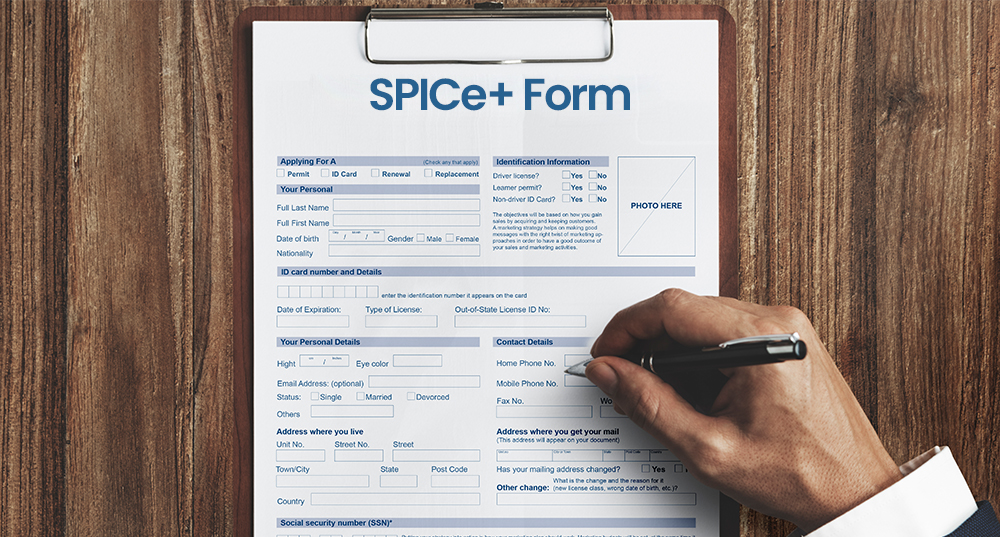
    Many founders Google “how to reserve a company name India” and land on the Reserve Unique Name (RUN) service. Here’s the thing — as of 2025, RUN is exclusively for name changes in already-incorporated companies.

    New incorporations must use SPICe+ Part A for name reservation. Filing a RUN request for a fresh incorporation wastes your time and filing fees.

    Once your name is approved via SPICe+ Part A, you have 20 days to complete and submit Part B. Don’t let it lapse.
    Mistake #3 — Submitting Wrong or Outdated Documents

    Incorrect documentation is the second most common reason for resubmission requests. Common document errors include:

    • Electricity bills or bank statements older than 2 months (for address proof)
    • PAN cards with name mismatches vs. Aadhaar
    • Passport photos that don’t meet MCA specifications
    • Registered office address proof not matching the state of incorporation

    Every director needs a valid Digital Signature Certificate (DSC) and a Director Identification Number (DIN) before filing. Missing either one stops the entire process cold.

    Document Checklist for Directors

    • PAN card (mandatory for Indian nationals)
    • Aadhaar card (address proof)
    • Passport-size photograph
    • DSC (Class 3) — valid and activated
    • DIN — applied via SPICe+ or DIR-3 form

    Mistake #4 — Writing Vague or Overly Broad MOA Objects

    The Memorandum of Association (MOA) defines what your company is legally allowed to do. Many founders copy-paste generic object clauses thinking broader is better.

    The MCA has specific guidelines on MOA drafting. If your primary business activity isn’t clearly mentioned, you could face legal restrictions on operations — or worse, MCA rejection.

    A quick example: A SaaS founder building a B2B invoicing tool filed MOA objects for “general trading and IT services.” Six months later, when approaching investors, the MOA had to be amended — a process that takes another 30+ days and costs additional filing fees.

    Write specific, accurate objects that match your actual business. You can always add more later through an EGM resolution, but it costs time and money.

    Mistake #5 — Ignoring Post-Incorporation Compliance

    Getting your Certificate of Incorporation feels like the finish line. It’s actually the starting gun.

    Within 30 days of incorporation, you must:

    • Open a current bank account in the company name
    • Obtain GST registration if your turnover crosses ₹20 lakh (₹10 lakh for special category states) — or immediately if you’re doing interstate supply. Lawizer handles GST registration starting at ₹999
    • File INC-20A (Declaration of Commencement of Business) within 180 days
    • Issue share certificates to all shareholders
    • Hold the first Board Meeting within 30 days of incorporation

    Missing INC-20A alone attracts a penalty of ₹50,000 on the company and ₹1,000 per day on each defaulting officer. Most first-time founders have never heard of it.

    Mistake #6 — Adding Directors Without Checking Eligibility

    Every director has legal obligations and potential personal liability under the Companies Act, 2013. Adding someone as a director simply to meet the minimum two-director requirement — without checking eligibility — is a serious mistake.

    Directors must:

    • Be at least 18 years old
    • Not be disqualified under Section 164 of the Companies Act
    • Have a valid DIN
    • At least one director must be a resident of India (stayed in India for at least 182 days in the previous calendar year)

    Also: equity allocation to co-founders must be documented in a board resolution at the time of share allotment. Sorting this out later creates disputes that can derail funding rounds.

    Mistake #7 — Not Protecting the Brand Before or After Incorporation

    Your company name registration with MCA does NOT protect your brand name or logo. These are two completely separate legal protections.

    Dozens of founders have incorporated successfully, built a product, run ads — and then received a cease and desist from a brand that trademarked the same name earlier. By then, rebranding costs lakhs.

    File for trademark registration at the same time as company incorporation — or immediately after. At ₹999, it’s the most affordable brand insurance you’ll ever buy. Register your trademark with Lawizer here.

    Frequently Asked Questions

    Q: How long does private limited company registration take in India in 2025?

    A: With all documents correct and DSC activated, SPICe+ Part A name approval takes 1–3 working days. Part B (full incorporation) takes another 5–7 working days. Total: 7–10 working days if everything is in order. Mistakes or resubmissions can extend this to 3–4 weeks.

    Q: What is the minimum capital required to register a private limited company in India?

    A: There is no minimum paid-up capital requirement for private limited company registration in India. The earlier ₹1 lakh minimum was removed. You can incorporate with ₹10,000 or even ₹1,000 as authorised capital, though most professionals recommend ₹1 lakh to keep future share allotments clean.

    Q: Can a single person register a private limited company in India?

    A: No. A private limited company requires a minimum of 2 directors and 2 shareholders. If you want to be the sole owner, you should register a One Person Company (OPC) instead. Lawizer offers OPC registration starting at ₹999.

    Q: What is SPICe+ and why does it matter for company registration?

    A: SPICe+ (Simplified Proforma for Incorporating Company Electronically Plus) is the MCA’s integrated incorporation form that simultaneously handles company name reservation, DIN allotment, PAN, TAN, EPFO, ESIC, Profession Tax, and bank account opening — all in one filing. Understanding its two-part structure (Part A for name, Part B for full incorporation) is essential to avoid delays.

    Q: What happens if I miss filing INC-20A after incorporation?

    A: INC-20A is the Declaration of Commencement of Business that must be filed within 180 days of incorporation. Missing this deadline attracts a penalty of ₹50,000 on the company and ₹1,000 per day on each defaulting officer. The company also cannot commence business or borrow money without filing this form.

    Ready to register your private limited company the right way?
    Lawizer’s experts handle everything — name check, DSC, DIN, SPICe+ filing, and post-incorporation compliance — fully online, starting at just ₹1,499. No CA visit needed.

    Start your company registration with Lawizer →

  • The Essential Checklist for Business Incorporation in India (2026)

    Introduction

    In 2026, forming a company in India has become significantly easier due to digital platforms and integrated regulatory systems.

    However, business incorporation still requires proper planning, documentation, and strict compliance with legal formalities.

    This essential checklist will help you with the entire process to ensure your company is incorporated smoothly, legally, and successfully.


    Why Proper Incorporation Planning Matters

    Choosing the right structure and completing regulatory steps correctly helps:

    • Protect personal liability
    • Ensure tax compliance
    • Build investor confidence
    • Avoid future legal disputes
    • Establish long-term operational stability

    Let’s break down the step-by-step incorporation process.


    1. Decide Your Business Structure

    Before starting the incorporation process, choose the most suitable legal structure based on your goals:

    • Private Limited Company – Ideal for startups seeking funding
    • One Person Company (OPC) – Suitable for solo entrepreneurs
    • Limited Liability Partnership (LLP) – Limited liability with simpler compliance
    • Partnership Firm – Suitable for small professional ventures
    • Sole Proprietorship – Simple structure but no limited liability

    Your decision impacts taxation, funding opportunities, compliance burden, and liability protection.


    2. Obtain Digital Signature Certificate (DSC)

    A Digital Signature Certificate (DSC) is mandatory for filing electronic documents.

    • Directors and authorized signatories must obtain DSC from licensed certifying agencies.
    • It serves as your official digital identity for government filings.

    3. Apply for Director Identification Number (DIN)

    Every proposed director must obtain a Director Identification Number (DIN) from the Ministry of Corporate Affairs.

    • DIN is a unique 8-digit identification number.
    • It is mandatory before submitting incorporation documents.

    4. Name Reservation (RUN / SPICe+)

    Choosing a compliant and unique business name is a crucial step.

    Ensure that:

    • The name is not identical to an existing company or trademark.
    • It complies with MCA naming guidelines.
    • It reflects your business activity and brand identity.

    You can reserve the name through:

    • RUN (Reserve Unique Name)
    • SPICe+ incorporation form

    5. Draft Key Company Documents

    You must prepare foundational legal documents:

    Memorandum of Association (MOA)

    Defines the company’s objectives and permitted activities.

    Articles of Association (AOA)

    Specifies internal governance rules and shareholder rights.

    These documents form the legal backbone of your company.


    6. Prepare Registered Office Proof

    Every company must have a registered office in India.

    Required documents include:

    • Utility bill (issued within last 2 months)
    • Rent agreement (if applicable)
    • No Objection Certificate (NOC) from property owner

    This address becomes the official communication point for government correspondence.


    7. File Incorporation Forms (SPICe+)

    The primary step is filing the SPICe+ (Simplified Proforma for Incorporating Company Electronically) form via the MCA portal.

    SPICe+ covers:

    • Company registration
    • PAN and TAN allotment
    • GST registration (if applicable)
    • EPFO/ESIC registration (if applicable)
    • Bank account integration

    This integrated filing system reduces duplication and speeds up approvals.


    8. PAN, TAN & Bank Account Setup

    After approval:

    • PAN (Permanent Account Number) is auto-generated
    • TAN (Tax Deduction Account Number) is issued
    • Open a current business bank account
    • Deposit initial share capital

    These steps activate your company financially.


    9. GST Registration (If Applicable)

    GST registration is mandatory if:

    • Your turnover exceeds prescribed thresholds
    • You engage in inter-state trade
    • Your business falls under notified categories

    Early GST registration ensures smooth compliance and invoicing.


    10. Post-Incorporation Compliance

    After incorporation, companies must:

    • Appoint a statutory auditor (within 30 days)
    • Conduct first board meeting (within 30 days)
    • Issue share certificates
    • File commencement of business declaration (if required)
    • Maintain statutory registers

    Annual compliance includes financial statements, annual returns, and tax filings.


    Document Checklist for Business Incorporation

    ✔ Director’s identity proof (PAN, Aadhaar, Passport)
    ✔ Director’s address proof
    ✔ Passport-sized photographs
    ✔ Registered office proof
    ✔ MOA & AOA drafts
    ✔ Consent to act as director
    ✔ Digital Signature Certificate details


    Key 2026 Considerations

    Business incorporation in 2026 involves:

    • Increased digital verification
    • Stronger KYC norms
    • Integrated MCA-GST-tax systems
    • Higher penalties for non-compliance

    Staying updated with regulatory changes is essential.


    Conclusion

    Incorporating a business in India in 2026 is faster and more streamlined than ever before. However, precision in documentation and compliance remains critical.

    By following this essential checklist, you ensure your business is legally structured, financially prepared, and ready for sustainable growth.

    Whether you are launching a startup or expanding operations, proper incorporation sets the foundation for long-term success.


    Frequently Asked Questions (FAQs)

    How long does business incorporation take in India?

    Answer: Typically, it takes 7–15 working days, depending on documentation and approvals.

    Is DIN mandatory for all directors?

    Answer: Yes, every proposed director must obtain a valid DIN.

    Is GST registration compulsory for every company?

    Answer: No, it depends on turnover thresholds and business nature.

    Can I incorporate a company completely online?

    Answer: Yes, the entire incorporation process is digital through the MCA portal.

    What is the most preferred business structure in India?

    Answer: Private Limited Company is commonly preferred for startups and growth-focused businesses.


  • HOW TO INCORPORATE A PRIVATE LIMITED COMPANY IN INDIA: A COMPLETE STEP-BY-STEP GUIDE

    HOW TO INCORPORATE A PRIVATE LIMITED COMPANY IN INDIA: A COMPLETE STEP-BY-STEP GUIDE

    Starting a business in India begins with choosing the right legal structure. Among all business entities, a Private Limited Company is the most preferred choice for startups, entrepreneurs, and growing businesses due to its credibility, limited liability, and scalability. In this blog, we explain what a private limited company is, eligibility criteria, step-by-step incorporation process, and how Lawizer simplifies company registration for you.

    What Is a Private Limited Company?

    A Private Limited Company (Pvt Ltd) is a business entity registered under the Companies Act, 2013, where the liability of shareholders is limited to their shareholding. It is a separate legal entity, meaning the company has its own legal identity distinct from its owners.

    Key Features:

    • Separate legal entity
    • Limited liability protection
    • Perpetual succession
    • Easy transferability of shares (restricted)
    • Higher trust among investors and customers

    Eligibility Criteria to Incorporate a Private Limited Company:

    To register a private limited company in India, the following eligibility requirements must be met:

    1. Minimum 2 Directors (maximum 15)
    2. Minimum 2 Shareholders (directors can be shareholders)
    3. At least one director must be an Indian resident
    4. Unique company name
    5. Registered office address in India
    6. Directors must have DIN (Director Identification Number) and DSC (Digital Signature Certificate)

    Step-by-Step Process to Incorporate a Private Limited Company:

    Documents Required for Private Limited Company Registration

    • PAN and Aadhaar of directors
    • Passport (for foreign nationals, if any)
    • Address proof (bank statement / utility bill)
    • Registered office proof (rent agreement / ownership document)
    • Passport-size photographs

    Step 1: Obtain Digital Signature Certificate (DSC)

    DSC is mandatory for filing online incorporation documents with the Ministry of Corporate Affairs (MCA).

    Step 2: Apply for Director Identification Number (DIN)

    DIN is required for all proposed directors of the company.

    Step 3: Name Approval (SPICe+ Part A)

    Choose a unique company name and apply for approval through the MCA portal.

    Step 4: Draft MOA & AOA

    • MOA (Memorandum of Association) defines the company’s objectives.
    • AOA (Articles of Association) defines internal rules and management.

    Step 5: File SPICe+ Form (Part B)

    Submit incorporation documents, registered office details, PAN, TAN, and GST (optional) in a single form.

    Step 6: Certificate of Incorporation

    Once approved, the Registrar of Companies (ROC) issues the Certificate of Incorporation, officially registering your private limited company.


    How Lawizer Helps You Incorporate a Private Limited Company

    Lawizer is a trusted legaltech platform that simplifies the entire company incorporation process through expert-driven, tech-enabled solutions.

    Why Choose Lawizer?

    • ✅ End-to-end company registration support
    • ✅ Verified corporate lawyers & CS professionals
    • ✅ Fast, affordable, and transparent pricing
    • ✅ Expert drafting of MOA & AOA
    • ✅ Real-time updates and dedicated support
    • ✅ Secure document handling

    With Lawizer, you don’t need to worry about complex legal procedures, compliance errors, or delays. Our experts handle everything—from name approval to final incorporation—so you can focus on growing your business.

    Conclusion

    Incorporating a private limited company is a smart step toward building a credible and scalable business. While the legal process may seem complex, the right legaltech partner can make it effortless. Lawizer ensures a smooth, compliant, and hassle-free incorporation experience—trusted by entrepreneurs, startups, and businesses across India.

    👉 Get your Private Limited Company registered today with Lawizer.