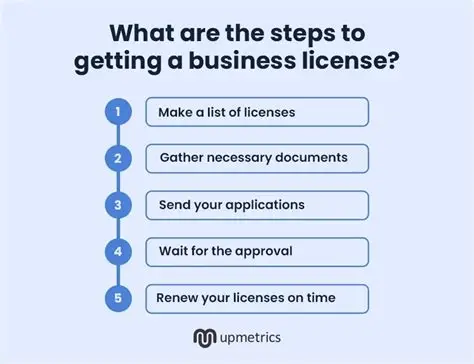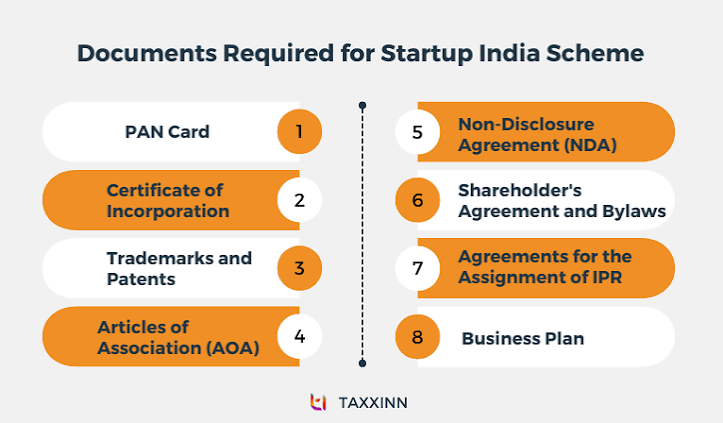
Tag: private limited company

  • What Happens If You Miss Your ROC Annual Filing Deadline?

    What Happens If You Miss Your ROC Annual Filing Deadline?

    β‚Ή100 per day. No upper cap. The MCA (Ministry of Corporate Affairs) charges this late fee on every form filed after the ROC annual return deadline. The clock starts ticking the very next day. Miss AOC-4 and MGT-7 by just 78 days. The MCA will charge over β‚Ή12,400 in penalties before you even factor in legal fees.

    And that’s just the financial hit. If you miss your filings for three consecutive years, the MCA can deactivate your directors’ DINs and prevent them from serving in any company for five years.

    πŸ“Œ TL;DR:Β Missing your ROC annual filing deadline triggers an automatic penalty of β‚Ή100 per day per form β€” with no maximum cap β€” under the Companies Act 2013. For a private limited company in India, this means AOC-4 and MGT-7 penalties compound simultaneously.

    If filings are missed for three consecutive financial years, directors face disqualification under Section 164(2) and lose their DIN across all companies. Lawizer can help you file late returns, clear penalties, and get your company back to compliant status β€” fully online.

    What You’ll Learn

    • Exact due dates for AOC-4, MGT-7, and MGT-7A β€” and when the penalty clock starts
    • How the β‚Ή100/day penalty compounds across multiple forms and multiple years
    • What director disqualification under Section 164(2) actually means for you
    • The risk of company strike-off and how MCA initiates it
    • Steps to fix late filings and get back to compliance fast

    First, Let’s Get the Deadlines Straight

    Here’s the thing β€” most founders don’t miss the deadline deliberately. They miss it because they don’t know exactly when it falls.

    ROC filing deadlines are pegged to your AGM (Annual General Meeting) date, not a fixed calendar date, which trips up a lot of first-time company owners. UnderΒ MCA’s compliance framework, every private limited company must hold its AGM by September 30 each financial year.

    Once your AGM date is set, here’s exactly how the filing windows work:

    • Form AOC-4Β (financial statements β€” balance sheet, P&L, auditor’s report): due withinΒ 30 daysΒ of the AGM. For a September 30 AGM, that’s October 29.
    • Form MGT-7Β (annual return β€” shareholding, director details, compliance summary): due withinΒ 60 daysΒ of the AGM. For a September 30 AGM, that’s November 28.
    • Form MGT-7AΒ (for OPCs and small companies): same 60-day window as MGT-7, but a simplified format.

    What most founders miss: even if your company had zero revenue, zero transactions, or zero employees, you still have to file. There are no exemptions for dormant or “inactive” companies under the Companies Act 2013. A NIL return is still a required return.

    The β‚Ή100/Day Penalty β€” And Why It Adds Up Faster Than You Think

    The moment your filing window closes, the late fee kicks in automatically. The MCA charges β‚Ή100 per day per form, with no ceiling. Let’s break this down with a real example.
    Say your AGM was on September 30, 2025. Your AOC-4 deadline is October 29, and your MGT-7 deadline is November 28. If you file both on January 15, 2026:

    AOC-4 β€” 78 days late

    MGT-7 β€” 48 days late

    Total late fees

    How to Calculate Your Penalty on the MCA Portal

    You don’t have to guess. The MCA21 portal has a built-in fee calculator. Go to MCA Services β†’ Fee & Payment Services β†’ Calculate Fee, select your form and the date you plan to file, and it will show you the exact late fee before you proceed.

    Director Disqualification Under Section 164(2) β€” The Real Danger

    Paying a penalty is painful but recoverable. Director disqualification is a different beast entirely. Under Section 164(2)(a) of the Companies Act 2013, if your company fails to file its financial statements or annual returns for any continuous period of three financial years, every director of that company gets disqualified β€” automatically, without a hearing.

    Here’s what disqualification actually means. Your DIN (Director Identification Number β€” your unique director identity issued by the MCA) gets deactivated. You can’t be appointed as a director in that company or any other company for five years. In 2017, over 3.09 lakh directors across India were disqualified in a single sweep.

    A quick example: a Mumbai-based founder running three companies β€” one dormant, two active β€” who forgot to file for the dormant entity found himself locked out of all three companies. No board resolutions, no bank account signings, no compliance filings. For five years.

    Which Financial Years Put You in the Danger Zone Right Now?

    In 2026, companies that missed filings for FY 2022-23, FY 2023-24, and FY 2024-25 are entering the three-year non-compliance window. If your company is in this group, you need to act before the ROC acts.

    What Happens to the Company Itself β€” Strike-Off Risk

    Beyond director-level consequences, the company itself faces a serious threat: strike-off from the MCA register. Under Section 248 of the Companies Act 2013, the Registrar of Companies can remove a company’s name from the register if it’s in default of filing requirements.

    • Bank accounts can be frozen after the company is flagged as a defaulter by the ROC
    • Investors and banks check MCA21 compliance status before approving funding or loans
    • A non-compliant MCA record makes due diligence fail β€” fatal for startups in fundraising mode
    • Revival via NCLT petition is possible but involves legal fees, time, and court appearances

    How to Fix a Missed Filing β€” Your Step-by-Step Recovery Plan

    The short answer: file now, even if you’re late. Every day you wait adds β‚Ή100 to each outstanding form, and you inch closer to the disqualification threshold

    Step 1

    Check pending years on MCA21

    Step 2

    Get financials audited by a CA

    Step 3

    File AOC-4 before MGT-7

    Step 4

    Pay late fees & submit

    Log into the MCA21 portal using your CIN (Corporate Identity Number) and check your filing history. If it’s two or more years pending, engage a CA immediately β€” the form sequencing gets complicated across multiple years. Always file AOC-4 (financial statements) before MGT-7 (annual return). Filing out of order can cause rejection on the portal.

    If you’d rather not navigate MCA21, form codes, and late fee calculations yourself, Lawizer’s compliance team handles the entire ROC annual filing process β€” from audit coordination to MCA submission β€” fully online, without a physical CA visit.

    Frequently Asked Questions

    Q: What is the penalty if I miss the ROC annual filing deadline in India?

    A: The MCA charges an additional fee of β‚Ή100 per day per form from the date the filing was due until the date you actually file. There is no upper cap on this penalty. For a private limited company filing both AOC-4 and MGT-7 late, the penalties compound on both forms separately β€” even a 60-day delay on both forms means β‚Ή12,000 in late fees, plus the standard government filing charges.

    Q: My company had no business activity last year. Do I still need to file ROC returns?

    A: Yes, absolutely. Every company registered under the Companies Act 2013 must file annual returns and financial statements β€” even if it had zero revenue, zero transactions, or no employees. Dormant companies must file NIL returns. Failure to file on the grounds of inactivity is not an accepted excuse by the MCA, and penalties apply equally.

    Q: Can a director be barred from other companies because of one company’s filing default?

    A: Yes, and this is one of the most misunderstood aspects of ROC compliance. Under Section 164(2)(a) of the Companies Act 2013, if any company you’re a director of fails to file for three consecutive financial years, your DIN gets deactivated and you’re disqualified from holding directorship in that companyΒ andΒ every other company for five years.

    Q: How do I check if my company is at risk of being struck off by the ROC?

    A: Log into the MCA21 portal at mca.gov.in and search your company by name or CIN. The company master data page shows the filing history and current status. If your company is marked “Active (Non-compliant)” or you see missing entries for consecutive years, consult a CA immediately.

    Q: Is there a way to waive or reduce the ROC late filing penalty?

    A: There is no standard process to waive ROC late fees β€” the β‚Ή100/day penalty is automatically calculated by the MCA system and cannot be negotiated. Historically, the MCA has occasionally introduced amnesty schemes (such as the CFSS β€” Companies Fresh Start Scheme) at reduced or waived penalties, but these are time-limited. File as soon as possible to stop the clock.

    Q: I missed ROC filings for two years. Can I still fix this without going to court?

    A: Yes β€” two years means you haven’t crossed the three-year disqualification threshold under Section 164(2), so you can still file late returns directly through the MCA21 portal by paying accumulated late fees. Work with a CA or a compliance platform likeΒ LawizerΒ to ensure the filing sequence and form data are accurate.

  • OPC vs LLP vs Private Limited: Which Structure is Right for Your Startup?

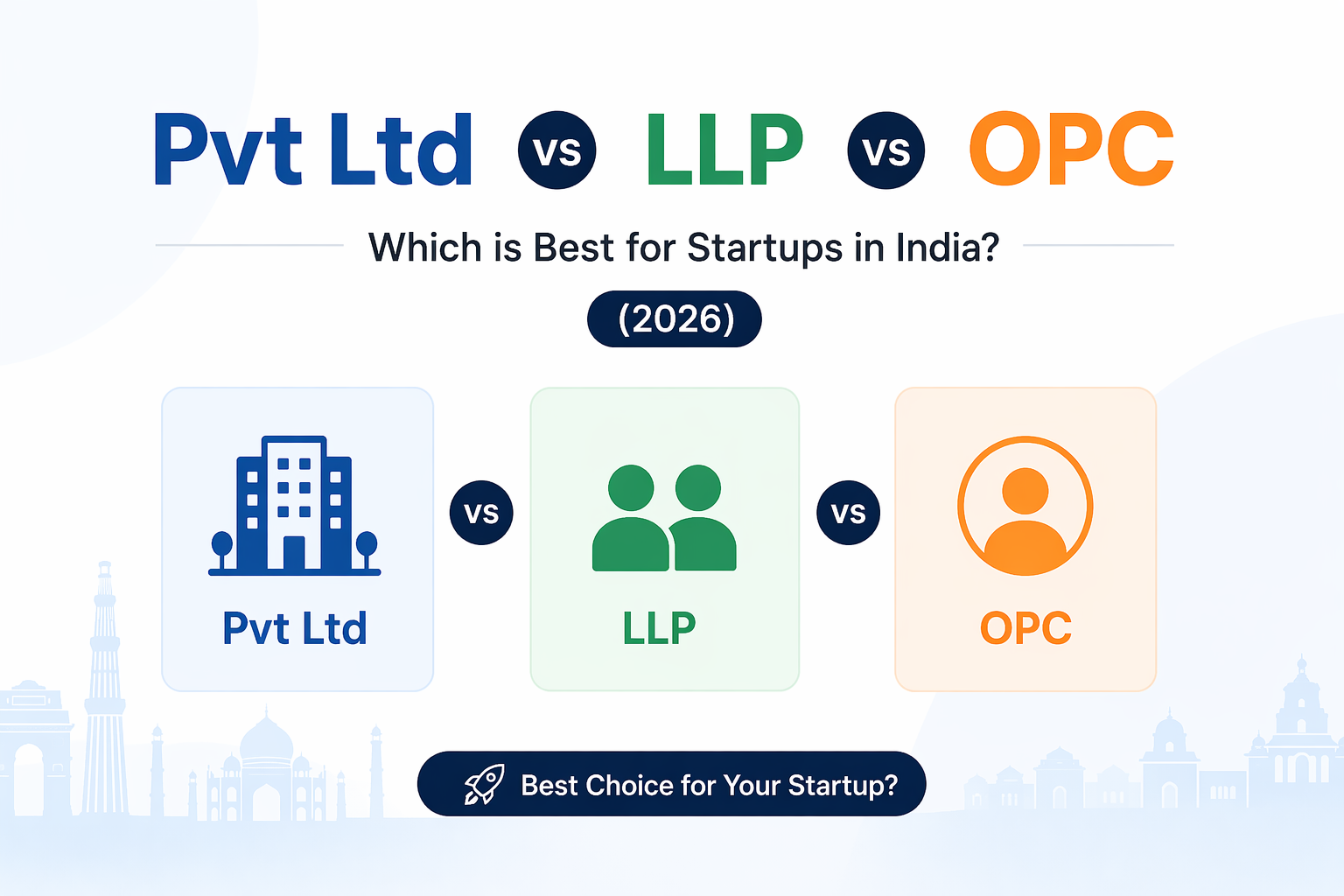
    OPC vs LLP vs Private Limited: Which Structure is Right for Your Startup?

    Entrepreneurs registered over 1.12 lakh new companies in India in just the first eight months of FY 2024–25β€”and many of those founders agonized over the same question you’re wrestling with right now: OPC, LLP, or Private Limited?

    Choosing the wrong business structure can increase your tax burden, discourage potential investors before your first pitch, and create unnecessary compliance challenges while your business is still in its early stages.

    The good news? You can easily avoid these problems once you understand how each structure affects your finances, liability, and growth potential.

    πŸ“Œ TL;DRChoosing between OPC vs LLP vs Private Limited Company in India comes down to three things β€” how many founders you have, whether you plan to raise external funding, and how much compliance you can handle.

    Solo founders with no immediate investor plans: go OPC. Service businesses with two or more partners: go LLP. Growth-focused startups targeting VC or angel investment: go Private Limited. Lawizer can help you register the right structure fully online, without a CA visit.

    What You’ll Learn

    • What OPC, LLP, and Private Limited actually mean β€” in plain language
    • How each structure compares on compliance, tax, funding, and costs
    • Exactly which structure fits your startup situation in 2025
    • Common mistakes founders make when choosing a business structure

    What Each Structure Actually Means

    Let’s break this down. The Ministry of Corporate Affairs (MCA) registers all three structuresβ€”OPC, LLP, and Private Limitedβ€”and each one gives you something a sole proprietorship doesn’t: limited liability. That means if your business hits a financial wall, your personal savings, house, and car stay protected. But that’s roughly where the similarities end.

    One Person Company (OPC)

    An OPC was introduced under the Companies Act 2013 specifically for solo entrepreneurs. You are the sole shareholder and director β€” both roles in one person. It gives you corporate credibility without needing a co-founder.

    One catch: you must nominate a second person who takes over if something happens to you, and there are turnover-based conversion thresholds to be aware of.

    Limited Liability Partnership (LLP)

    An LLP is governed by the Limited Liability Partnership Act 2008. Think of it as a partnership firm that’s been upgraded β€” partners get limited liability protection, but you keep the operational flexibility of a traditional partnership.

    It needs a minimum of 2 designated partners, at least one of whom must be an Indian resident. LLPs don’t issue equity shares, which is both their biggest strength (less complexity) and their biggest weakness (can’t raise VC money directly).

    Private Limited Company (Pvt Ltd)

    A Private Limited Company under the Companies Act 2013 requires at least 2 directors and 2 shareholders. It’s the structure that investors β€” angel networks, VCs, and most banks β€” are most comfortable with.

    Private limited companies make up 96% of all companies registered in India, and that number reflects a clear market preference. You can issue equity shares, bring on investors via convertible notes or SAFEs, and eventually IPO if you scale that far.

    Compliance and Annual Filing: The Real Ongoing Cost

    Here’s the thing β€” the registration fee is a one-time hit. What founders routinely underestimate is the annual compliance cost. This is where LLP, OPC, and Private Limited diverge most sharply.

    An LLP has the lightest compliance load. You file Form 11 (Annual Return) and Form 8 (Statement of Accounts) with the Registrar of Companies (ROC) each year.

    Statutory audit is only mandatory if your turnover crosses β‚Ή40 lakh or contribution exceeds β‚Ή25 lakh β€” which makes LLP incredibly cost-effective for early-stage service businesses.

    An OPC sits somewhere in the middle. Like a Private Limited company, it must hold board meetings and file annual returns with MCA21 (the government’s online company filing portal). However, the compliance is slightly simpler since there’s only one shareholder. Audits are mandatory regardless of turnover size.

    A Private Limited Company has the heaviest compliance requirements. You need to hold Annual General Meetings (AGMs), file financial statements (Form AOC-4) and annual returns (Form MGT-7) with ROC every year, maintain statutory registers, and get a statutory audit done regardless of revenue.

    What most founders miss: this burden is manageable if you’re growing, because the infrastructure you’re building also signals credibility to banks and investors.

    • LLP: Lowest compliance. Audit only if turnover exceeds β‚Ή40 lakh. Best for bootstrapped service businesses.
    • OPC: Medium compliance. Mandatory audit, but simpler than Pvt Ltd due to single-member structure.
    • Private Limited: Highest compliance. Mandatory AGMs, ROC filings, and annual statutory audit β€” but also comes with investor-ready credibility.

    Funding and Investment: Who Can Actually Raise Money?

    If raising money from angel investors, venture capitalists, or institutional funds is part of your long-term vision, the choice becomes simple: go with a Private Limited Company.

    Investors typically provide funding in exchange for equity (shares), and a Private Limited Company allows businesses to issue shares while offering the legal framework, governance standards, and exit opportunities that investors generally expect.

    An LLP, on the other hand, cannot issue equity shares. Although partners can contribute capital to an LLP, the structure does not support traditional startup fundraising effectively. As a result, most funded Indian startups choose to incorporate as Private Limited Companies.

    OPCs face another challenge. Since an OPC can have only one shareholder, bringing in investors requires converting it into a Private Limited Company first. If fundraising is likely within the next 12–18 months, starting as a Private Limited can save valuable time and effort later.

    Think of it this way: A Bengaluru-based D2C founder preparing to pitch at an angel investor demo day in six months would be far better off incorporating as a Private Limited Company from day one rather than dealing with conversion formalities during a crucial fundraising phase.

    Taxation: Which Structure Saves You More?

    Both LLPs and Private Limited Companies pay taxes as separate legal entities, but they face different tax rates.

    A Private Limited Company pays a flat corporate tax rate of 22% under the new regime (Section 115BAA of the Income Tax Act). Newly incorporated manufacturing companies may qualify for a lower 15% tax rate. In contrast, an LLP pays a flat 30% tax on its total income. A surcharge also applies when its profit exceeds β‚Ή1 crore.

    Many founders overlook this advantage. Private Limited Companies have better access to startup tax exemptions. These include the 3-year tax holiday available under Section 80-IAC for startups recognised by the DPIIT..

    LLPs can also obtain DPIIT recognition, but many startup schemes and incentives focus primarily on companies registered under the Companies Act, 2013 rather than the LLP Act. As a result, Private Limited Companies often find it easier to access certain startup benefits and funding opportunities.

    An OPC follows the same tax structure as a Private Limited Company and pays a 22% corporate tax rate under the applicable tax regime. LLPs look attractive for simplicity but can end up paying more tax at higher profit levels.

    If your projected annual profit is above β‚Ή15–20 lakh, this difference is worth calculating carefully with a CA.

    Which Structure Fits Your Situation β€” A Decision Framework

    Solo founder, no co-founder, not planning to fundraise immediately

    Go OPC. You get limited liability, a corporate identity (useful for opening a business bank account, signing contracts, and building client credibility), and lower complexity than a Pvt Ltd. You can always incorporate and convert to Private Limited later when you’re ready to scale.

    Two or more founders, service business, want to keep things lean

    Go LLP. This is the sweet spot for CA firms, consulting practices, IT service providers, and design studios. Low compliance, flexible profit-sharing, and no pressure to maintain complex corporate governance. Many thriving businesses in Delhi, Pune, and Kolkata run successfully as LLPs for years without needing to convert.

    Building a product startup, plan to raise funding, or want ESOP flexibility

    Go Private Limited. Full stop. Private limited companies can issue ESOPs (Employee Stock Ownership Plans) to attract talent, take angel or VC money, and eventually list on Indian stock exchanges. If your startup is in fintech, SaaS, edtech, or D2C β€” this is your structure.

    Already running a proprietorship, want to formalise on a budget

    An LLP or OPC is often the right first step. Both are cheaper to register and maintain than a Private Limited Company. Once your revenue stabilises, conversion is available β€” and it’s a solved process, not a reinvention.

    Quick Comparison: OPC vs LLP vs Private Limited

    Factor OPC LLP Private Limited
    Founders needed 1 2+ 2+
    Can raise VC/Angel funding? No (needs conversion) No Yes
    Tax rate 22% (corporate) 30% flat 22% (corporate)
    Compliance burden Medium Low High
    Mandatory audit Always Only if turnover > β‚Ή40L Always

    Frequently Asked Questions

    Q: Can I convert my OPC to a Private Limited Company later?

    A: Yes, you can convert an OPC to a Private Limited Company through MCA21 procedures under the Companies Act 2013. The process involves adding at least one more shareholder and director, filing the relevant forms with the Registrar of Companies, and amending your Memorandum of Association (MOA). It typically takes 4–8 weeks and involves legal costs. If you expect to fundraise within a year, it’s usually more efficient to start as a Private Limited directly.

    Q: Which structure is cheapest to register and maintain in India?

    A: LLP is generally the most cost-effective structure to register and maintain over the long term, particularly for businesses with turnover below β‚Ή40 lakh (which are exempt from mandatory statutory audit). OPC registration is similarly affordable upfront, but ongoing compliance costs are higher because audits are mandatory regardless of revenue. Private Limited Companies have the highest annual compliance cost due to mandatory audits, AGMs, and multiple ROC filings.

    Q: Can an LLP get MSME registration in India?

    A: Yes, an LLP is eligible to register as an MSME (Micro, Small and Medium Enterprise) on the Udyam Registration portal, as long as it meets the investment and turnover thresholds defined by the MSMED Act. MSME status gives you access to priority sector lending, government scheme benefits, and collateral-free loans. The registration applies equally to LLPs, OPCs, and Private Limited Companies.

    Q: Do I need a physical office address to register a company in India?

    A: Yes, all three structures require a registered office address in India at the time of incorporation. This can be your home address, a co-working space, or a rented office. Many founders in cities like Bengaluru, Mumbai, and Hyderabad use their residential address initially and update it later as the business grows.

    Q: Is Private Limited always better than LLP for a startup in India?

    A: Not always β€” it depends entirely on your business goals. If you’re building a funded, equity-driven, high-growth startup, then yes, Private Limited is the clear choice. But for a consulting firm, boutique agency, or professional practice where founders want to split profits flexibly and keep compliance simple, an LLP can be a smarter long-term choice. The “best” structure is the one that matches your actual business model and growth plan.

    Q: What is SPICe+ and how does it work for company registration?

    A: SPICe+ (Simplified Proforma for Incorporating Company Electronically Plus) is MCA’s integrated online form for registering a company in India. It combines multiple applications into one β€” Director Identification Number (DIN), company name reservation, PAN, TAN, GSTIN application, and EPFO/ESIC registration. It covers OPC and Private Limited Company registration. LLPs are incorporated through a separate FiLLiP form on the same MCA portal.

  • How to Register a Private Limited Company in India in 2025: Step-by-Step

    How to Register a Private Limited Company in India in 2025: Step-by-Step

    Over 1.38 lakh new companies were incorporated in India between April 2024 and March 2025 alone β€” and 96% of all active Indian companies are private limited companies.

    That’s not a coincidence. Private limited company registration gives founders limited liability, a separate legal identity, and instant credibility with investors, banks, and enterprise clients.

    But here’s the thing β€” most founders either overpay a CA, get stuck in document loops, or miss critical post-incorporation steps that cause compliance headaches later. This guide fixes all of that.

    πŸ“Œ TL;DR:Β Private limited company registration in India is done entirely online through the MCA21 portal using the SPICe+ integrated form.

    You need at least 2 directors, 2 shareholders, a DSC, and a DIN β€” and the whole process takes 7–15 working days. Lawizer handles the end-to-end registration so you can focus on building your business, not filing forms.

    What You’ll Learn

    • The exact eligibility conditions and documents you need before you begin
    • Every step in the MCA SPICe+ registration process β€” in the correct sequence
    • Government fees, realistic timelines, and common mistakes that delay approval
    • What you must do immediately after getting your Certificate of Incorporation

    Why Register as a Private Limited Company? The Real Advantages

    Before getting into steps, it’s worth being clear about why Pvt Ltd is the default choice for serious founders.

    A private limited company is a separate legal entity under the Companies Act, 2013 β€” meaning the company can own assets, sign contracts, open bank accounts, and take on liabilities completely independently of its founders. Your personal savings aren’t on the line if the business goes under.

    What most founders miss: Pvt Ltd status is a hard prerequisite for most institutional investors. VC firms, angel networks, and accelerators like Y Combinator or 100X.VC will not write a cheque to an unincorporated entity or a proprietorship.

    And if you’re selling to enterprise clients in Bengaluru or Mumbai β€” or planning to raise foreign capital β€” a Pvt Ltd structure is essentially non-negotiable.

    There’s also the trust factor. Customers, vendors, and even potential hires perceive an incorporated company differently. A “Pvt Ltd” at the end of your business name signals permanence. And once incorporated, the company enjoys perpetual succession β€” it continues to exist even if directors change.

    Eligibility Checklist: What You Need Before You Apply

    Let’s break this down before touching the MCA portal. Getting these basics wrong wastes days. Here’s what’s mandatory under the Companies Act, 2013:

    • Minimum 2 directors β€” at least one must be an Indian resident (present in India for 182+ days in the previous calendar year)
    • Minimum 2 shareholders β€” directors and shareholders can be the same people
    • Maximum 200 shareholders β€” beyond this, you’d need a public limited structure
    • Registered office address in India β€” can be a rented space or a virtual office; a residential address works too
    • No minimum paid-up capital β€” the earlier β‚Ή1 lakh requirement was removed by the Companies Amendment Act, 2015. You can start with β‚Ή10,000 or less

    Documents you’ll need for each director and shareholder: PAN card, Aadhaar or passport, a recent bank statement or utility bill (address proof), and passport-size photographs. For the registered office: a utility bill of the premises plus a No Objection Certificate (NOC) from the owner if it’s rented.

    Step-by-Step: The Private Limited Company Registration Process in 2025

    In 2025, the entire process runs through the MCA21 portal β€” India’s unified corporate registry managed by the Ministry of Corporate Affairs. Gone are the days of courier-filing physical documents. Here’s the exact sequence:

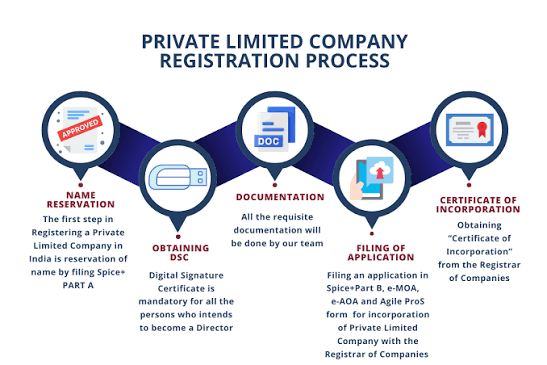
    Step 1: Obtain a Digital Signature Certificate (DSC)

    A DSC β€” Digital Signature Certificate β€” is your e-signature for signing all MCA forms. Every proposed director and subscriber to the Memorandum of Association (MOA) must have one.

    You get it from government-approved agencies like eMudhra or Sify. Expect to submit ID proof, address proof, and a selfie or video for verification. This typically takes 1–2 days and costs β‚Ή1,000–₹2,000 per DSC depending on validity (1 or 2 years).

    Step 2: Name Reservation via SPICe+ Part A

    SPICe+ (Simplified Proforma for Incorporating Company Electronically Plus) is MCA’s integrated web form β€” it handles incorporation, PAN, TAN, GST, EPFO, and ESIC registration all in one submission.

    Part A is just for name reservation. You can propose up to 2 names. The name must end with “Private Limited” and can’t conflict with existing trademarks or company names. Use the MCA Name Search tool to check availability before applying. Name approval typically takes 1–3 working days.
    A quick example: If you want “TechNova Solutions Private Limited,” search “TechNova” on the MCA portal first. If it’s taken or flagged as similar to a registered trademark, have a backup ready. Two rejections and you’ll need to refile, losing time and money.

    Step 3: File SPICe+ Part B β€” The Core Incorporation Form

    This is where the actual incorporation happens. Part B of SPICe+ asks for director details, registered office address, share capital structure, and other company particulars. It’s filed along with these key attachments:

    • MOA (Memorandum of Association) β€” defines the company’s objectives and scope of business; filed via eForm INC-33
    • AOA (Articles of Association) β€” the internal rulebook for governance; filed via eForm INC-34
    • AGILE-PRO-S β€” the linked form for simultaneous GST registration, EPFO (Employees’ Provident Fund Organisation), ESIC (Employees’ State Insurance Corporation), and a bank account opening request

    Director Identification Number (DIN) β€” a unique ID number issued by MCA to track an individual’s directorships β€” is auto-generated during the SPICe+ Part B filing process. You don’t need to apply separately.

    Step 4: Pay Government Fees and Stamp Duty

    Government fees depend on your authorised share capital. For a company with β‚Ή1 lakh authorised capital, the total MCA fee is typically in the range of β‚Ή3,000–₹7,000. Stamp duty varies by state

    β€” for example, it’s approximately β‚Ή500 in Delhi but higher in Maharashtra. All payments are made online through the MCA portal. There are no offline payment options.

    Step 5: Certificate of Incorporation β€” You’re Live

    Once the Registrar of Companies (ROC) approves your application, you receive a digitally signed Certificate of Incorporation (COI) via email. The COI includes your CIN (Corporate Identity Number), and PAN and TAN are auto-issued in collaboration with the Income Tax Department.

    The short answer on timeline: 7–15 working days from the date of SPICe+ submission, assuming clean documentation and no name objections.

    Critical Post-Incorporation Steps (Most Founders Skip These)

    Getting the COI is not the finish line β€” it’s the starting gun. Here’s what must happen in the weeks after incorporation:

    • Open a current bank account in the company’s name within 30 days. Take your COI, MOA, AOA, PAN, and board resolution to any scheduled commercial bank.
    • File INC-20A (Commencement of Business Declaration) β€” this is mandatory within 180 days of incorporation. Directors must deposit the paid-up share capital into the company’s bank account before filing. Skipping this attracts a β‚Ή50,000 penalty and can result in the company being struck off.
    • Issue share certificates to all subscribers within 60 days of incorporation.
    • Apply for GST registration if your turnover will exceed β‚Ή40 lakh (β‚Ή20 lakh for service-only businesses or special category states). This can be done via the AGILE-PRO-S form at the time of incorporation itself, or later through the GSTN portal.
    • Protect your brand β€” company registration does NOT protect your brand name from being used by others. You’ll need a separate trademark registration for that.

    If your business qualifies as a Micro, Small, or Medium Enterprise under the MSMED Act, 2006, you should also consider an MSME Udyam registration β€” it unlocks priority sector lending, government scheme benefits, and faster payment protections from buyers.

    What Does It Cost? A Realistic Breakdown

    Here’s what the full cost looks like for a standard Pvt Ltd with β‚Ή1 lakh authorised capital:

    • DSC (per director): β‚Ή1,000–₹2,000
    • MCA government fees: β‚Ή3,000–₹7,000 (varies by state and capital)
    • Stamp duty: β‚Ή500–₹2,000 (varies by state)
    • Professional service fee: β‚Ή5,000–₹15,000 if using a platform or CA

    Total: expect to spend β‚Ή8,000–₹25,000 depending on the service provider and your state. Platforms like Lawizer keep the professional fee transparent and fixed β€” no surprise billings halfway through the process. You can see all business legal services at Lawizer’s startup legal hub.

    Common Mistakes That Delay Your Application

    Based on real founder experiences on forums and Q&A platforms, these are the errors that cause rejections and refilings:

    • Name conflicts: Proposing names too similar to existing brands or companies. Always search both the MCA database and the trademark registry before committing.
    • Address proof mismatch: The utility bill for the registered office is older than 2 months, or the address on the NOC doesn’t exactly match the address proof submitted.
    • DSC issues: Using an expired DSC or a DSC that isn’t mapped to your PAN correctly on the MCA portal.
    • MOA objects clause: Drafting overly broad or vague business objectives. The ROC can raise queries if the object clause isn’t specific enough to your business activity.
    • Forgetting INC-20A: Many founders think they’re done after the COI arrives. Skipping the Commencement of Business declaration is a serious non-compliance that attracts heavy penalties.

    Frequently Asked Questions

    Q: How long does it take to register a private limited company in India in 2025?

    A: The complete process β€” from DSC to Certificate of Incorporation β€” typically takes 7 to 15 working days in 2025. The name approval stage takes 1–3 days, DSC procurement takes 1–2 days, and the SPICe+ Part B processing takes 3–7 working days after submission.
    If documents are clean and the name is approved without objection, some incorporations are completed in as few as 7 working days. Errors in forms or name disputes can add a week or more.

    Q: What is the minimum capital required to register a private limited company in India?

    A: There is no minimum paid-up capital requirement. The Companies Amendment Act, 2015 removed the earlier mandatory β‚Ή1 lakh minimum, so you can incorporate with as little as β‚Ή10,000 or even less.
    That said, you should set an authorised capital that reflects your realistic fundraising needs β€” since increasing it later involves additional MCA fees and ROC filings.

    Q: Can a single person register a private limited company?

    A: No β€” a private limited company requires a minimum of 2 directors and 2 shareholders.
    If you’re a solo founder, you have two options: bring in a co-founder or family member as the second director/shareholder, or register as a One Person Company (OPC) instead. OPC is a separate legal structure under the Companies Act, 2013 designed for sole entrepreneurs and has its own eligibility conditions.

    Q: Is it mandatory to have a physical office to register a private limited company?

    A: You need a registered office address in India, but it doesn’t have to be a commercial space. A residential address works β€” many founders use their home address for early-stage companies. Virtual office addresses from co-working providers are also accepted, provided you can furnish a valid NOC from the building owner and a recent utility bill of the premises.

    Q: What is the SPICe+ form and do I need to fill it myself?

    A: SPICe+ (Simplified Proforma for Incorporating Company Electronically Plus) is MCA’s master incorporation form that handles company registration, PAN, TAN, GST, EPFO, and ESIC all in one linked application. It has two parts β€” Part A for name reservation and Part B for the full incorporation filing. While technically anyone can file it, the form is complex and errors cause rejections. Most founders use a legal platform or professional to prepare and file it correctly the first time.

    Q: Does registering a company name also protect it as a trademark?

    A: No β€” company registration and trademark registration are completely separate. Registering “XYZ Solutions Private Limited” with the MCA only prevents another company from using the exact same registered name. It does not stop someone from using “XYZ Solutions” as a brand name for products or services. To protect your brand, logo, or slogan against infringement, you need to file a separate trademark application with the CGPDTM (Controller General of Patents, Designs and Trade Marks).

  • INC-20A: The Post-Incorporation Form Most Founders Have Never Heard OfS

    INC-20A: The Post-Incorporation Form Most Founders Have Never Heard OfS

    You just got your Certificate of Incorporation. You’re celebrating. But there’s a mandatory MCA form sitting on a 180-day countdown clock β€” and most new founders don’t even know it exists. It’s called INC-20A, the Declaration for Commencement of Business, and skipping it can freeze your company’s operations, trigger a β‚Ή50,000 penalty, and get your company struck off the register entirely.

    This is one of the most overlooked post-incorporation compliance steps in India. Let’s fix that right now.

    πŸ“Œ TL;DR: INC-20A (Declaration for Commencement of Business) is a mandatory MCA filing under Section 10A of the Companies Act, 2013 for every company incorporated in India on or after 2nd November 2018 with share capital. It must be filed within 180 days of incorporation. Without it, your company legally cannot conduct any business or borrow funds β€” and risks a β‚Ή50,000+ penalty or strike-off. Lawizer helps founders file INC-20A quickly and correctly, fully online.

    What You’ll Learn

    • What INC-20A is and why the MCA introduced it in 2018
    • Which companies must file it, who is exempt, and the exact 180-day deadline
    • The documents you need, the step-by-step filing process on MCA21, and the penalties for missing the deadline
    • The one pre-condition most founders forget before they can even file

    What Is INC-20A and Why Does It Exist?

    INC-20A β€” officially the Declaration for Commencement of Business β€” was introduced through the Companies (Amendment) Ordinance, 2018, which inserted a new Section 10A into the Companies Act, 2013. It came into effect on 2nd November 2018.

    Before this change, a company could technically open its doors, sign contracts, and borrow money the day after getting its CIN (Corporate Identity Number). That loophole led to thousands of shell companies being registered with no real capital ever deposited.

    Here’s the thing. The MCA’s solution was elegant: make every new company formally declare, before doing anything, that its subscribers have actually paid up their share capital into the company’s bank account. That declaration is Form INC-20A.

    Think of it as your company’s “permission to operate” stamp β€” without it, your incorporation certificate is essentially incomplete from a business-operations standpoint.

    This form is filed under Rule 23A of the Companies (Incorporation) Rules, 2014, and needs to be certified by a practising Chartered Accountant (CA), Company Secretary (CS), or Cost Accountant before submission on the MCA21 portal.

    Who Must File INC-20A β€” and Who Gets a Pass?

    Not every registered entity needs to file this form. Here’s a clear breakdown so you know exactly where you stand.

    Companies Required to File

    • Any company incorporated on or after 2nd November 2018 with a share capital β€” this includes Private Limited Companies, Public Limited Companies, and One Person Companies (OPCs)
    • Companies that need regulatory approvals from sectoral bodies like RBI, SEBI, or IRDAI must also attach proof of that approval along with INC-20A

    Companies Exempt from Filing

    • Companies incorporated before 2nd November 2018
    • Companies incorporated without share capital (such as Section 8 companies β€” non-profits)
    • LLPs (Limited Liability Partnerships) and Partnership Firms β€” these have separate governance structures and this form does not apply to them

    What most founders miss: if you registered your startup as a Private Limited Company in, say, Bengaluru or Delhi after November 2018 β€” which accounts for the vast majority of new incorporations today β€” you are legally required to file INC-20A before you send your first invoice or sign your first client contract.

    The One Thing You Must Do Before Filing INC-20A

    Let’s break this down, because this is the step that trips up most founders. Before you can even open the INC-20A form on the MCA21 portal, you must complete one prerequisite: deposit the subscription money into your company’s bank account.

    When you incorporated your company, each founder (subscriber) agreed in the Memorandum of Association (MOA) to take a certain number of shares at a specified value. The entire purpose of INC-20A is to confirm that all of that agreed share capital has actually been transferred into the company’s official current account.

    For example, if your company’s paid-up capital is β‚Ή1,00,000, each subscriber must have deposited their proportionate share into the company bank account before the form is filed.

    A quick example: suppose two co-founders each hold 50% of a company incorporated with β‚Ή1,00,000 paid-up capital. Each one must deposit β‚Ή50,000 into the company’s current account. Only after both transfers appear on the bank statement can you attach that statement to INC-20A and certify it.

    This is why opening the company’s current account immediately after incorporation β€” not weeks later β€” is so critical. Don’t wait for your accountant to remind you.

    Need help with the full incorporation and post-incorporation compliance checklist? The Lawizer business legal services page covers everything from SPICe+ filing to post-registration steps like INC-20A, GST registration, and MSME enrolment.

    Documents Required for INC-20A Filing

    Filing INC-20A on the MCA21 Version 3 portal is straightforward once you have all your documents in order. Here’s everything you’ll need:

    • Company Bank Statement β€” showing all credit entries, specifically the receipt of subscription money from each shareholder. This is the most critical document.
    • Photographs of the Registered Office β€” one showing the external building and one showing the interior of the office, with at least one Director or KMP (Key Managerial Personnel) visible in the photo.
    • Board Resolution β€” authorising a specific director to file the INC-20A form on behalf of the company.
    • Proof of regulatory approval β€” required only if your company’s business is regulated by RBI, SEBI, IRDAI, or another sectoral body.
    • Digital Signature Certificate (DSC) β€” of the director who will be signing and submitting the form on the MCA21 portal.

    The form itself must be certified by a practising CA, CS, or Cost Accountant before it’s uploaded. Once submitted, the MCA typically processes it and issues acknowledgement. There’s no separate “certificate” issued β€” successful filing and its SRN (Service Request Number) confirmation is your proof of compliance.

    Incorporation Compliance Checklist India | Complete Guide

    The 180-Day Deadline and What Happens If You Miss It

    The deadline is firm: INC-20A must be filed within 180 days from the date of incorporation. So if your company was incorporated on 1st January 2025, the last date to file INC-20A is 30th June 2025.

    The MCA’s e-filing portal accepts INC-20A filings throughout this window, and it’s strongly advisable to file well before the last 30 days.

    The short answer on penalties: they’re steep and they escalate. Here’s exactly what non-compliance triggers under Section 10A of the Companies Act, 2013:

    • Penalty on the company: β‚Ή50,000 (one-time flat penalty)
    • Penalty on every officer in default (each director who was responsible): β‚Ή1,000 per day for every day the default continues, capped at β‚Ή1,00,000 per officer
    • Company strike-off: If the Registrar of Companies (RoC) has reasonable cause to believe the company is inactive β€” no bank account, no assets, no business β€” it can initiate action to remove the company’s name from the Register of Companies entirely

    These aren’t theoretical. The MCA has actively penalised companies for non-compliance β€” in one documented case, the RoC Hyderabad imposed a total penalty of β‚Ή2.5 lakh on a company and its directors for failing to file INC-20A.

    Directors must pay penalties from their personal income, not company funds. That’s a personal financial hit that no early-stage founder should have to absorb for a form that takes a few days to file correctly.

    If your company has already missed the deadline, there’s still a path forward. Late filing is accepted on the MCA portal with additional fees, and in some cases, founders can file a condonation application explaining the reasons for delay. But do not wait. Each additional day adds β‚Ή1,000 to every director’s personal liability.

    Step-by-Step: How to File INC-20A on MCA21

    Here’s the complete process, simplified for founders who want to understand what their CA or Lawizer’s team is doing on their behalf:

    • Step 1 β€” Open the Company’s Bank Account: Do this immediately after incorporation. Deposit the subscription amounts from all shareholders as per the MOA.
    • Step 2 β€” Collect Documents: Gather the bank statement, registered office photographs, board resolution, and director DSC.
    • Step 3 β€” Download the Form: Log into the MCA21 Version 3 portal using the company’s CIN and director credentials. Access the INC-20A e-form.
    • Step 4 β€” Fill and Certify: Complete all mandatory fields β€” CIN, registered office address, and the declaration. Have a practising CA, CS, or Cost Accountant digitally certify the form.
    • Step 5 β€” Attach and Upload: Attach all supporting documents and upload the certified form on the MCA21 portal.
    • Step 6 β€” Pay Fees and Get SRN: Pay the prescribed filing fee online. The portal generates an SRN (Service Request Number) as proof of submission. Save this.

    Once filed successfully, your company is legally authorised to commence business operations, exercise borrowing powers, and enter into contracts. Until then β€” even if you’ve been operating informally β€” you are technically in default under the Companies Act, 2013.

    Lawizer’s compliance experts handle this entire process end-to-end, so you don’t have to track down a CA and navigate MCA21 on your own.

    INC-20A vs SPICe+: Understanding the Difference

    A lot of founders confuse INC-20A with SPICe+. They’re entirely different. SPICe+ (Simplified Proforma for Incorporating Company Electronically Plus) is the form you file to incorporate your company β€” it’s the form through which MCA assigns your CIN and issues your Certificate of Incorporation. INC-20A is the form you file after incorporation, to declare that business can now commence.

    Think of it this way: SPICe+ is the birth certificate of your company. INC-20A is the clearance certificate that says your company is funded, operational, and ready to engage with the world. You need both.

    One without the other leaves your company legally incomplete for business purposes. If you’re also planning to register for MSME Udyam registration or GST, those processes can run in parallel with INC-20A β€” but don’t start billing clients until INC-20A is filed and confirmed.

    Frequently Asked Questions

    Q: Is INC-20A mandatory for all private limited companies in India?

    A: Yes, INC-20A is mandatory for every company incorporated in India on or after 2nd November 2018 that has a share capital. This includes Private Limited Companies, Public Limited Companies, and One Person Companies (OPCs). Companies incorporated before that date, companies without share capital (like Section 8 non-profits), LLPs, and partnership firms are not required to file this form.

    Q: What is the deadline to file INC-20A after company incorporation?

    A: INC-20A must be filed within 180 days from the date of incorporation of the company. For example, if your company was incorporated on 1st January 2025, the deadline to file INC-20A is 30th June 2025. Missing this deadline attracts a β‚Ή50,000 penalty on the company and β‚Ή1,000 per day on each defaulting director, up to a maximum of β‚Ή1,00,000 per officer.

    Q: Can my company start business before filing INC-20A?

    A: No. Under Section 10A of the Companies Act, 2013, a company cannot commence any business activity or exercise any borrowing powers until INC-20A has been filed with the Registrar of Companies (RoC). Operating without filing INC-20A makes the company and its directors liable to penalties, and the Registrar can initiate proceedings to strike off the company’s name from the register.

    Q: What documents are needed to file Form INC-20A?

    A: To file INC-20A, you’ll need the company’s bank statement showing receipt of subscription money from all shareholders, photographs of the registered office (exterior and interior with a director or KMP visible), a board resolution authorising the filing, and the Director’s Digital Signature Certificate (DSC). The form must be certified by a practising Chartered Accountant, Company Secretary, or Cost Accountant before submission on the MCA21 portal.

    Q: What happens if INC-20A is not filed within 180 days?

    A: If INC-20A is not filed within 180 days of incorporation, the company faces a flat penalty of β‚Ή50,000. Each director in default is additionally liable to pay β‚Ή1,000 per day of continued non-compliance, up to β‚Ή1,00,000 per director β€” and this penalty must be paid from personal funds, not company accounts. In serious cases, the Registrar of Companies can also initiate action to strike off the company’s name from the Register of Companies entirely.

    Q: Who certifies the INC-20A form before filing?

    A: Form INC-20A must be verified and certified by a practising professional β€” either a Chartered Accountant (CA), Company Secretary (CS), or Cost Accountant β€” before it is uploaded to the MCA21 portal. Directors cannot self-certify this form. The certifying professional confirms that the information provided, including the proof of share capital receipt, is accurate and complete.

    Q: Does INC-20A need to be filed every year?

    A: No, INC-20A is a one-time filing. It is required only once, immediately after incorporation and before the company commences business. It is not an annual compliance requirement. However, companies must continue to file their annual returns, financial statements, and other periodic MCA forms as required under the Companies Act, 2013.

    Ready to file INC-20A and get your company legally operational?
    Lawizer’s experts handle everything β€” INC-20A filing, post-incorporation compliance, GST registration, and MSME Udyam enrolment β€” fully online, starting at just β‚Ή999. No CA visit needed.

    Start Your INC-20A Filing with Lawizer β†’

  • 7 Mistakes Founders Make During Private Limited Company Registration in India

    7 Mistakes Founders Make During Private Limited Company Registration in India

    India registered 21,737 new private limited companies in April 2026 alone. Yet thousands of those applications faced delays, resubmissions, or outright rejection β€” not because the businesses weren’t viable, but because of avoidable paperwork mistakes.

    If you’re about to register your startup, this guide will save you weeks of back-and-forth with the MCA.

    πŸ“Œ TL;DR: Private limited company registration in India is faster than ever thanks to SPICe+, but most rejections happen due to wrong name selection, incorrect documents, and missing post-incorporation compliance. Avoid these 7 mistakes and you’ll be incorporated in under 10 working days.

    What You’ll Learn

    • The most common SPICe+ filing mistakes that cause MCA rejection
    • Why your company name is the single biggest bottleneck
    • What happens after incorporation β€” and what most founders miss

    Why Private Limited Company Registration Goes Wrong

    The Ministry of Corporate Affairs (MCA) has made company incorporation largely digital through the SPICe+ (Simplified Proforma for Incorporating Company Electronically Plus) form. In theory, a founder can go from zero to incorporated in 7–10 working days.

    In practice? Most first-time founders hit at least one snag. Here’s what actually goes wrong β€” and how to fix it before you file.

    Mistake #1 β€” Choosing a Company Name Without Checking MCA First

    Name rejection is the single most common reason SPICe+ Part A gets rejected. The MCA checks your proposed name against:

    • Existing registered company names (even partial matches)
    • Trademarked words via the IP India trademark database
    • Restricted words like “Bank”, “Stock Exchange”, “Government”, “National”
    • The Emblems and Names (Prevention of Improper Use) Act, 1950

    What most founders miss: You can’t use “Tech Solutions India Pvt Ltd” if a company named “Tech Solutions Pvt Ltd” already exists. The similarity threshold is stricter than you’d expect.

    Fix: Before filing, run a free name check on the MCA Master Data portal. Pick a distinctive, specific name β€” the more unique, the faster your approval.

    Mistake #2 β€” Using the RUN Service for a New Company

    Many founders Google “how to reserve a company name India” and land on the Reserve Unique Name (RUN) service. Here’s the thing β€” as of 2025, RUN is exclusively for name changes in already-incorporated companies.

    New incorporations must use SPICe+ Part A for name reservation. Filing a RUN request for a fresh incorporation wastes your time and filing fees.

    Once your name is approved via SPICe+ Part A, you have 20 days to complete and submit Part B. Don’t let it lapse.

    Mistake #3 β€” Submitting Wrong or Outdated Documents

    Incorrect documentation is the second most common reason for resubmission requests. Common document errors include:

    • Electricity bills or bank statements older than 2 months (for address proof)
    • PAN cards with name mismatches vs. Aadhaar
    • Passport photos that don’t meet MCA specifications
    • Registered office address proof not matching the state of incorporation

    Every director needs a valid Digital Signature Certificate (DSC) and a Director Identification Number (DIN) before filing. Missing either one stops the entire process cold.

    Document Checklist for Directors

    • PAN card (mandatory for Indian nationals)
    • Aadhaar card (address proof)
    • Passport-size photograph
    • DSC (Class 3) β€” valid and activated
    • DIN β€” applied via SPICe+ or DIR-3 form

    Mistake #4 β€” Writing Vague or Overly Broad MOA Objects

    The Memorandum of Association (MOA) defines what your company is legally allowed to do. Many founders copy-paste generic object clauses thinking broader is better.

    The MCA has specific guidelines on MOA drafting. If your primary business activity isn’t clearly mentioned, you could face legal restrictions on operations β€” or worse, MCA rejection.

    A quick example: A SaaS founder building a B2B invoicing tool filed MOA objects for “general trading and IT services.” Six months later, when approaching investors, the MOA had to be amended β€” a process that takes another 30+ days and costs additional filing fees.

    Write specific, accurate objects that match your actual business. You can always add more later through an EGM resolution, but it costs time and money.

    Mistake #5 β€” Ignoring Post-Incorporation Compliance

    Getting your Certificate of Incorporation feels like the finish line. It’s actually the starting gun.

    Within 30 days of incorporation, you must:

    • Open a current bank account in the company name
    • Obtain GST registration if your turnover crosses β‚Ή20 lakh (β‚Ή10 lakh for special category states) β€” or immediately if you’re doing interstate supply. Lawizer handles GST registration starting at β‚Ή999
    • File INC-20A (Declaration of Commencement of Business) within 180 days
    • Issue share certificates to all shareholders
    • Hold the first Board Meeting within 30 days of incorporation

    Missing INC-20A alone attracts a penalty of β‚Ή50,000 on the company and β‚Ή1,000 per day on each defaulting officer. Most first-time founders have never heard of it.

    Mistake #6 β€” Adding Directors Without Checking Eligibility

    Every director has legal obligations and potential personal liability under the Companies Act, 2013. Adding someone as a director simply to meet the minimum two-director requirement β€” without checking eligibility β€” is a serious mistake.

    Directors must:

    • Be at least 18 years old
    • Not be disqualified under Section 164 of the Companies Act
    • Have a valid DIN
    • At least one director must be a resident of India (stayed in India for at least 182 days in the previous calendar year)

    Also: equity allocation to co-founders must be documented in a board resolution at the time of share allotment. Sorting this out later creates disputes that can derail funding rounds.

    Mistake #7 β€” Not Protecting the Brand Before or After Incorporation

    Your company name registration with MCA does NOT protect your brand name or logo. These are two completely separate legal protections.

    Dozens of founders have incorporated successfully, built a product, run ads β€” and then received a cease and desist from a brand that trademarked the same name earlier. By then, rebranding costs lakhs.

    File for trademark registration at the same time as company incorporation β€” or immediately after. At β‚Ή999, it’s the most affordable brand insurance you’ll ever buy. Register your trademark with Lawizer here.

    Frequently Asked Questions

    Q: How long does private limited company registration take in India in 2025?

    A: With all documents correct and DSC activated, SPICe+ Part A name approval takes 1–3 working days. Part B (full incorporation) takes another 5–7 working days. Total: 7–10 working days if everything is in order. Mistakes or resubmissions can extend this to 3–4 weeks.

    Q: What is the minimum capital required to register a private limited company in India?

    A: There is no minimum paid-up capital requirement for private limited company registration in India. The earlier β‚Ή1 lakh minimum was removed. You can incorporate with β‚Ή10,000 or even β‚Ή1,000 as authorised capital, though most professionals recommend β‚Ή1 lakh to keep future share allotments clean.

    Q: Can a single person register a private limited company in India?

    A: No. A private limited company requires a minimum of 2 directors and 2 shareholders. If you want to be the sole owner, you should register a One Person Company (OPC) instead. Lawizer offers OPC registration starting at β‚Ή999.

    Q: What is SPICe+ and why does it matter for company registration?

    A: SPICe+ (Simplified Proforma for Incorporating Company Electronically Plus) is the MCA’s integrated incorporation form that simultaneously handles company name reservation, DIN allotment, PAN, TAN, EPFO, ESIC, Profession Tax, and bank account opening β€” all in one filing. Understanding its two-part structure (Part A for name, Part B for full incorporation) is essential to avoid delays.

    Q: What happens if I miss filing INC-20A after incorporation?

    A: INC-20A is the Declaration of Commencement of Business that must be filed within 180 days of incorporation. Missing this deadline attracts a penalty of β‚Ή50,000 on the company and β‚Ή1,000 per day on each defaulting officer. The company also cannot commence business or borrow money without filing this form.

    Ready to register your private limited company the right way?
    Lawizer’s experts handle everything β€” name check, DSC, DIN, SPICe+ filing, and post-incorporation compliance β€” fully online, starting at just β‚Ή1,499. No CA visit needed.

    Start your company registration with Lawizer β†’