Tag: registration

  • How to Register a Copyright in India: Process, Cost, and What It Protects

    How to Register a Copyright in India: Process, Cost, and What It Protects

    Introduction

    Whether you are writing a novel, designing a logo, coding a new app, or producing music, your creative output is a valuable asset.

    In an age where digital theft and content scraping are rampant, protecting your intellectual property is no longer optional.

    Navigating intellectual property laws can feel intimidating, but understanding your rights is the first step to securing your work.

    Here is a complete guide on how to register a copyright in India, the costs involved, and the protections it guarantees and also how Lawizer can make the process easier.


    What is Copyright and What Types of Works are Automatically Protected?

    Copyright is a legal right granted to creators, giving them exclusive control over the use and distribution of their original work.

    Under the Indian Copyright Act, 1957, copyright is established automatically the moment an original work is created and fixed in a tangible medium.

    The law automatically protects:

    • Books, articles, and poems
    • Computer software and code
    • Paintings, photographs, and architectural designs
    • Musical compositions and song lyrics
    • Movies and audio recordings

    Why You Should Still Register Despite Automatic Protection

    If copyright is automatic, why go through the hassle of registering it? While you own the rights the moment you create the work, enforcing those rights without a certificate is difficult.

    Here is why registration is crucial:

    • Legal Evidence: A copyright certificate serves as prima facie evidence in court.
    • Statutory Damages: Easier to claim compensation in infringement cases.
    • Commercial Power: Required for licensing, selling, or transferring rights.

    Step-by-Step Copyright Registration Process

    Registering your work in India is done through the official government portal.

    1. Create an Account: Register on the portal.
    2. Fill Form XIV: Provide details of the work and author.
    3. Upload Work: Submit digital or physical copies.
    4. Pay Fees: Generate a diary number.
    5. Waiting Period: 30 days for objections.
    6. Examination: Review by authority.
    7. Registration: Certificate issued.

    Classes of Copyright Work

    Your work must fall under one of these categories:

    • Literary Works: Books, blogs, software.
    • Artistic Works: Logos, paintings, photographs.
    • Dramatic Works: Scripts and plays.
    • Musical Works: Compositions.
    • Sound Recordings: Audio tracks.
    • Cinematograph Films: Videos and films.

    Documents Required and Fees

    You will generally need:

    • Copies of the work
    • No Objection Certificate (if applicable)
    • Power of Attorney (if filed via agent)

    Government Fees

    • Literary/Artistic Works: ₹500
    • Logos (commercial use): ₹2,000
    • Films: ₹5,000
    • Sound Recordings: ₹2,000

    How Long Does Registration Take?

    The process typically takes 6 to 12 months due to the mandatory waiting period and examination process.


    Rights of a Copyright Owner

    As an owner, you get exclusive rights:

    • Reproduction: Make copies
    • Adaptation: Modify or translate
    • Communication: Share publicly
    • Moral Rights: Claim authorship and protect integrity

    How Lawizer Helps You

    The registration process can be complex. Lawizer simplifies it with expert assistance.

    Why Choose Lawizer?

    • End-to-End Filing
    • Document Preparation
    • Objection Handling
    • Status Tracking
    • Emergency Legal Support

    Protect your creative work with confidence.


    Conclusion

    Your creative work is valuable and deserves protection.

    While copyright exists automatically, registration strengthens your legal position and enables commercialization.

    With the right support, the process becomes simple and efficient.


    Frequently Asked Questions

    How long does copyright last in India?

    A: Lifetime of the author plus 60 years.

    Can I copyright an idea?

    A: No, only the expression of an idea is protected.

    What is Lawizer?

    A: Lawizer is a legal-tech platform simplifying legal services.

    Is Lawizer legitimate?

    A: Yes, it is a reliable platform.

    Is Lawizer a law firm?

    A: No, it is a legal-tech solution.

  • Benefits of Registering as a Private Limited Company in India

    Introduction

    Choosing the right business structure is one of the most important decisions for any entrepreneur.

    In India, registering as a Private Limited Company under the Ministry of Corporate Affairs offers several legal, financial, and strategic advantages.

    Whether you are launching a startup or scaling an existing venture, understanding the benefits of registering as a private company can help you make a confident and informed decision.


    What is a Private Limited Company?

    A Private Limited Company is a legally recognized business entity with:

    • Limited liability for shareholders
    • Separate legal identity
    • Perpetual succession
    • Structured compliance requirements

    It is one of the most preferred business structures in India due to its credibility and growth potential.


    Key Benefits of Registering as a Private Limited Company

    1. Limited Liability Protection

    One of the biggest advantages of a private limited company is limited liability.

    This means:

    • Shareholders are only liable up to the amount they have invested.
    • Personal assets remain protected from business debts or legal claims.

    If the company faces financial losses or lawsuits, the personal property of owners is safeguarded. This reduces financial risk and encourages entrepreneurs to take calculated business decisions.


    2. Separate Legal Entity

    A Private Limited Company is legally distinct from its owners.

    This allows the company to:

    • Own property in its own name
    • Enter into contracts
    • Sue or be sued independently

    The company’s identity remains separate from its shareholders, ensuring operational stability.


    3. Perpetual Succession

    Unlike sole proprietorships or partnerships, a private limited company continues to exist even if:

    • A shareholder exits
    • A director resigns
    • Ownership changes

    This concept of perpetual succession ensures long-term business continuity and enhances investor confidence.


    4. Better Access to Funding

    Funding becomes significantly easier when you operate as a registered private limited company.

    You can:

    • Issue shares to raise capital
    • Attract venture capitalists and angel investors
    • Secure bank loans more easily

    Financial institutions prefer registered companies because of structured compliance and transparency.


    5. Enhanced Credibility and Brand Image

    Registration with the Ministry of Corporate Affairs increases business credibility.

    Clients, vendors, and partners often perceive private limited companies as:

    • More professional
    • More reliable
    • Better regulated

    This credibility can open doors to larger contracts and long-term partnerships.


    6. Easy Transfer of Ownership

    Ownership in a private limited company can be transferred through the transfer of shares.

    This makes it easier to:

    • Bring in new investors
    • Restructure ownership
    • Exit existing shareholders

    Business operations continue smoothly without disruption.


    7. Tax Benefits and Structured Compliance

    Private limited companies enjoy structured corporate tax rates and can claim deductions on legitimate business expenses.

    Additionally:

    • Proper financial reporting improves transparency
    • Statutory compliance builds investor trust
    • Organized records support long-term expansion

    8. Scalability and Growth Potential

    If your goal is business expansion, a private limited structure offers strong scalability.

    It allows you to:

    • Expand across regions
    • Attract institutional investment
    • Convert into a public company in the future

    This makes it ideal for startups planning long-term growth.


    9. Better Talent Acquisition

    Private limited companies can attract skilled professionals more easily.

    They can offer:

    • Job stability
    • Structured work roles
    • Employee Stock Option Plans (ESOPs)

    This helps in building a strong and motivated team.


    Conclusion

    Registering as a Private Limited Company in India provides legal protection, improved credibility, funding opportunities, and long-term growth advantages.

    Although compliance requirements and documentation are involved, the strategic benefits outweigh the initial effort. For entrepreneurs aiming to build a scalable and investor-friendly business, registering as a private company is often the smartest decision.


    Frequently Asked Questions

    What is a Private Limited Company?

    It is a legally registered business entity recognized by the Ministry of Corporate Affairs with limited liability and separate legal status.

    What is the main advantage of registering as a Private Limited Company?

    The primary advantage is limited liability, which protects shareholders’ personal assets.

    Can a Private Limited Company raise funds easily?

    Yes, it can raise capital by issuing shares and attracting investors more easily than unregistered businesses.

  • Step-by-Step Guide to GST Registration for Small Shop Owners

    Step-by-Step Guide to GST Registration for Small Shop Owners

    Introduction

    GST registration is a transformative step for any sole proprietorship in India. It is the bridge that transitions a small local business into a legally recognized, tax-compliant entity.

    While the government has digitized the process through integrated portals, the journey often remains challenging due to rigorous documentation and legal verification requirements.

    The Goods and Services Tax (GST) law can be overwhelming for individual shop owners.

    However, utilizing Lawizer, a leading legal-tech solution, enables a stress-free registration process through direct consultations with verified legal experts.


    Understanding GST for Small Store Owners

    GST is a comprehensive, destination-based indirect tax that replaced the fragmented old system of VAT, Service Tax, and Excise Duty. For a small business owner, the business and the individual are legally inseparable.

    Consequently, your Permanent Account Number (PAN) acts as the primary identifier for your 15-digit GST Identification Number (GSTIN).

    Breaking Down the GSTIN

    • First 2 digits: State Code.
    • Next 10 digits: Proprietor’s PAN.
    • Last 3 digits: Entity number, default character, and checksum digit.

    Why Should You Register Today?

    Registering under GST is not just a legal requirement. It opens up growth opportunities for your business and builds long-term credibility.

    1. Legal Compliance: Every business exceeding the threshold limit must register to avoid heavy legal penalties.
    2. Input Tax Credit (ITC): You can claim back the GST paid on business purchases such as furniture, laptops, or shop rent.
    3. Market Expansion: Many large corporations and B2B clients only collaborate with GST-compliant vendors.
    4. E-Commerce Access: A GSTIN is mandatory to sell products on platforms like Amazon, Flipkart, or Myntra.

    2026 Thresholds: When is GST Registration Compulsory?

    As of 2026, the following turnover limits apply to sole proprietorships in India:

    Category Mandatory Threshold
    Service Providers Annual turnover exceeding ₹20 Lakhs
    Goods Suppliers Annual turnover exceeding ₹40 Lakhs
    Special Category States ₹10 Lakhs for services / ₹20 Lakhs for goods

    Zero-Threshold Cases (Mandatory Regardless of Turnover):

    You must register if you:

    • Engage in interstate sales.
    • Sell through e-commerce platforms.
    • Operate as a Casual Taxable Person.

    The 6-Step GST Registration Process

    Step 1: Initiation via Part A

    Visit the official GST portal. Provide PAN, mobile number, and email. After OTP verification, a Temporary Reference Number (TRN) is generated.

    Step 2: Business Details

    Log in using TRN and complete Part B by entering trade name, selecting proprietorship, and stating the reason for registration.

    Step 3: Document Uploads

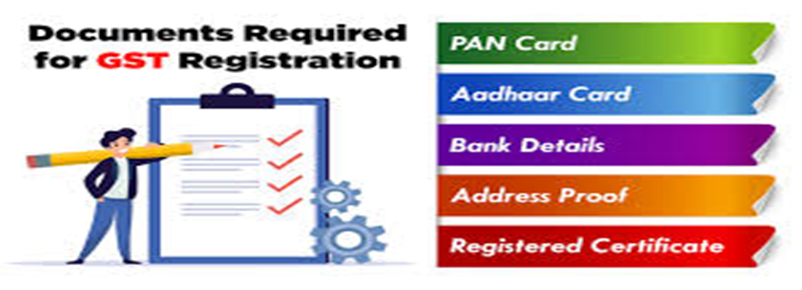
    • Identity Proof: Aadhaar Card and PAN Card
    • Photograph: Proprietor’s image
    • Address Proof: Rent agreement, NOC, or utility bills
    • Bank Proof: Cancelled cheque or passbook copy

    Step 4: Aadhaar Authentication

    An Aadhaar-based e-KYC verification is required. Successful verification may eliminate physical inspection.

    Step 5: Officer Verification

    An officer reviews your application. If needed, a clarification notice (REG-03) is issued, which must be answered within 7 working days.

    Step 6: GSTIN Generation

    Upon approval, your GSTIN and Registration Certificate (Form REG-06) are issued. Download and display it at your place of business.


    How Does Lawizer Make the Process Seamless?

    GST registration can be complex, and errors often lead to delays. Lawizer connects business owners with professionals like Chartered Accountants and Company Secretaries to simplify the process.

    Why Choose Lawizer?

    • Expert Oversight: Ensures documentation meets government standards.
    • Fast Response: Provides quick consultations.
    • Virtual Office Solutions: Helps with business address documentation.
    • Query Handling: Experts manage government notices and responses.
    • Affordable: Free consultation with transparent pricing.

    Get GST Registered Without Hassle. Choose Lawizer Today!


    Frequently Asked Questions

    What is Central GST (CGST)?

    A: CGST is the tax levied by the Central Government on intra-state transactions.

    What is State GST (SGST)?

    A: SGST is the tax levied by the State Government on intra-state transactions.

    What is Integrated GST (IGST)?

    A: IGST applies to inter-state transactions and is collected by the Central Government.

    Are there fees for registration?

    A: While the government portal is free, Lawizer charges a service fee for handling documentation and filing.

    How long does the process take?

    A: Typically, GSTIN is issued within 3 to 10 working days after successful Aadhaar authentication.

    Is Lawizer a registered company?

    A: Yes. Lawizer is an initiative of Zeptus Private Limited, a registered entity in India.

  • Why Your Brand Needs Trademark Registration in India Today?

    In the hyper-competitive Indian market, your brand name isn’t just a label—it is a vital business asset.

    Many founders make the mistake of thinking a Domain Name or a Company Registration (RoC) gives them ownership of their brand.

    However, in the eyes of Indian law, a domain name is merely an address, and a RoC provides a legal identity but zero Intellectual Property (IP) protection.

    Without a registered trademark, you are building your business on a weak foundation. Lawizer, a leading legal-tech platform, offers the most efficient way to secure your brand.


    1. The Shield and Sword of Your Business:

    A trademark acts as both a defensive shield and an offensive sword under the Trade Marks Act, 1999. Registration grants you the exclusive right to use your brand name, logo, and tagline nationwide.

    • The Shield: It prevents others from feeding on your hard-earned reputation.
    • The Sword: It gives you the legal power to sue copycats who try to confuse your customers with similar-sounding names.

    2. The Power of the ® Symbol:

    The transition from a “TM” to an ® is more than just a character change; it’s a global signal of authenticity and trust.

    • Exclusive Rights: Grants sole legal authority to use your brand identity.
    • Statutory Weight: Provides the necessary legal standing to win infringement cases quickly.
    • Marketplace Entry: Most major e-commerce platforms and government tenders require a registered trademark for onboarding.

    3. Business Expansion and Franchising:

    If you plan to scale, franchise, or license your brand, trademark registration is mandatory.

    Investors and partners are more likely to fund brands with secured legal protection. A registered trademark allows you to enter “e-commerce” and international markets without the fear of brand theft.

    Costs and Duration to Register:

    • Affordability: Government charges are concessional for startups, individuals, and small enterprises.
    • Validity: Protection lasts for 10 years and is renewable indefinitely.
    • Timeline: The process typically takes 12 to 18 months.

    Key Industries Powered by Trademark Registration

    Trademarking is a strategic asset across these high-growth sectors:

    IndustryWhy It Matters
    Consumer GoodsPrevents “look-alike” products in crowded markets.
    Food & BeverageProtects unique packaging and brand names.
    HealthcareEnsures trust and stops dangerous counterfeit products.
    Tech & SoftwareSecures identity in fast-moving, innovative sectors.
    Luxury & FashionPreserves exclusivity by stopping counterfeiters.

    Key Industries Powered by Trademark Registration

    Trademarking is a strategic asset across these high-growth sectors:

    IndustryWhy It Matters
    Consumer GoodsPrevents “look-alike” products in crowded markets.
    Food & BeverageProtects unique packaging and brand names.
    HealthcareEnsures trust and stops dangerous counterfeit products.
    Tech & SoftwareSecures identity in fast-moving, innovative sectors.
    Luxury & FashionPreserves exclusivity by stopping counterfeiters.

    Key Industries Powered by Trademark Registration

    Trademarking is a strategic asset across these high-growth sectors:

    IndustryWhy It Matters
    Consumer GoodsPrevents “look-alike” products in crowded markets.
    Food & BeverageProtects unique packaging and brand names.
    HealthcareEnsures trust and stops dangerous counterfeit products.
    Tech & SoftwareSecures identity in fast-moving, innovative sectors.
    Luxury & FashionPreserves exclusivity by stopping counterfeiters.

    Key Industries Powered by Trademark Registration

    Trademarking is a strategic asset across these high-growth sectors:

    IndustryWhy It Matters
    Consumer GoodsPrevents “look-alike” products in crowded markets.
    Food & BeverageProtects unique packaging and brand names.
    HealthcareEnsures trust and stops dangerous counterfeit products.
    Tech & SoftwareSecures identity in fast-moving, innovative sectors.
    Luxury & FashionPreserves exclusivity by stopping counterfeiters.

    How Lawizer Simplifies the Process:

    Lawizer, an initiative of Zeptus Pvt Ltd, makes the journey from “TM” to “®” easy and stress-free.

    Lawizer Prerequisites:

    To get started, you will need the following documents:

    For Individuals / Startups / MSMEs:
    • Applicant’s PAN Card & Aadhaar
    • Address Proof
    • MSME/Udyam Certificate (for a 50% government fee concession)
    For Companies / LLPs / Partnerships:
    • Incorporation Certificate / Partnership Deed
    • PAN Card of the Entity
    • TM-48 Form (Authorizes our legal experts)

    What You Receive Through the Lawizer Portal:

    1. Instant TM Number: Use the “TM” symbol immediately after filing.
    2. Objection Management: Our experts handle “Examination Reports” to keep your application moving.
    3. Emergency SOS Button: Connect with an advocate within 2-3 minutes for urgent help.
    4. Free Consultation: Expert guidance for all first-time users.

    Conclusion: Legitimizing Your Innovation:

    In the “move fast and break things” culture of startups, don’t let your brand equity be the thing you break. Trademark registration is a business asset that increases your valuation during funding rounds.

    Secure Your Brand Today:

    Stop wondering if your brand is safe. Get expert guidance and end-to-end support with Lawizer. We’ll get back to you within 24 hours.

    Frequently Asked Questions (FAQs):

    Q1. Can I register a domain name as a trademark?

    A: Yes. If customers identify your service through your URL (e.g., Lawizer.com), the domain itself can be your trademark.

    Q2. What is the benefit of MSME/Udyam Registration?

    A: It is a massive cost-saver. Filing fees are ₹9,000 for companies but only ₹4,500 for MSMEs/Startups. Lawizer helps you leverage these concessions.

    Q3. How do I handle an “Objection”?

    A: Objections are common. Lawizer provides end-to-end support for these hearings, drafting the necessary legal counter-statements for you.

    Q4. Is Lawizer a registered company?

    A: Yes. Lawizer is an initiative of Zeptus Private Limited, a registered entity in West Bengal, India.

    Q5. Is Lawizer a law firm?

    A: No, Lawizer is a digital legal platform that connects you with qualified and verified lawyers. It does not provide legal advice directly.