
Introduction

For the modern Indian entrepreneur, “Labor Law Compliance” often evokes images of dusty registers, surprise inspections, and mountain-high paperwork.
However, as India moves toward a more digitized and pro-business regulatory environment, the Self-Certification Scheme has emerged as a game-changer.
In 2026, self-certification is no longer just an alternative; it is the gold standard for startups and MSMEs looking to scale without the friction of traditional inspections.
This guide explains how you can leverage self-certification to simplify your compliance roadmap.
What is the Self-Certification Scheme?
Self-certification is a simplified compliance mechanism that allows employers to certify their own adherence to various labor laws through an online portal.
Instead of routine physical inspections by labor officers, businesses provide a legal undertaking confirming that they comply with statutory requirements.
The Startup India Advantage
Under the Startup India Action Plan, recognized startups can self-certify compliance for 9 labor laws and 3 environmental laws.
For the first 3 to 5 years, startups are exempt from inspections unless a credible written complaint is filed.
Key Labor Laws Covered Under Self-Certification
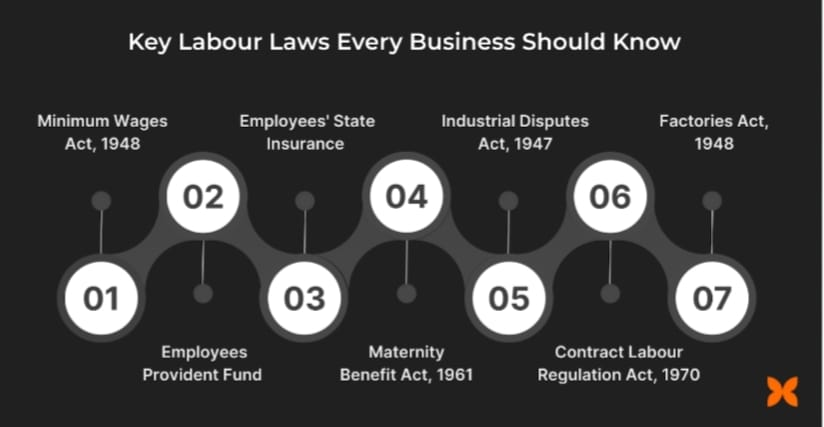
The central framework generally covers the following major labor laws:
- The Building and Other Construction Workers Act, 1996: Regulates safety and welfare of construction workers.
- The Inter-State Migrant Workmen Act, 1979: Protects rights of workers employed across states.
- The Payment of Gratuity Act, 1972: Governs employee retirement benefits.
- The Employees’ Provident Funds Act, 1952: Managed by the EPFO.
The Shift to the Shram Suvidha Portal
The Shram Suvidha Portal, launched by the Ministry of Labour & Employment, acts as a unified compliance platform.
It provides a single window for multiple labor law requirements.
- LIN Generation: Every business gets a unique Labour Identification Number.
- Online Returns: File a unified annual return covering multiple laws.
- Transparent Inspections: Inspections are randomized through a system-based algorithm.
How to Apply for Self-Certification
Step 1: DPIIT Recognition
Startups must obtain DPIIT recognition to access self-certification benefits and inspection exemptions.
Step 2: Register on Shram Suvidha Portal
Register using your PAN and business details on the Shram Suvidha Portal and activate your LIN.
Step 3: File Unified Annual Return
Submit the Unified Annual Return (UAR) instead of filing multiple returns for EPF, ESI, and other laws.
Why Self-Certification is the Best Strategy in 2026
The shift from “Inspector Raj” to “Self-Regulation” offers significant advantages:
- Cost Efficiency: Reduces reliance on manual compliance consultants.
- Risk Control: Encourages internal audits and reduces violations.
- Investor Confidence: Clean compliance history improves due diligence outcomes.
How Lawizer Simplifies the Process

Managing multiple compliance portals can be complex. Lawizer simplifies this through an automated legal-tech platform.
It integrates with government systems to track deadlines, auto-fill returns, and maintain audit-ready records.
Why Choose Lawizer?
- Automated Compliance: Reduces manual effort.
- Deadline Tracking: Never miss filings.
- Audit-Ready Records: Maintain digital registers.
- Centralized Dashboard: Manage all compliance in one place.
Simplify compliance and scale your business with Lawizer.
Conclusion: The Era of Informed Compliance
Self-certification represents a shift toward trust-based governance and digital compliance.
By adopting modern tools and government platforms, businesses can focus on growth rather than administrative burden.
Frequently Asked Questions
Does self-certification eliminate inspections?
A: No. Routine inspections are removed, but complaint-based inspections can still occur.
Is self-certification available for all industries?
A: Most service-based and non-hazardous businesses qualify. Hazardous industries may still require inspections.
Can EPF and ESI be self-certified?
A: Yes. Compliance can be managed through the unified portal, though contributions must be paid regularly.