Tag: startup India

  • Private Limited Company Registration Cost in India: Full Breakdown

    Private Limited Company Registration Cost in India: Full Breakdown

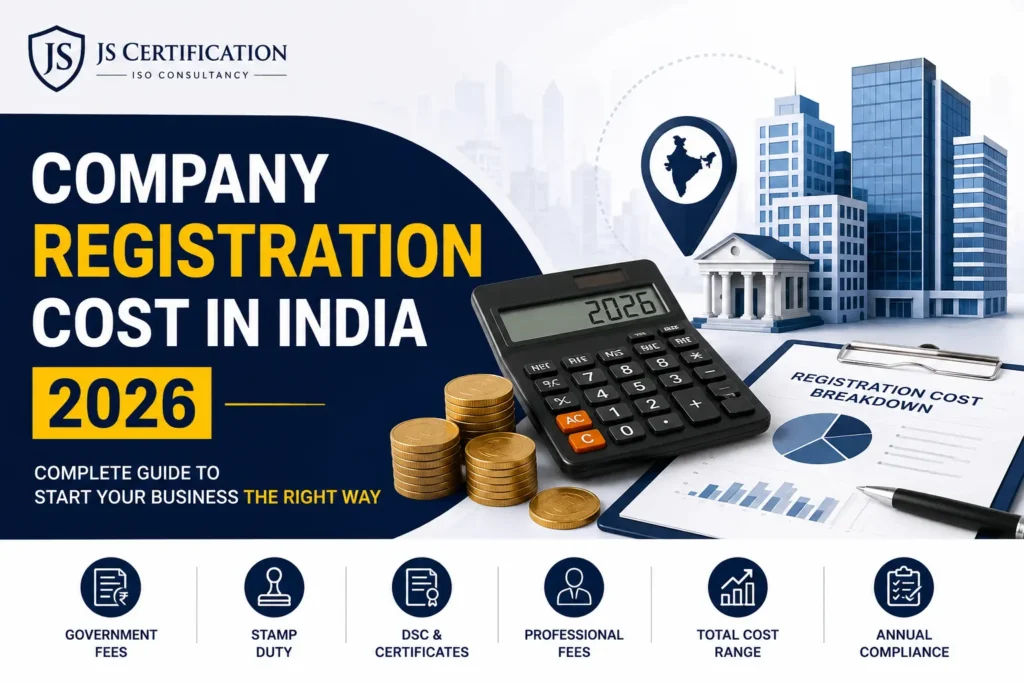
    Over 2.8 million companies are registered in India — and a huge chunk of founders still don’t know what they actually paid for. The private limited company registration cost in India isn’t a single fixed number. It’s a stack of four completely different charges, and most service providers quote only one of them upfront.

    Here’s the thing: if you don’t understand the breakdown, you will get surprised — every single time.

    📌 TL;DR: The private limited company registration cost in India typically falls between ₹10,000 and ₹35,000 all-in. For startups with authorised capital up to ₹15 lakh, the MCA government fee on SPICe+ is currently zero — your actual costs are stamp duty (₹400–₹2,000 depending on state), Digital Signature Certificates (₹1,500–₹2,500 per director), and professional fees (₹5,000–₹18,000). Lawizer handles the entire SPICe+ process transparently, fully online, with no hidden charges.

    What You’ll Learn

    • The four cost components that make up your total private limited company registration cost — and how to read any service provider’s quote
    • Exact MCA government fees, stamp duty rates by state, DSC costs, and professional fee ranges for 2025
    • A worked cost example for Delhi, Maharashtra, and West Bengal so you can budget before you file
    • Post-incorporation costs most founders completely miss (and what they’ll cost you if you ignore them)
    • Common billing mistakes that quietly inflate your total registration bill

    Why the “One Number” Quote Always Misleads Founders

    Ask ten consultants what private limited company registration costs in India, and you’ll get ten different answers — anywhere from ₹5,000 to ₹50,000. That’s not because anyone is lying. It’s because every quote slices the cost differently. Some include government fees. Some don’t. Some quote professional fees exclusive of GST. Some bury DSC costs inside a “convenience charge.” The only way to audit any quote is to separate the four buckets before you hand over a rupee.

    Let’s break this down. Every pvt ltd registration bill has four distinct components: MCA government fees, state stamp duty, Digital Signature Certificate fees, and professional fees. They’re governed by different rules, payable to different authorities, and they vary for completely different reasons. Treating them as one lump sum is exactly how founders get overcharged — or underprepared when the final invoice arrives.

    The Four Cost Buckets at a Glance

    • MCA Government Fees: Paid to the Ministry of Corporate Affairs (MCA) via the SPICe+ (Simplified Proforma for Incorporating Company Electronically Plus — MCA’s integrated online incorporation form) portal. Currently zero for companies with authorised capital up to ₹15 lakh.
    • Stamp Duty: Levied by your state government on the MOA (Memorandum of Association) and AOA (Articles of Association). Collected digitally through the MCA portal. Varies significantly state to state.
    • DSC Fees: Each proposed director needs a Class 3 Digital Signature Certificate from a CCA-licensed authority before any form can be filed. Costs ₹1,500–₹2,500 per person.
    • Professional Fees: What a CA, CS, or legaltech platform like Lawizer charges to handle name reservation, MOA/AOA drafting, SPICe+ filing, and post-incorporation support. This is the most variable item — and the one most worth comparing carefully.
    Startup India Registration | DPIIT Registration for Startups

    MCA Government Fees: The SPICe+ Slab Structure (2025)

    Here’s the short answer most founders don’t expect: if you’re registering a private limited company with authorised share capital up to ₹15 lakh, the MCA filing fee on SPICe+ is currently zero.

    The government progressively reduced these fees to encourage formalisation of Indian businesses, and for the overwhelming majority of early-stage startups — whether in Bengaluru, Kolkata, Mumbai, or Delhi — the statutory MCA charge is nil. PAN and TAN are issued alongside your Certificate of Incorporation at no additional cost. Director Identification Numbers (DINs) for up to three proposed directors are also allotted free within SPICe+.

    What most founders miss: the fee kicks in only once authorised capital crosses ₹15 lakh. A quick example: incorporate with ₹25 lakh authorised capital and you pay ₹2,000 in MCA fees. Push it to ₹50 lakh and fees scale further per the Companies (Registration Offices and Fees) Rules, 2014. The practical implication?

    Start with ₹1 lakh authorised capital — which is the minimum and the most common choice for Indian startups — and pay zero to the MCA. You can always pass a board resolution to increase authorised capital later via Form SH-7 when you actually need it.

    SPICe+ Fee Slabs (Companies Act 2013)

    Authorised Share CapitalMCA Filing Fee (SPICe+)
    Up to ₹15,00,000Nil
    ₹15,00,001 to ₹25,00,000₹2,000
    ₹25,00,001 to ₹1,00,00,000₹2,000 + ₹200 per ₹10,000 above ₹25 lakh
    Above ₹1,00,00,000As per graduated slab (Schedule X, Fees Rules)

    Stamp Duty: The Most Misunderstood Cost in Pvt Ltd Registration

    Stamp duty is where your state of registered office has the biggest impact on your total private limited company registration cost — and it’s the line item most online cost calculators quietly understate. It’s levied on your MOA and AOA under the respective State Stamp Act or the Indian Stamp Act, 1899 (as applicable in Union Territories).

    The good news: since MCA V3 launched, stamp duty is collected digitally through the MCA portal at the time of SPICe+ submission. The portal detects your registered office state, calculates the applicable duty, and collects it in a single payment. No Sub-Registrar visit. No physical stamp paper. No separate queue.

    The not-so-good news: stamp duty varies widely. Delhi charges roughly ₹400 total on MOA and AOA for a ₹1 lakh authorised capital company. Maharashtra charges ₹1,500–₹2,000 for the same structure. Punjab is among the highest-duty states in the country.

    If you genuinely have flexibility on your registered office location — say you’re a remote-first startup — this is worth calculating before you file, because a ₹1,500 difference is real money at the seed stage.

    Indicative State-Wise Stamp Duty (₹1 Lakh Authorised Capital, Pvt Ltd)

    StateApprox. Stamp Duty (MOA + AOA)
    Delhi (UT)~₹400
    Haryana~₹1,000
    Karnataka~₹1,500
    Maharashtra~₹1,500–₹2,000
    Tamil Nadu~₹1,500
    West Bengal~₹1,000–₹1,200
    Punjab~₹5,000–₹8,000 (significantly higher)

    Note: Figures are indicative for the most common scenario (₹1 lakh authorised capital, private company limited by shares). Verify exact rates on the MCA portal during SPICe+ filing, as state schedules are revised periodically.

    Company Registration Cost in India (2026 Guide). Private Limited, LLP & OPC  Fees Explained | ArthSetu Blog

    DSC and Professional Fees: The Real Variables in Your Budget

    Every proposed director needs a Class 3 DSC (Digital Signature Certificate — a government-recognised electronic signature used to sign MCA filings, issued by a CCA-licensed Certifying Authority under the Information Technology Act 2000).

    Class 2 DSCs were discontinued with effect from January 2021 and are invalid for MCA filings. Budget ₹1,800–₹2,500 per director for a two-year DSC. A typical two-director startup needs two DSCs — so ₹3,600–₹5,000 total for this line item.

    Always buy a two-year validity certificate. The marginal cost difference over a one-year DSC is ₹200–₹500, but it saves you the hassle of renewal before your first ROC (Registrar of Companies) annual filing cycle completes.

    Professional fees are the most variable component — and the one most worth scrutinising. A standard end-to-end service that covers name search, MOA/AOA drafting, SPICe+ filing, PAN/TAN, and Certificate of Incorporation typically ranges from ₹5,000 to ₹18,000 depending on the provider, complexity, and the number of directors.

    Platforms like Lawizer’s company incorporation service handle this fully online, giving you a transparent fixed quote rather than per-form pricing.

    One critical thing to ask every provider: is GST included? Professional service fees attract 18% GST — that’s an additional ₹900–₹3,240 on a ₹5,000–₹18,000 professional fee, and it’s legally non-negotiable. Government fees and DSC costs do not attract GST.

    Professional Fee Ranges by Service Tier

    • Budget / DIY-Assist (₹3,000–₹6,000): You handle document drafting; the service provider only files. High risk of MCA queries and rejection if MOA/AOA are thin or incorrect.
    • Standard End-to-End (₹8,000–₹18,000): Covers name reservation, MOA/AOA drafting, SPICe+ filing, PAN/TAN, Certificate of Incorporation, and basic post-incorporation support.
    • Premium Bundled (₹18,000–₹35,000+): Includes trademark availability search, bank account assistance, MSME/Udyam registration, GST registration, and 6–12 months of compliance support.

    Complete Cost Examples: Delhi, Maharashtra, and West Bengal

    What most founders miss: seeing the full four-component bill laid out in one place before they commit to a service provider. Here are three worked examples for the most common startup scenario — a private limited company with ₹1 lakh authorised capital and two directors, using a standard end-to-end professional service.

    Delhi (UT) — ₹1 Lakh Authorised Capital, 2 Directors

    Cost ComponentAmount
    MCA SPICe+ Filing Fee (capital ≤ ₹15 lakh)₹0
    Stamp Duty — MOA + AOA (Delhi)~₹400
    2 × Class 3 DSC (2-year)~₹4,000
    Professional Fee (end-to-end SPICe+, MOA/AOA drafting)~₹10,000
    GST on Professional Fee @ 18%~₹1,800
    Estimated Total~₹16,200

    Maharashtra — ₹1 Lakh Authorised Capital, 2 Directors

    Cost ComponentAmount
    MCA SPICe+ Filing Fee₹0
    Stamp Duty — MOA + AOA (Maharashtra)~₹1,500–₹2,000
    2 × Class 3 DSC (2-year)~₹4,000
    Professional Fee~₹12,000
    GST on Professional Fee @ 18%~₹2,160
    Estimated Total~₹19,660–₹20,160

    West Bengal — ₹1 Lakh Authorised Capital, 2 Directors

    Cost ComponentAmount
    MCA SPICe+ Filing Fee₹0
    Stamp Duty — MOA + AOA (West Bengal)~₹1,000–₹1,200
    2 × Class 3 DSC (2-year)~₹4,000
    Professional Fee~₹10,000
    GST on Professional Fee @ 18%~₹1,800
    Estimated Total~₹17,000–₹17,200

    Post-Incorporation Costs Most Founders Forget to Budget

    Registration is the start, not the finish. The SPICe+ form — through its sub-form AGILE-PRO-S — integrates GSTIN, EPFO, ESIC, and even bank account opening at zero additional government fee. Use it. But there are several costs that kick in soon after incorporation that most founders only discover when they get an email they didn’t expect.

    Within 30 days of incorporation, you must appoint a statutory auditor and file Form ADT-1 with the ROC. Within 60 days, directors must deposit subscribed share capital into the company bank account and issue share certificates — delays attract penalties under the Companies Act 2013.

    Annual compliance (Form AOC-4 for financial statements and Form MGT-7 for annual return) must be filed every year; late filing attracts ₹100 per day per form with no upper limit, which is a genuinely painful penalty that catches new founders off-guard.

    If you plan to protect your brand, trademark registration costs ₹4,500–₹9,000 per class depending on applicant type. And if you qualify as a micro or small enterprise, MSME Udyam registration is completely free and unlocks priority lending, government tender eligibility, and reduced trademark fees — do it on Day 2.

    Key Post-Incorporation Costs at a Glance

    • GST Registration: Free on the GSTN portal. Mandatory once turnover crosses ₹20 lakh (services) or ₹40 lakh (goods), or from Day 1 for inter-state supply.
    • Trademark Registration: ₹4,500 per class (MSME/startup/individual applicants), ₹9,000 per class (others). File early — trademark priority runs from the filing date.
    • MSME (Udyam) Registration: Zero cost. Takes 20 minutes online at udyamregistration.gov.in.
    • Statutory Audit: Budget ₹5,000–₹15,000 per year for early-stage companies, plus monthly accounting/bookkeeping of ₹3,000–₹8,000/month from Month 1.
    • Annual Compliance (ROC Filing): AOC-4 + MGT-7 filings. Late filing penalty is ₹100/day per form — no cap. File on time, every time.

    5 Common Mistakes That Inflate Your Registration Bill

    A quick example: a Bengaluru founder once incorporated with ₹10 lakh authorised capital because the consultant said “more capital looks credible.” The MCA fee was still zero, but the stamp duty on the AOA — which scales with authorised capital in Karnataka — was meaningfully higher than it would have been at ₹1 lakh. That’s a completely avoidable expense.

    Here are the five mistakes that consistently inflate the private limited company registration cost in India.

    • Over-capitalising at incorporation: Start with ₹1 lakh authorised capital. Increase it later via Form SH-7 only when you actually need it. Inflating capital upfront raises stamp duty and serves no practical purpose for a seed-stage company.
    • Accepting per-form billing: Once you’re in the MCA system, unscrupulous consultants can raise separate invoices for each form — DIN, SPICe+, MOA/AOA, PAN/TAN. Insist on a single fixed, itemised quote before you begin.
    • Ignoring GST on professional fees: An ₹8,000 professional fee quote that doesn’t mention GST is actually a ₹9,440 outflow. Always ask: inclusive or exclusive of GST?
    • Buying Class 2 DSCs from outdated resellers: Class 2 DSCs are invalid for MCA filings since January 2021. Confirm you’re buying a Class 3, IND (Individual) DSC with a USB token, valid for at least two years.
    • Not registering MSME on Day 2: MSME (Udyam) registration is free, takes 20 minutes, and unlocks meaningful benefits — including a reduced trademark fee of ₹4,500 per class vs ₹9,000. Most founders delay this for months and pay full trademark fees unnecessarily.

    Frequently Asked Questions

    Q: What is the total cost to register a private limited company in India in 2025?

    A: The total private limited company registration cost in India typically ranges from ₹10,000 to ₹35,000 all-in, covering MCA government fees (currently zero for authorised capital up to ₹15 lakh), state-specific stamp duty (₹400–₹2,000 for most states on ₹1 lakh capital), Class 3 Digital Signature Certificates for each director (₹1,500–₹2,500 per person), and professional fees for drafting and filing (₹5,000–₹18,000). GST at 18% applies on professional fees only. Government fees and DSC costs are GST-exempt.

    Q: Is there any government fee to register a pvt ltd company in India?

    A: For companies with authorised share capital up to ₹15 lakh, the MCA filing fee on the SPICe+ form is currently zero under the government’s startup-friendly fee structure. Stamp duty on the MOA and AOA still applies and varies by state — it ranges from roughly ₹400 (Delhi) to ₹8,000+ (Punjab) for a ₹1 lakh capital company. PAN, TAN, and DINs for up to three directors are allotted free within SPICe+.

    Q: Does stamp duty differ from state to state for company registration?

    A: Yes, significantly. Stamp duty on the MOA and AOA is governed by each state’s Stamp Act and varies by both state and authorised capital amount. It’s collected automatically through the MCA V3 portal at the time of filing — you don’t visit a stamp office. Delhi charges around ₹400, Karnataka around ₹1,500, Maharashtra around ₹1,500–₹2,000, and Punjab significantly more, all for the same ₹1 lakh authorised capital structure. Founders with a choice of registered office location should factor this in.

    Q: What is a DSC and why is it required for company registration?

    A: A DSC, or Digital Signature Certificate, is a government-recognised electronic signature issued by a Certifying Authority (CA) licensed under the Information Technology Act 2000. Every proposed director and subscriber to the MOA must hold a valid Class 3 DSC before any SPICe+ form can be filed with the MCA. Class 2 DSCs were discontinued in January 2021. A Class 3 individual DSC costs ₹1,500–₹2,500 depending on validity period and issuing authority. A two-year certificate is recommended to avoid renewal before your first annual ROC filing.

    Q: Can I register a private limited company without a CA or CS?

    A: Technically yes — the MCA21 portal is publicly accessible. But incorrectly drafted MOA/AOA, wrong object clauses, or mismatched DIN details are the most common reasons SPICe+ forms get rejected or raise MCA queries, which means resubmissions and delays. A rejected or defective application doesn’t mean a refund of government fees already paid. Most founders find that a professional platform handling the end-to-end process is significantly cheaper than fixing a self-filed mistake after the fact.

    Q: What happens if I don’t file annual compliance on time after registration?

    A: Every private limited company must file Form AOC-4 (financial statements) and Form MGT-7 (annual return) with the Registrar of Companies each year. Missing these deadlines triggers a penalty of ₹100 per day per form — with no upper limit under the Companies Act 2013. A 60-day delay on both forms costs ₹12,000 in late fees alone. Persistent non-compliance can also result in director disqualification and notices from the ROC, which are significantly more expensive to resolve.

    Ready to register your private limited company?
    Lawizer’s experts handle everything — company incorporation, MSME/Udyam registration, trademark filing — fully online, with a transparent fixed quote. No CA visit needed.

    Start Your Company Registration with Lawizer →

  • Solopreneur to Startup: When Exactly Should You Formally Incorporate?

    Solopreneur to Startup: When Exactly Should You Formally Incorporate?

    Most Indian freelancers cross ₹20 lakh in billings before they’ve even opened a current account for the business. That’s the exact point the law starts asking questions — and it’s usually the point founders start googling “when to incorporate company in India” at 1 a.m.

    Here’s the thing. Incorporating too early wastes money on compliance for a business that hasn’t proven itself. Incorporating too late costs you a client, a co-founder, or an investor. There’s a narrow window where it actually makes sense — and it’s rarely “day one.”

    📌 TL;DR: You don’t need to incorporate on day one — a sole proprietorship is legal, requires no registration, and works fine until you hit specific triggers: ₹20 lakh in annual turnover (GST becomes mandatory), an investor writing a cheque, a co-founder wanting a formal equity split, or an enterprise client demanding a company PAN. Below that point, incorporating a private limited company just adds ₹35,000–₹60,000 a year in compliance cost for a business that hasn’t earned it yet. Lawizer can set up the right structure — Pvt Ltd, OPC, or LLP — once you actually hit one of these signals.

    What You’ll Learn

    • Why registering a Pvt Ltd too early actually costs you money
    • The exact revenue, client, and funding signals that mean it’s time
    • Sole proprietorship vs OPC vs LLP vs Pvt Ltd — which fits your stage
    • Where GST and MSME registration fit into this timeline

    The Real Cost of Incorporating Too Early

    A lot of first-time founders register a Private Limited Company (a separate legal entity recognised by the Ministry of Corporate Affairs, or MCA) in their very first month, often because a CA friend suggested it or a WhatsApp forward made proprietorships sound risky.

    What most founders miss: a Pvt Ltd requires a statutory auditor from day one, annual ROC filings, ITR-6 returns, and DIN renewal — regardless of whether the company made ₹5 lakh or ₹0 in revenue that year.

    Realistic annual compliance for a small Pvt Ltd runs close to ₹35,000–₹60,000, even before you’ve validated whether anyone wants what you’re building. Compare that to a sole proprietorship, which needs no formal registration at all — you can start invoicing clients under your own PAN the same day you decide to freelance seriously.

    The short answer: build first, prove the business works, then incorporate. A structure doesn’t make a business real — revenue does.

    The Signals That Actually Mean It’s Time

    Instead of a calendar date, use triggers. Here’s what most founders who incorporate at the right time have in common:

    • You’re nearing ₹20 lakh in annual turnover. That’s the GST registration threshold for service providers in most states (₹40 lakh for goods, ₹10 lakh in special category states). Past this point, you’re a taxable entity whether or not you’ve incorporated.
    • A co-founder wants a documented equity split. You can’t issue shares without a company. This is the single most common reason two-person teams incorporate earlier than solo founders.
    • An investor is ready to wire money. Angel or institutional investors need a company bank account and a cap table — neither exists without incorporation.
    • An enterprise client’s procurement team asks for a “company PAN.” Large B2B buyers frequently can’t onboard an individual vendor, regardless of your Udyam or GST status.
    • You’re hiring employee #1 and want to offer ESOPs. Employee stock options only exist within a company structure.

    Notice what’s not on this list: having an idea, building an MVP, or making your first few sales. None of that requires a registered entity yet.

    Sole Proprietorship, OPC, LLP, or Pvt Ltd — Which Fits Your Stage

    Let’s break this down by what you’re actually doing right now, not what you plan to do eventually.

    Solo, under ₹20 lakh, no funding plans

    Stay a sole proprietor. You pay tax under your individual slab rate, not a flat corporate rate, and there’s no separate compliance calendar to track. A Udyam (MSME) registration is worth getting even at this stage — it costs almost nothing, helps you open a current account, and qualifies you for priority-sector lending later.

    Solo, corporate or international clients, liability-sensitive work

    Consider a One Person Company (OPC) — a company structure built specifically for single founders that still gives you limited liability and a distinct legal identity. IT consultants, SaaS builders, and agency owners working with larger clients often move here before they ever bring on a co-founder.

    Two or more founders, no funding yet

    An LLP (Limited Liability Partnership) is usually the better first move. It gives you a formal ownership split and limited liability without the statutory audit requirement that applies to Pvt Ltds from day one — LLPs only need an audit once turnover crosses ₹40 lakh.

    Raising money or planning to issue ESOPs

    This is when a Private Limited Company earns its cost. It’s the only structure investors will fund, the only one that supports employee stock options cleanly, and it comes with a genuine tax upside: domestic companies opting for the concessional regime under Section 115BAA of the Income Tax Act pay an effective rate of 25.17%, against individual slab rates that hit 30% plus cess well before ₹15 lakh in profit.

    Where GST and MSME Registration Fit In

    Incorporation and tax registration aren’t the same decision, and mixing them up is where a lot of founders get confused. You need GST registration once your turnover crosses ₹20 lakh (₹10 lakh in special category states) for services, regardless of whether you’re a proprietor, an LLP, or a Pvt Ltd.

    MSME (Udyam) registration is separate again — it’s not mandatory, but it’s fast, free, and worth doing early since it plugs into your income tax filings automatically.

    If you’re planning to apply for DPIIT recognition under the Startup India scheme — for the three-year tax exemption under Section 80IAC, or access to the Seed Fund Scheme — note that only Private Limited Companies and LLPs are eligible.

    Sole proprietorships and OPCs don’t qualify for this particular benefit, which is worth factoring in if government schemes are part of your growth plan.

    Making the Switch Without Losing Time

    Once you’ve hit a genuine trigger, converting from proprietor to a registered company isn’t a same-day process — it typically takes 7 to 21 business days depending on name approval and documentation.

    The company needs to formally take over your existing contracts, assets, and client relationships through a business transfer agreement, and your GST, PAN, and bank accounts all need updating to the new entity’s name.

    What most founders miss here: starting this conversion a few weeks before you actually need it — before the investor’s cheque is due, before the enterprise contract’s start date — saves you from scrambling. A company incorporation that’s rushed under deadline pressure is where documentation errors creep in.

    Frequently Asked Questions

    Q: Do I need to register my business before I start freelancing in India?

    A: No. You can invoice clients, accept payments, and pay income tax under your own PAN as a sole proprietor without any formal registration. You only need to register for GST once your turnover crosses ₹20 lakh a year (₹10 lakh in a few special category states).

    Q: What’s the minimum revenue before I should think about a Pvt Ltd?

    A: There’s no fixed number, but most founders find it makes sense once they’re consistently earning ₹1–1.5 lakh a month, are approaching the ₹20 lakh GST threshold, or have a specific trigger like investor funding or an enterprise contract. Below that, a Pvt Ltd’s compliance cost usually outweighs the benefit.

    Q: Can I convert my sole proprietorship into a private limited company later?

    A: Yes. You incorporate a new Pvt Ltd and then transfer the existing business’s assets, liabilities, and contracts to it through a business transfer agreement. The process usually takes 7–21 business days, and losses from the proprietorship generally can’t be carried forward into the new company.

    Q: Is a one person company (OPC) better than a sole proprietorship?

    A: An OPC gives you limited liability and a separate legal identity, which a sole proprietorship doesn’t — useful if you work with corporate clients or carry contractual risk. But it comes with more compliance than a proprietorship, so it’s usually a step you take once liability protection actually matters to your business.

    Ready to incorporate at the right time?
    Lawizer’s experts handle Pvt Ltd, OPC, and LLP incorporation, GST registration, and MSME/Udyam registration — fully online, starting at just ₹1,999. No CA visit needed.

    Get your business incorporated →

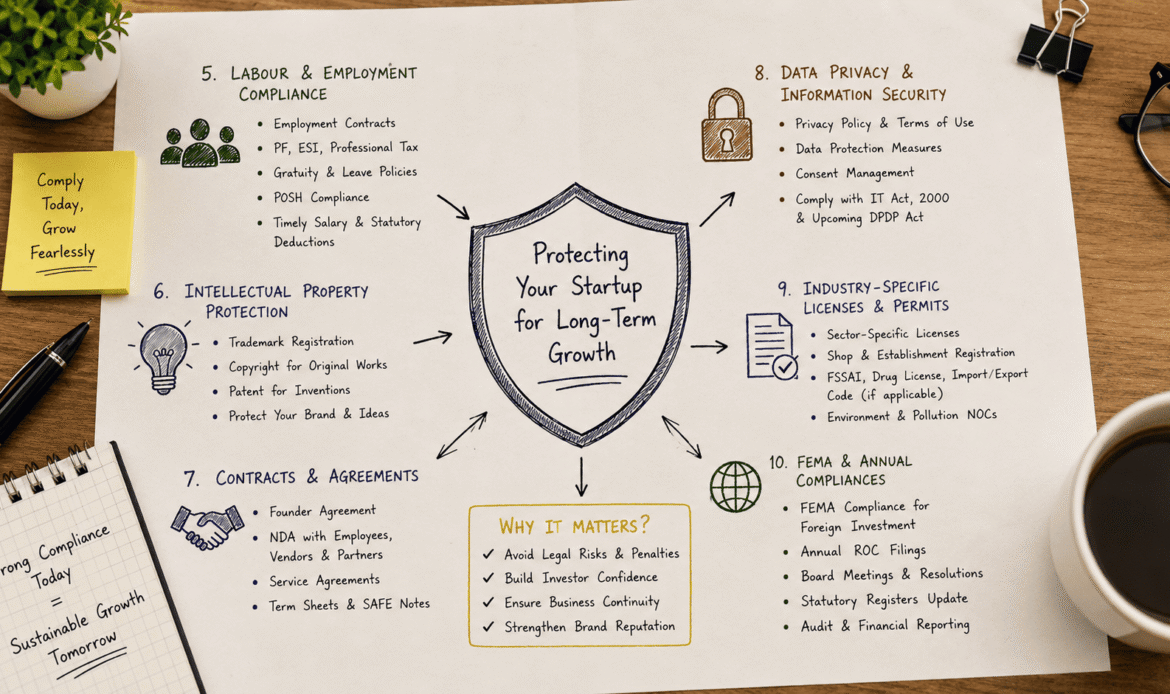
  • Why Compliance Gaps Kill Startup Funding Rounds in India

    Why Compliance Gaps Kill Startup Funding Rounds in India

    A 2025 study on Indian fintech due diligence found that 73% of failed deals traced back to regulatory gaps — missed licences, KYC lapses, and messy cross-border filings. If you’re heading into a funding round, compliance gaps are the single most preventable reason term sheets fall apart.

    Investors don’t walk away because your product is weak. They walk away because your paperwork doesn’t match your story.

    📌 TL;DR: Indian startups routinely lose funding rounds over compliance gaps like missed MCA filings, unassigned IP, undocumented ESOPs, and a cap table that doesn’t match the Registrar of Companies’ records. Investors treat these as governance red flags, not paperwork errors, and they either cut valuation, add protective clauses, or exit the deal entirely. Lawizer helps founders fix these gaps — incorporation, GST, MSME, and ROC filings — before an investor’s lawyer finds them first.

    What You’ll Learn

    • The specific compliance gaps that most often derail Indian startup funding rounds
    • Why investors treat small filing lapses as governance red flags, not clerical mistakes
    • A practical checklist to get your startup diligence-ready before term sheet stage

    Why Investors Treat Compliance Gaps as Deal-Breakers

    Here’s the thing: investors aren’t auditing your paperwork for fun. A missed filing tells them something bigger — that operational discipline is missing somewhere else too.

    Legal due diligence reports from Indian VC-backed deals show that more than half of failed rounds involve issues around revenue recognition, burn-rate reporting, or undocumented liabilities, not just product or market concerns.

    What most founders miss: compliance records aren’t a formality you clean up before a round. They’re evidence. When your Ministry of Corporate Affairs (MCA) filings, GST returns, and internal cap table all line up without explanation, it shortens diligence timelines and protects your valuation. When they don’t, investors either delay closing, demand indemnities, or walk.

    The Five Compliance Gaps That Kill Indian Funding Rounds

    The short answer: most funding rounds don’t die over one catastrophic issue. They die over a pattern of small, avoidable gaps that pile up in the data room. These are the ones that show up again and again in Indian startup due diligence.

    • Missed ROC filings: AOC-4, MGT-7, and DIR-3 KYC are annual, non-negotiable filings under the Companies Act, 2013. Recent MCA data shows nearly 18% of active startups missed at least one annual form in FY 2024–25, and each miss adds daily penalties plus a red flag in your compliance history.
    • Cap table mismatches: If your internal cap table doesn’t match the Register of Members filed in Form MGT-7, investors treat it as a serious discrepancy — not a typo.
    • Unassigned IP: Under Indian law, intellectual property created by a founder or freelancer belongs to the creator unless it’s formally assigned to the company. Missing IP assignment agreements are one of the most common reasons diligence stalls.
    • Undocumented ESOPs: An ESOP scheme approved informally, without a shareholder special resolution filed via Form MGT-14, is technically unauthorised — and investors will ask you to fix it as a closing condition.
    • GST and TDS mismatches: Delayed GST returns or input tax credit discrepancies trigger automated notices, and investors now expect at least two years of clean tax filing history before they commit.

    How Compliance Gaps Actually Cost You Money and Time

    Let’s break this down. A single missed DPT-3 filing or a deactivated Director Identification Number (DIN) from a skipped DIR-3 KYC doesn’t just cost a penalty. It stalls the entire round while your lawyers scramble to fix it mid-negotiation — and every week of delay is a week where the investor can renegotiate terms or lose interest.

    A quick example: founders preparing for Series A routinely discover, right in the middle of diligence, that unpaid vendor dues weren’t reflected in the books, or that a director loan was never reported on Form DPT-3. Each of these is fixable on its own.

    Together, three or four of them signal weak financial control, and that’s what actually erodes valuation — not the individual filing.

    This is also where MSME Udyam registration matters more than founders expect — investors check it as part of vendor payment compliance, since companies with unresolved MSME dues beyond 45 days face mandatory half-yearly disclosure under Form MSME-1.

    Building a Diligence-Ready Compliance Spine

    What separates startups that close rounds smoothly from those that don’t isn’t luck — it’s a compliance routine that runs quietly in the background, independent of fundraising timelines. Founders who pass due diligence on the first attempt tend to share the same habits.

    Quarterly, not annual, compliance check-ins

    Waiting until a term sheet lands to review your MCA and GST status means you’re fixing years of gaps under time pressure. A quarterly review catches issues while they’re still cheap to correct.

    Every founder and freelancer signs an IP assignment

    This should happen at the point of hiring, not right before a data room goes out. It’s a one-page fix that removes one of the most common deal-breakers investors flag.

    Trademark and brand protection early

    Investors also check whether your core brand assets are actually yours to defend. A trademark registration filed early, through the IP India portal, signals that your intangible assets are protected — something diligence teams increasingly flag when it’s missing.

    Clean, filed tax history

    Investors typically review at least two years of income tax filings during due diligence. Keeping your ITR filings current, alongside GST returns on the GSTN portal, removes an entire category of objections before they surface.

    What to Fix Before Your Next Funding Conversation

    If a round is even loosely on your roadmap for the next six months, start with the three areas that carry the most weight in diligence: your cap table, your IP assignments, and your top statutory filings. These are where ownership and control actually sit, and they’re where investors look first.

    Founders who go through company incorporation and compliance the right way from day one rarely face this scramble. If you incorporated quickly and deferred the paperwork, now is the point to close the gap — before an investor’s counsel finds it for you.

    Frequently Asked Questions

    Q: Can a startup really lose a funding round just because of missed MCA filings?

    A: Yes. Missed filings like AOC-4 or DIR-3 KYC signal weak governance to investors, and combined with other gaps, they can lead to reduced valuation, added protective clauses, or a walked deal. Investors view MCA filing history as a direct proxy for how disciplined a founding team is.

    Q: What compliance documents do investors ask for first?

    A: Investors typically start with MCA incorporation and filing records, the cap table with supporting Form PAS-3 filings, board meeting minutes, IP assignment agreements, and GST or income tax filing history. These form the baseline before deeper legal and financial due diligence begins.

    Q: How early should we start compliance clean-up before raising funds?

    A: Most advisors recommend starting three to six months before you plan to raise, since fixing statutory gaps, reconciling cap tables, and completing IP assignments takes time. Startups that maintain investor-ready records year-round avoid this scramble entirely.

    Q: Is an unregistered trademark actually a funding risk?

    A: Yes, especially for consumer or brand-led startups. Investors want assurance that your core brand identity is legally defensible, and an unregistered trademark leaves your most valuable intangible asset exposed to disputes or copycats after the round closes.

    Q: Do informal ESOP promises to early employees cause problems during diligence?

    A: Yes. ESOP grants issued without a shareholder-approved scheme filed with the MCA are technically unauthorised, and investors will require you to ratify or restructure them before closing, which adds time and legal cost to the round.

    Ready to make your startup diligence-ready?
    Lawizer’s experts handle company incorporation, GST filing, MSME registration, and trademark protection — fully online, starting at just ₹1,999. No CA visit needed.

    Get your compliance in order →

  • India’s Legaltech Boom: What $793M in Funding Means for You

    India’s Legaltech Boom: What $793M in Funding Means for You

    India’s legaltech sector has attracted $793 million in cumulative funding. In 2025, the industry recorded a 781% year-on-year increase, marking the largest single-year funding surge in its history. That’s not a rounding error. That’s investors betting big money that Indian founders are done doing legal paperwork the old way.

    If you’re a founder who still emails PDFs back and forth with a CA for GST filing or MSME registration, things are about to change. This legaltech boom is redefining what “normal” looks like for business compliance.

    📌 TL;DR: India’s legaltech industry has raised $793 million across roughly 960 companies, with 2025 funding up 781% year-on-year — the sector’s biggest jump on record. For founders, this means faster, cheaper, more reliable online options for company incorporation, GST, trademark, and MSME compliance instead of slow offline processes. Platforms like Lawizer are part of this shift, handling incorporation and compliance fully online so founders can skip the CA-office runaround.

    What You’ll Learn

    • Why $793 million is flowing into Indian legaltech right now
    • What’s actually driving the 781% funding surge in 2025
    • How this changes company incorporation, GST, and compliance for founders
    • What to watch for before picking a legaltech platform

    The Numbers Behind India’s Legaltech Boom

    Here’s the thing. Legaltech used to be the sleepy corner of Indian startup investing — the sector fintech and edtech investors barely glanced at. That’s flipped.According to data from Tracxn’s startup database, India is home to around 960 legaltech companies. Among them, 86 have secured funding, and one has achieved unicorn status.

    The real story is the pace. Legaltech funding in India has grown from about $107 million to a cumulative $793 million. In 2025, the sector recorded a 781% year-on-year increase, marking its highest annual investment to date.

    A quick example: SpotDraft, a contract automation platform, alone raised over $113 million across multiple rounds, including backing from Qualcomm Ventures. That’s the scale of confidence investors now have in Indian legal technology.

    Why Now?

    • India’s regulatory load keeps growing — DPDPA, GST updates, Companies Act 2013 amendments, and sector-specific rules all add compliance work
    • AI-powered document review and drafting cut turnaround time dramatically, making automation commercially viable
    • Millions of MSMEs and startups need affordable, scalable legal access that traditional law firms and CAs can’t deliver at volume

    What This Means for Company Incorporation

    Let’s break this down. Company incorporation in India runs through SPICe+ (Simplified Proforma for Incorporating Company Electronically Plus — MCA’s online incorporation form), filed on the MCA21 portal.

    On paper, it’s already digital. In practice, most founders still end up stuck answering DIN queries, chasing digital signature certificates, or waiting on a CA who’s juggling twenty other clients.

    What most founders miss: the legaltech money isn’t just building flashy AI tools for law firms. A meaningful chunk is going into founder-facing platforms that handle the entire incorporation-to-compliance journey — private limited company registration, LLP setup, GST registration, and ongoing filings — without the founder ever stepping into a CA’s office. That’s the direct benefit of this funding wave reaching your desk.

    If you’re incorporating a company or setting up your compliance stack from scratch, Lawizer’s business registration services are built exactly for this shift — online-first, no repeated office visits, transparent pricing

    GST, Trademark, and MSME: The Everyday Wins

    The short answer: automation is finally reaching the parts of compliance founders actually dread — recurring GST filings, trademark status tracking, and MSME/Udyam renewals. These aren’t glamorous problems, but they’re the ones that eat a founder’s Tuesday afternoon every single month.

    GST compliance, tracked through GSTN’s own systems, has traditionally meant founders relying on their CA to remember filing deadlines. As more legaltech investment flows into compliance automation, platforms now send proactive reminders. They also auto-populate returns and flag mismatches before they turn into legal notices.

    A trademark filed through the Controller General of Patents, Designs and Trademarks (CGPDTM) can now be tracked in real time. Founders no longer need to call their lawyer every few weeks to ask, “Any update?”

    Same logic applies to brand protection and MSME benefits. If you have not registered your trademark yet, do it early to protect your brand name. Early registration also reduces the risk of a competitor claiming it first. Lawizer’s trademark registration service handles the entire CGPDTM filing process from start to finish.

    And if you qualify for MSME status, Udyam registration through Lawizer unlocks collateral-free loans, delayed payment protection, and tender benefits that most founders don’t even know exist.

    What to Watch Before You Pick a Legaltech Platform

    A funding boom brings good tools — and also a lot of noise. Not every platform that raised money is built for a first-time founder in Bengaluru registering a two-person startup, versus an enterprise legal team in Mumbai managing thousand-contract portfolios. Here’s what actually matters when you’re evaluating options:

    • Does it handle India-specific requirements — MCA21 filings, state-wise GST rules, Aadhaar-based e-sign — or is it a generic tool adapted for India?
    • Is pricing transparent upfront, or do “starting from” prices balloon once you add government fees and follow-up filings?
    • Can you actually talk to a real compliance expert when something goes wrong, or is it a chatbot loop?

    What most founders miss: the platform’s funding size says nothing about whether it fits your stage. A well-capitalized enterprise CLM (Contract Lifecycle Management) tool is overkill if all you need is to file your first ITR (Income Tax Return). For income tax filing done right the first time, Lawizer’s ITR filing service keeps it simple and founder-focused.

    Where This Is Headed

    A quick example of the trajectory: the Indian legaltech market is projected to cross $1.28 billion in 2026, growing at roughly 15.2% CAGR — a pace faster than the global average. That growth is driven by a simple fact — India’s regulatory load isn’t shrinking.

    Between DPDPA, evolving GST rules, and Companies Act compliance, founders will need more automated help, not less.

    Here’s the thing: this isn’t really about the funding number. It’s about what it buys founders — faster incorporation, fewer missed deadlines, and compliance that doesn’t require a law degree to understand. That’s the actual dividend of $793 million landing in this sector.

    Frequently Asked Questions

    Q: How much funding has India’s legaltech sector raised so far?

    A: India’s legaltech sector has raised a cumulative $793 million in venture capital and private equity across roughly 960 companies. 2025 alone saw a 781% year-on-year rise in funding compared to the previous year, marking the highest annual investment the sector has recorded so far.

    Q: Does the legaltech boom actually help small founders, or just big law firms?

    A: Both, but founder-facing platforms are a major part of the investment. A large share of legaltech funding is going into tools for company incorporation, GST filing, trademark tracking, and MSME registration — the everyday compliance work small founders deal with, not just enterprise contract management.

    Q: Is online company incorporation in India actually reliable now?

    A: Yes. Company incorporation runs through MCA’s SPICe+ form on the MCA21 portal, and legaltech platforms have built layers on top of it to handle document prep, DIN and DSC processing, and follow-up queries without the founder needing to visit an office. This is one of the most mature use cases in the current funding wave.

    Q: What should I check before choosing a legaltech platform for my startup?

    A: Check whether the platform handles India-specific requirements like state-wise GST rules and Aadhaar e-sign, confirm pricing is transparent with no hidden government-fee markups, and make sure you can reach a real compliance expert if an issue comes up. A platform’s total funding doesn’t tell you whether it’s built for your specific stage or need.

    Q: Why is India’s legaltech funding growing faster than other sectors right now?

    A: Growth is driven by increasing regulatory complexity — DPDPA, GST updates, and Companies Act compliance all create continuous demand — combined with AI tools that make automated drafting and review commercially viable at scale. India’s legaltech market is projected to grow faster than the global average through 2030.

    Ready to skip the compliance runaround?
    Lawizer’s experts handle everything — company incorporation, GST registration, trademark filing — fully online, starting at just ₹1,999. No CA visit needed.

    Start your registration with Lawizer →

  • Startup India Registration: Who Qualifies, What You Get, and How to Apply:

    Startup India Registration: Who Qualifies, What You Get, and How to Apply:


    Over 2.23 lakh startups have now been officially recognized under Startup India — and in FY 2025–26 alone, more than 55,200 new startups received DPIIT recognition, the highest ever in a single year. That’s not a coincidence. That’s founders discovering what this registration actually unlocks.

    Three years of zero income tax. An 80% cut on patent fees. Angel tax protection. Government tender access without prior experience. And it’s completely free to apply. If you haven’t filed for Startup India registration yet, you may be leaving a serious amount of money and credibility on the table.

    📌 TL;DR: Startup India registration — officially called DPIIT recognition — is a free, fully online certification for eligible Indian startups. To qualify, your entity must be a Private Limited Company, LLP, or Partnership Firm, less than 10 years old, with annual turnover under ₹100 crore, and engaged in an innovative product or scalable business model. Key benefits include a 3-year income tax holiday under Section 80IAC, 80% rebate on patent fees, self-certification under labour laws, and access to the Startup India Seed Fund Scheme. Lawizer can help you prepare and file your application without errors or delays.

    StartupIndia Registration Service in Kolkata - West Bengal | DPIIT ...

    What You’ll Learn

    • Exactly which businesses qualify for Startup India registration under DPIIT norms
    • Every benefit you get after recognition — tax, funding, IP, compliance, and tenders
    • The step-by-step application process on the Startup India portal, including documents needed
    • What mistakes commonly delay or reject applications — and how to avoid them
    • How to claim the Section 80IAC tax exemption after getting your DPIIT certificate

    What Is Startup India Registration and Why Does It Matter?

    Startup India registration refers to the DPIIT recognition process under the Startup India initiative, launched on 16th January 2016 by the Government of India. When DPIIT — the Department for Promotion of Industry and Internal Trade, the central government body under the Ministry of Commerce and Industry — certifies your business as a startup, it’s not just a badge. It’s your official entry pass into India’s innovation ecosystem.

    Here’s the thing: most founders assume Startup India registration is for big-ticket VC-funded companies in Bengaluru or Mumbai. It’s not. Over 51% of DPIIT-recognized startups now come from non-metro cities, and recognition is available to businesses across all sectors — from agritech in Nagpur to edtech in Kochi. What matters is that you meet the eligibility criteria, not where you’re located.

    The recognition is also completely free. There are no government fees to apply. DPIIT reviews your application and, if approved, issues a Recognition Certificate — typically within 2 to 7 working days. That certificate then unlocks a stack of benefits that would otherwise cost your startup lakhs of rupees.


    Who Qualifies? The Exact DPIIT Eligibility Criteria

    Not every new business is a “startup” under the law. DPIIT follows the definition laid down in G.S.R. Notification 127(E) dated 19th February 2019, and your entity must satisfy all five conditions simultaneously. Let’s break this down.

    1. Entity Type You must be incorporated as one of the following: a Private Limited Company (under the Companies Act, 2013), a Limited Liability Partnership (LLP), or a Registered Partnership Firm. Sole proprietorships, trusts, and public limited companies are not eligible. If you’re currently a sole proprietor, you’d need to convert to a Pvt. Ltd. or LLP first.

    2. Age of Entity Your business must not be more than 10 years old from the date of incorporation. DeepTech startups recognized under the DeepTech policy get an extended window of 20 years. The clock starts from your Certificate of Incorporation date — not from when you launched your product.

    3. Annual Turnover Your startup’s annual turnover must not have exceeded ₹100 crore in any financial year since incorporation. Pre-revenue startups are eligible — you don’t need to be generating income to apply. DPIIT assesses innovation potential, not current revenue.

    4. Original Formation Your entity must not have been formed by splitting or reconstructing an existing business. This is designed to prevent established companies from rebranding themselves as startups to claim benefits. If you’re genuinely a new venture, this criterion won’t affect you.

    5. Innovation or Scalability This is the criterion that trips up most applicants. DPIIT requires that your entity works towards the development, improvement, or innovation of a product, process, or service — OR that it operates on a scalable business model with high potential for employment or wealth generation. What most founders miss: your product doesn’t need to be entirely novel, but your application must clearly articulate how it solves a problem differently. Vague descriptions like “we provide software services” are the #1 reason for rejection.


    What You Actually Get: Benefits of DPIIT Recognition

    Once DPIIT issues your Recognition Certificate, a set of benefits kicks in — some automatically, some requiring a separate application. Here’s a complete breakdown of what’s on the table.

    Income Tax Holiday — Section 80IAC Eligible DPIIT-recognized startups — only Private Limited Companies and LLPs incorporated after 1st April 2016 — can apply for a 100% income tax exemption for 3 consecutive financial years within the first 10 years of incorporation, under Section 80IAC of the Income Tax Act. This isn’t automatic; you apply separately to the Inter-Ministerial Board (IMB) for approval. If your startup earns ₹1 crore in annual profit, this exemption saves you approximately ₹27–30 lakh in taxes each year during those three years.

    Angel Tax Protection Angel Tax (Section 56(2)(viib) of the Income Tax Act) was a provision that taxed the portion of investor funding exceeding your startup’s fair market value. The Union Budget 2024 abolished angel tax entirely for all investor classes — a major win for the ecosystem. DPIIT recognition still provides additional documentation and credibility that makes fundraising smoother, especially when dealing with institutional investors or structuring your legal setup for growth.

    IPR Benefits: 80% Off Patent Fees Filing a patent normally costs ₹8,000 as the base government fee. With DPIIT recognition, it drops to ₹1,600 — an 80% rebate. Similarly, trademark registration fees drop by 50% for recognized startups. Beyond cost savings, your patent application is fast-tracked through the examination queue — so you’re not waiting years for IP protection that your product needs now.

    Compliance Relief and Labour Law Self-Certification DPIIT-recognized startups can self-certify compliance under several labour laws — including the EPF Act, ESI Act, and Payment of Gratuity Act — for a period of 3 to 5 years. This means no routine government inspections during that window. You’re also exempt from filing cash flow statements, can conduct board meetings with greater flexibility, and can issue sweat equity up to 50% of paid-up capital. For an early-stage team in Delhi or Bengaluru trying to move fast, this compliance breathing room is genuinely valuable.

    Government Tenders Without Prior Experience Normally, government procurement requires vendors to demonstrate prior experience and submit an Earnest Money Deposit (EMD — a security amount bid to show seriousness). DPIIT-recognized startups are exempt from both requirements. Central ministries and departments are specifically directed to relax these conditions. This opens up a large procurement market to new ventures that would otherwise be shut out.

    Funding Schemes Access Recognition unlocks access to government-backed funding channels: the Startup India Seed Fund Scheme (SISFS), which has committed over ₹605 crore to more than 3,400 startups through 219 incubators; the Fund of Funds for Startups (FFS), which has disbursed more than ₹7,000 crore to over 135 Alternative Investment Funds (AIFs); and the expanded Credit Guarantee Scheme for Startups (CGSS), with a guarantee cover of up to ₹20 crore per borrower. These are not easily accessible without DPIIT recognition.


    How to Apply: Step-by-Step Process

    The entire Startup India registration process is online, through the official Startup India portal at startupindia.gov.in. Here’s exactly what you do.

    Step 1 — Incorporate your entity first: Your business must already be registered as a Pvt. Ltd., LLP, or Partnership Firm before you can apply. If you haven’t done this yet, Lawizer’s incorporation service gets this done fully online, without a CA visit.

    Step 2 — Register on the Startup India portal: Go to startupindia.gov.in, click “Register”, create your account, and verify your email ID.

    Step 3 — Apply for DPIIT Recognition: After logging in, navigate to the “Recognition” tab and select “Apply for DPIIT Recognition”. You’ll fill out a form with details about your entity, business model, and what problem you’re solving.

    Step 4 — Upload documents: You’ll need your Certificate of Incorporation or Partnership Registration, a brief description of your innovation (this is critical — write clearly), and details of all directors or partners. An authority letter authorizing the applicant to file on behalf of the company is also required.

    Step 5 — Submit and wait: DPIIT reviews the application and issues the Recognition Certificate within 2 to 7 working days if everything is in order.

    Step 6 — Apply for 80IAC tax exemption separately: After getting your DPIIT certificate, file a separate application with the Inter-Ministerial Board (IMB) for the income tax exemption under Section 80IAC. This process takes 3 to 9 months and requires additional documentation.

    A quick example: a Bengaluru-based SaaS startup with 3 co-founders applied in early 2025. They had their Certificate of Incorporation ready, wrote a specific 400-word innovation description explaining how their AI-based HR tool reduced hiring time by 40% for SMEs, and got their DPIIT certificate within 4 working days. That clarity of description made all the difference.


    Common Reasons Applications Get Rejected — and How to Avoid Them

    What most founders miss: over 40% of Startup India applications face delays or rejections due to documentation errors or weak innovation descriptions. DPIIT is not evaluating your revenue or team size. It is evaluating whether your application convincingly demonstrates innovation, scalability, and a potential to create employment or wealth.

    • Vague product descriptions: Writing “we offer IT services” or “we develop mobile apps” is not sufficient. Describe the specific problem, your unique approach, and the scale of impact — in concrete terms.
    • Wrong entity type: Sole proprietorships, public limited companies, and non-profits cannot apply. Check your registration structure before filing.
    • Missing or mismatched documents: The name on your Certificate of Incorporation must exactly match what you enter on the portal. Any mismatch causes rejection.
    • Reconstructed business claims: If DPIIT finds that your “new” entity is a restructuring of an existing business — same directors, same clients, same product — the application will be denied.

    The short answer: spend at least as much time on your innovation description as you do on the paperwork. It is the most heavily weighted part of the review.


    StartupIndia Registration 2026 Quickly ...

    Frequently Asked Questions

    Q: Is Startup India registration mandatory for my business? No, Startup India registration is not mandatory. A business can legally operate in India without DPIIT recognition. However, not registering means you miss out on the 3-year income tax exemption under Section 80IAC, the 80% rebate on patent fees, self-certification under labour laws, and access to government seed funding schemes. For most early-stage startups looking to reduce costs or raise funding, registration is strongly advisable.

    Q: Can a sole proprietorship apply for Startup India DPIIT recognition? No, sole proprietorships are not eligible for DPIIT recognition under the Startup India initiative. Only Private Limited Companies, Limited Liability Partnerships (LLPs), and Registered Partnership Firms qualify. If you’re currently operating as a sole proprietor, you would need to convert to one of these entity types — after which recognition may be available from the original date of commencement of business, subject to DPIIT guidelines.

    Q: How long does the Startup India registration process take? The DPIIT Recognition Certificate is typically issued within 2 to 7 working days after you submit a complete application with all required documents. However, if your innovation description is vague or documents are mismatched, the application can be returned for revision, which adds weeks to the process. The separate Section 80IAC tax exemption application, filed after recognition, takes between 3 and 9 months for Inter-Ministerial Board approval.

    Q: Can a startup with no revenue yet apply for DPIIT recognition? Yes. Pre-revenue startups are fully eligible to apply for Startup India registration. DPIIT evaluates your innovation potential and business model, not your current income. As long as you can demonstrate through your pitch deck or product description that your startup addresses a real problem through an innovative approach and has the potential to scale, generate employment, or create wealth, you can qualify for recognition even before your first rupee of revenue.

    Q: What documents do I need to apply for Startup India registration? The primary documents required are your Certificate of Incorporation (for a Pvt. Ltd. or LLP) or Partnership Registration Certificate, a description of your startup’s innovative product or service, details of all directors or partners, and an authority letter authorising the applicant to file on behalf of the company. Additional documents — such as a pitch deck, demo video, or URL of your live product — may strengthen your application, especially for startups in early stages without a live product yet.

    Q: Is the income tax exemption under Section 80IAC automatic after DPIIT recognition? No, it is not automatic. DPIIT recognition is the first step — it makes you eligible to apply for the Section 80IAC exemption, but you must separately file an application with the Inter-Ministerial Board (IMB). Only Private Limited Companies and LLPs incorporated after 1st April 2016 are eligible for this exemption. The IMB reviews the application and, if approved, grants a 3-year income tax holiday on profits, claimable within the first 10 years of the startup’s life.


    Ready to get your DPIIT Recognition Certificate? Lawizer’s experts handle everything — company incorporation, Startup India registration filing, and Section 80IAC tax exemption applications — fully online, starting at just ₹999. No CA visit needed. Start Your Startup India Registration with Lawizer → lawizer.com/startup-businesslegal

  • 7 Mistakes Founders Make During Private Limited Company Registration in India

    7 Mistakes Founders Make During Private Limited Company Registration in India

    India registered 21,737 new private limited companies in April 2026 alone. Yet thousands of those applications faced delays, resubmissions, or outright rejection — not because the businesses weren’t viable, but because of avoidable paperwork mistakes.

    If you’re about to register your startup, this guide will save you weeks of back-and-forth with the MCA.

    📌 TL;DR: Private limited company registration in India is faster than ever thanks to SPICe+, but most rejections happen due to wrong name selection, incorrect documents, and missing post-incorporation compliance. Avoid these 7 mistakes and you’ll be incorporated in under 10 working days.

    What You’ll Learn

    • The most common SPICe+ filing mistakes that cause MCA rejection
    • Why your company name is the single biggest bottleneck
    • What happens after incorporation — and what most founders miss

    Why Private Limited Company Registration Goes Wrong

    The Ministry of Corporate Affairs (MCA) has made company incorporation largely digital through the SPICe+ (Simplified Proforma for Incorporating Company Electronically Plus) form. In theory, a founder can go from zero to incorporated in 7–10 working days.

    In practice? Most first-time founders hit at least one snag. Here’s what actually goes wrong — and how to fix it before you file.

    Mistake #1 — Choosing a Company Name Without Checking MCA First

    Name rejection is the single most common reason SPICe+ Part A gets rejected. The MCA checks your proposed name against:

    • Existing registered company names (even partial matches)
    • Trademarked words via the IP India trademark database
    • Restricted words like “Bank”, “Stock Exchange”, “Government”, “National”
    • The Emblems and Names (Prevention of Improper Use) Act, 1950

    What most founders miss: You can’t use “Tech Solutions India Pvt Ltd” if a company named “Tech Solutions Pvt Ltd” already exists. The similarity threshold is stricter than you’d expect.

    Fix: Before filing, run a free name check on the MCA Master Data portal. Pick a distinctive, specific name — the more unique, the faster your approval.

    Mistake #2 — Using the RUN Service for a New Company

    Many founders Google “how to reserve a company name India” and land on the Reserve Unique Name (RUN) service. Here’s the thing — as of 2025, RUN is exclusively for name changes in already-incorporated companies.

    New incorporations must use SPICe+ Part A for name reservation. Filing a RUN request for a fresh incorporation wastes your time and filing fees.

    Once your name is approved via SPICe+ Part A, you have 20 days to complete and submit Part B. Don’t let it lapse.

    Mistake #3 — Submitting Wrong or Outdated Documents

    Incorrect documentation is the second most common reason for resubmission requests. Common document errors include:

    • Electricity bills or bank statements older than 2 months (for address proof)
    • PAN cards with name mismatches vs. Aadhaar
    • Passport photos that don’t meet MCA specifications
    • Registered office address proof not matching the state of incorporation

    Every director needs a valid Digital Signature Certificate (DSC) and a Director Identification Number (DIN) before filing. Missing either one stops the entire process cold.

    Document Checklist for Directors

    • PAN card (mandatory for Indian nationals)
    • Aadhaar card (address proof)
    • Passport-size photograph
    • DSC (Class 3) — valid and activated
    • DIN — applied via SPICe+ or DIR-3 form

    Mistake #4 — Writing Vague or Overly Broad MOA Objects

    The Memorandum of Association (MOA) defines what your company is legally allowed to do. Many founders copy-paste generic object clauses thinking broader is better.

    The MCA has specific guidelines on MOA drafting. If your primary business activity isn’t clearly mentioned, you could face legal restrictions on operations — or worse, MCA rejection.

    A quick example: A SaaS founder building a B2B invoicing tool filed MOA objects for “general trading and IT services.” Six months later, when approaching investors, the MOA had to be amended — a process that takes another 30+ days and costs additional filing fees.

    Write specific, accurate objects that match your actual business. You can always add more later through an EGM resolution, but it costs time and money.

    Mistake #5 — Ignoring Post-Incorporation Compliance

    Getting your Certificate of Incorporation feels like the finish line. It’s actually the starting gun.

    Within 30 days of incorporation, you must:

    • Open a current bank account in the company name
    • Obtain GST registration if your turnover crosses ₹20 lakh (₹10 lakh for special category states) — or immediately if you’re doing interstate supply. Lawizer handles GST registration starting at ₹999
    • File INC-20A (Declaration of Commencement of Business) within 180 days
    • Issue share certificates to all shareholders
    • Hold the first Board Meeting within 30 days of incorporation

    Missing INC-20A alone attracts a penalty of ₹50,000 on the company and ₹1,000 per day on each defaulting officer. Most first-time founders have never heard of it.

    Mistake #6 — Adding Directors Without Checking Eligibility

    Every director has legal obligations and potential personal liability under the Companies Act, 2013. Adding someone as a director simply to meet the minimum two-director requirement — without checking eligibility — is a serious mistake.

    Directors must:

    • Be at least 18 years old
    • Not be disqualified under Section 164 of the Companies Act
    • Have a valid DIN
    • At least one director must be a resident of India (stayed in India for at least 182 days in the previous calendar year)

    Also: equity allocation to co-founders must be documented in a board resolution at the time of share allotment. Sorting this out later creates disputes that can derail funding rounds.

    Mistake #7 — Not Protecting the Brand Before or After Incorporation

    Your company name registration with MCA does NOT protect your brand name or logo. These are two completely separate legal protections.

    Dozens of founders have incorporated successfully, built a product, run ads — and then received a cease and desist from a brand that trademarked the same name earlier. By then, rebranding costs lakhs.

    File for trademark registration at the same time as company incorporation — or immediately after. At ₹999, it’s the most affordable brand insurance you’ll ever buy. Register your trademark with Lawizer here.

    Frequently Asked Questions

    Q: How long does private limited company registration take in India in 2025?

    A: With all documents correct and DSC activated, SPICe+ Part A name approval takes 1–3 working days. Part B (full incorporation) takes another 5–7 working days. Total: 7–10 working days if everything is in order. Mistakes or resubmissions can extend this to 3–4 weeks.

    Q: What is the minimum capital required to register a private limited company in India?

    A: There is no minimum paid-up capital requirement for private limited company registration in India. The earlier ₹1 lakh minimum was removed. You can incorporate with ₹10,000 or even ₹1,000 as authorised capital, though most professionals recommend ₹1 lakh to keep future share allotments clean.

    Q: Can a single person register a private limited company in India?

    A: No. A private limited company requires a minimum of 2 directors and 2 shareholders. If you want to be the sole owner, you should register a One Person Company (OPC) instead. Lawizer offers OPC registration starting at ₹999.

    Q: What is SPICe+ and why does it matter for company registration?

    A: SPICe+ (Simplified Proforma for Incorporating Company Electronically Plus) is the MCA’s integrated incorporation form that simultaneously handles company name reservation, DIN allotment, PAN, TAN, EPFO, ESIC, Profession Tax, and bank account opening — all in one filing. Understanding its two-part structure (Part A for name, Part B for full incorporation) is essential to avoid delays.

    Q: What happens if I miss filing INC-20A after incorporation?

    A: INC-20A is the Declaration of Commencement of Business that must be filed within 180 days of incorporation. Missing this deadline attracts a penalty of ₹50,000 on the company and ₹1,000 per day on each defaulting officer. The company also cannot commence business or borrow money without filing this form.

    Ready to register your private limited company the right way?
    Lawizer’s experts handle everything — name check, DSC, DIN, SPICe+ filing, and post-incorporation compliance — fully online, starting at just ₹1,499. No CA visit needed.

    Start your company registration with Lawizer →