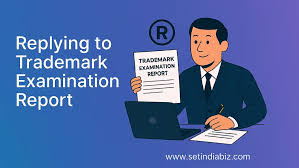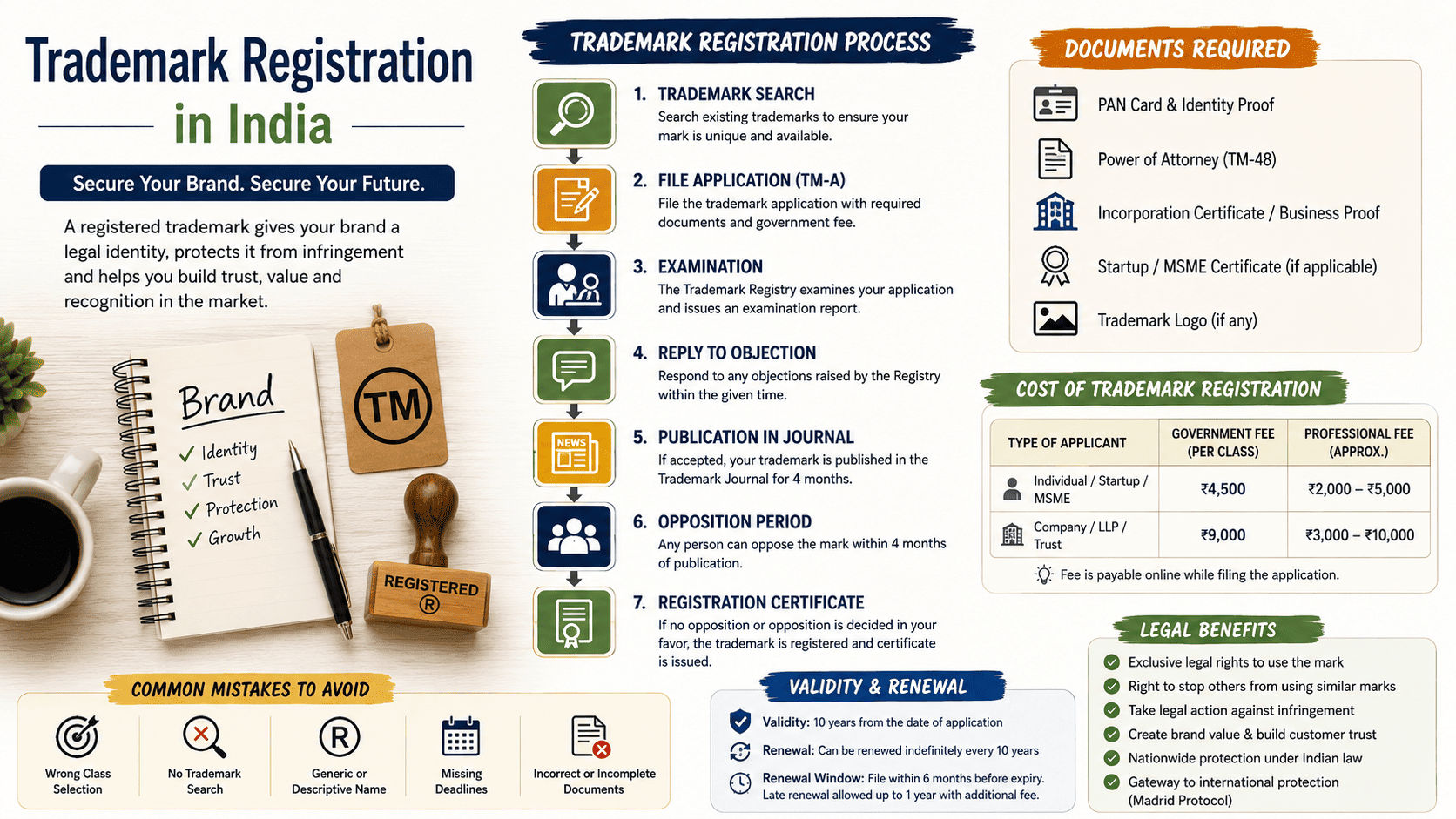
Trademark objection reply is the written response submitted to the Trade Marks Registry when an examiner raises objections against a trademark application. Seeing “Objected” on the IP India portal can be worrying, but an objection is not the same as a final rejection. The applicant gets an opportunity to explain why the mark should proceed, address the examiner’s concerns, and provide supporting evidence where appropriate.
For Indian founders and small-business owners, the important point is simple: do not ignore the examination report. The Trade Marks Registry’s current procedure states that an applicant should respond to office objections within 30 days from receipt of the examination report. If no response is submitted within the prescribed period, the application may be treated as abandoned. If the response does not overcome the objections, a hearing may follow.
This guide explains how to check a trademark objection, prepare a response, understand common grounds such as Sections 9 and 11 of the Trade Marks Act, assess fees and timelines, and know what happens after the reply is filed.
What Is a Trademark Objection?
A trademark objection is an objection raised by the Trade Marks Registry during examination of an application. The examiner reviews the application and may identify legal, factual or procedural issues that need to be addressed before the application can proceed.
The objection is generally communicated through an Examination Report. The report explains the grounds on which the application has been objected to and may identify earlier trademarks or other issues relevant to the application.
The key distinction is that an objection is not automatically a rejection. The applicant has an opportunity to respond. Under the Trade Marks Rules, 2017, a timely response is considered by the Registrar. If the response resolves the objection, the application can proceed to publication in the Trade Marks Journal. If the objection remains unresolved, the matter may move to a hearing.
Applicants can refer to the Trade Marks Act, 1999 and the Trade Marks Rules, 2017 for the governing provisions.
What Does “Objected” Mean in Trademark?
When the application status says “Objected”, it generally means that an examination objection has been raised and the application requires a response.
It does not mean that the trademark has already been permanently refused. The next step is to read the Examination Report, understand the grounds raised by the examiner and prepare an appropriate response within the applicable period.
Founders should also distinguish an examination objection from a third-party opposition. An examination objection comes from the Registry during examination. An opposition is a separate proceeding that can be initiated by another person after the mark is advertised in the Trade Marks Journal.
Why Is a Trademark Application Objected To?
There is no single reason why an application may be objected to. The grounds depend on the mark, the goods or services covered, earlier marks on the Register and the information provided in the application.
Common issues include:
- The mark may lack sufficient distinctiveness.
- The mark may describe the kind, quality, purpose or other characteristics of the goods or services.
- The mark may be similar to an earlier trademark.
- The goods or services may create a likelihood of confusion with those covered by an earlier mark.
- There may be classification, specification or other procedural issues.
- The examiner may raise another objection under the Trade Marks Act or Rules based on the circumstances of the application.
What Are the Common Grounds for Trademark Objection?
Section 9 Objection: Lack of Distinctiveness
Section 9 of the Trade Marks Act deals with absolute grounds for refusal. Among other things, it covers marks that are devoid of distinctive character and marks that exclusively describe certain characteristics of goods or services.
For example, a mark that simply describes what a product is, what it does or a characteristic of the product may face difficulty in registration. The exact assessment depends on the mark and the goods or services involved.
A response to a Section 9 objection may therefore need to explain why the mark is distinctive. Depending on the circumstances, evidence of use and market recognition may also be relevant.
Read the official Section 9 provisions of the Trade Marks Act before relying on a particular legal argument.
Section 11 Objection: Similarity With an Earlier Trademark
Section 11 deals with relative grounds for refusal. A trademark may face an objection where it is identical or similar to an earlier trademark and the relevant goods or services are identical or similar, creating a likelihood of confusion or association.
This is why a trademark search should consider more than an exact spelling match. Phonetic similarity, visual similarity and the relationship between the relevant goods or services can matter.
If a Section 11 objection is raised, the response should deal with the cited mark carefully. Simply saying “the names are different” may not be enough. The applicant should examine the overall marks, the relevant goods or services and the circumstances of the market.
How to Check a Trademark Objection?
Before drafting anything, confirm exactly what the Registry has objected to. Do not rely only on the application status shown on a third-party website or an old screenshot.
You can use the official IP India Trade Mark Public Search to investigate earlier marks. You can also use the official Trade Marks Registry system to track the application and related proceedings.
Step 1: Check the Application Status
Search for the trademark application using the application number and review its current status. If the application is shown as objected, look for the corresponding Examination Report or communication from the Registry.
Step 2: Read the Examination Report
Read the complete report rather than focusing only on the word “Objected”. Identify every objection raised by the examiner.
Make a simple list of the issues. For example:
- Section 9 objection.
- Section 11 objection.
- Classification or specification issue.
- Requirement for additional information or documents.
This makes it easier to ensure that your response answers every point.
Step 3: Check the Cited Trademarks
If the report cites earlier marks, search those marks and review their status, classes and relevant goods or services.
Do not assume that every cited mark automatically prevents registration. The legal assessment depends on the specific facts, including similarity and the goods or services involved.
How to File a Trademark Objection Reply?
A good response should be structured, specific and supported by the facts of the application. The aim is not simply to disagree with the examiner. The aim is to explain why the objection should be waived or why the application should be allowed to proceed.
Step 1: Understand Every Objection
Start with the Examination Report. Identify the legal provision relied upon and the reason given by the examiner.
If the report raises multiple objections, deal with each one separately. A response that addresses only the most obvious objection may leave another objection unresolved.
Step 2: Prepare a Point-by-Point Response
The response should explain the applicant’s position in relation to each objection.
For a Section 9 objection, the argument may focus on the distinctiveness of the mark, the nature of the mark and, where relevant, evidence showing how the mark is used in the market.
For a Section 11 objection, the response may need to distinguish the applicant’s mark from the cited mark and address the relevant goods or services and likelihood of confusion.
Where an objection concerns classification or the description of goods or services, the response should address the specific classification issue rather than relying on general arguments about brand ownership.
Step 3: Add Relevant Supporting Evidence
Evidence can be particularly important where the applicant relies on use, goodwill or acquired distinctiveness.
Depending on the facts, supporting material may include:
- Invoices and sales records.
- Product packaging and labels.
- Advertising material.
- Website pages.
- Social media records.
- Marketing material.
- Business documents showing use of the mark.
- Other dated documents that support the applicant’s position.
Not every objection requires every document listed above. The evidence should be relevant to the argument being made.
Step 4: File the Response Within the Applicable Time
IP India’s current Standard Operating Procedure states that a response to the Examination Report should be submitted within one month, or 30 days, from receipt of the report. The Trade Marks Rules also provide that an application may be treated as abandoned if the applicant fails to respond within the prescribed period.
For this reason, check the actual communication and application record and do not rely on a generic online deadline calculator.
Step 5: Track the Application After Filing
Filing the response is not necessarily the end of the process. The Registry may accept the application, or it may determine that the objections remain unresolved and provide an opportunity for a hearing.
Continue monitoring the application after the response has been submitted.
What Documents Are Required for a Trademark Objection Reply?
There is no universal document list for every application. The documents required depend on the objections and the arguments being made.
Common supporting documents can include:
- A copy of the Examination Report.
- Trademark application details.
- Proof of use, where use is relevant to the response.
- Invoices and sales documents.
- Advertisements and promotional material.
- Website and social media evidence.
- Product packaging or labels.
- Affidavits or declarations, where appropriate.
- Other documents specifically relevant to the objection.
Evidence should be organised chronologically where dates are important. Poorly organised documents can make an otherwise useful response harder to assess.
How Much Does a Trademark Objection Reply Cost?
The cost depends on what exactly needs to be filed and whether professional assistance is used.
A routine response to an Examination Report should be distinguished from proceedings such as a third-party opposition, amendment request, renewal or expedited processing. These proceedings can have their own prescribed fees.
IP India’s current official fee schedule separately lists fees for applications, oppositions, renewals and various requests. It does not list a separate standard government fee simply described as a “reply to examination report”. However, a particular matter may involve a fee if another request or proceeding is also required.
Professional fees are separate. A lawyer, trademark agent or legal service provider may charge for reviewing the Examination Report, conducting legal research, preparing the response, organising evidence and handling subsequent proceedings.
For current professional pricing, founders can review Lawizer’s startup and business legal services, where trademark objection support is listed among its business protection services.
What Is the Time Limit for a Trademark Objection Reply?
The Trade Marks Registry’s current Standard Operating Procedure states that the applicant should submit a reply to office objections within 30 days from receipt of the Examination Report. The Trade Marks Rules, 2017 similarly provide that if the applicant fails to respond within one month, the Registrar may treat the application as abandoned.
This makes the response deadline one of the most important parts of the process.
Do not wait until the final few days. A complicated Section 11 objection may require searching earlier marks, collecting business evidence and reviewing the goods or services before the response can be properly prepared.
If the objection has already been raised, you can also read Lawizer’s guide to trademark registration in India for broader context on examination, publication and registration.
What Happens After Filing a Trademark Objection Reply?
After the reply is submitted, the Registry considers the response. There are several possible outcomes.
If the Registrar Accepts the Response
If the objections are considered satisfactorily addressed, the application can proceed to the next stage. After acceptance, the trademark is published in the Trade Marks Journal.
Publication creates an opportunity for third parties to oppose the application within the applicable statutory period.
If the Registrar Is Not Satisfied
If the response does not overcome the objections, the applicant may be given an opportunity to attend a hearing. The hearing gives the applicant an opportunity to make submissions before the matter is decided.
A hearing does not automatically mean the trademark will be rejected. The outcome depends on the objections, the evidence, the submissions and the applicable law.
If the Application Is Refused
If the objection remains unresolved after the relevant proceedings, the application may ultimately be refused. The available remedy depends on the nature and stage of the decision.
At that point, professional legal advice can be useful because the next step may involve a more formal challenge rather than another routine examination response.
What Happens If You Do Not Reply to a Trademark Objection?
Ignoring an Examination Report is risky. Under the Trade Marks Rules, 2017, an application may be treated as abandoned if the applicant does not respond within the prescribed period.
Abandonment is different from a simple pending objection. Once an application is abandoned, the applicant cannot assume that the original application will continue automatically.
If your application is already close to its response deadline, check the official record immediately and obtain advice on the available procedural options.
Trademark Objection vs Trademark Opposition: What Is the Difference?
These terms are often confused because both can prevent a trademark application from moving smoothly toward registration. However, they occur at different stages and involve different parties.
| Trademark Objection | Trademark Opposition |
|---|---|
| Raised during examination by the Registry | Initiated by a third party after publication |
| Usually communicated through an Examination Report | Begins with a notice of opposition |
| Applicant responds to the examiner’s objections | Applicant responds to the opponent’s case through the prescribed process |
| May lead to a hearing if objections remain | Can become a contested proceeding involving evidence and hearings |
Section 21 of the Trade Marks Act provides the framework for opposition. The Act states that an opposition may be filed within three months from advertisement or re-advertisement, with the Registrar having power to allow a further period of up to one month. This creates a maximum period of four months in the circumstances permitted by the provision.
IP India’s processing guidance also describes the four-month opposition window following publication in the Trade Marks Journal.
Therefore, a founder should not treat an examination objection and a third-party opposition as the same procedure.
What Happens After a Trademark Is Published for Opposition?
Once the application is accepted and published in the Trade Marks Journal, third parties get the opportunity to oppose registration within the applicable period.
If no opposition is filed within the applicable period, the application can proceed toward registration. If an opposition is filed, the matter becomes a contested proceeding and the applicant must respond through the prescribed procedure.
Can You Renew a Trademark After It Has Ended?
This question concerns a registered trademark rather than an application that has merely been objected to.
Under Section 25 of the Trade Marks Act, a registered trademark is valid for 10 years and can be renewed for further periods of 10 years. If the renewal fee is not paid, the law provides mechanisms involving surcharge and, in certain circumstances, restoration after removal from the Register.
The current IP India rules provide a six-month period after expiry for renewal with the applicable surcharge. If the mark has already been removed, restoration and renewal may be possible within the statutory period and subject to the prescribed requirements.
For current renewal requirements, see Lawizer’s trademark renewal services or check the official IP India trademark forms and official fees.
Common Mistakes to Avoid in a Trademark Objection Reply
1. Treating an Objection as a Final Rejection
An examination objection gives the applicant an opportunity to respond. Do not abandon the application simply because the status has changed to “Objected”.
2. Sending a Generic Response
A response should address the actual grounds in the Examination Report. Generic statements about having a unique brand may not adequately answer a specific Section 9 or Section 11 objection.
3. Ignoring Cited Trademarks
If the examiner has cited earlier marks, study them. The response should explain the relevant differences and circumstances rather than ignoring the cited marks.
4. Filing Irrelevant Evidence
More documents do not automatically make a response stronger. Evidence should support the legal and factual arguments being made.
5. Missing the Deadline
This is one of the most avoidable mistakes. Put the response deadline on your compliance calendar as soon as the Examination Report is received.
6. Failing to Monitor the Application Afterwards
Even after filing the response, monitor the application. A hearing notice or further communication may require action.
FAQ: Trademark Objection Reply
How do I file a trademark objection reply?
First, review the Examination Report and identify every objection. Prepare a point-by-point response supported by relevant evidence, then submit it through the prescribed Trade Marks Registry process within the applicable deadline. Keep the filing acknowledgement and continue monitoring the application.
How to reply to a trademark objection?
Start by understanding the legal ground cited by the examiner. Address each objection separately, explain why the mark should proceed, distinguish cited marks where relevant and attach evidence that supports the applicant’s position.
What does “objected” mean in trademark?
“Objected” generally means that the Trade Marks Registry has raised an examination objection against the application. It is not, by itself, a final rejection. The applicant gets an opportunity to respond within the prescribed period.
How do I check my trademark objection?
Use the official IP India Trade Mark Public Search and application-status facilities. Search using the trademark application details and review the Examination Report or related communication attached to the application.
What is the difference between a trademark objection and opposition?
An objection is raised by the Registry during examination. An opposition is generally filed by a third party after the trademark application is advertised in the Trade Marks Journal. The procedures and response requirements are different.
What happens if my trademark is rejected?
If the application is ultimately refused, the next available remedy depends on the decision, procedural stage and facts of the case. A professional should review the order before deciding whether to pursue a further challenge.
What happens if a trademark application is abandoned?
An abandoned application does not continue through the normal registration process. If an application has been marked abandoned, the applicant should review the reason and the available procedural remedy rather than assuming that the application will automatically revive.
How long does it take to respond to a trademark office objection?
The Registry’s current procedure provides one month, or 30 days, from receipt of the Examination Report for the applicant to respond. The time needed to prepare the response itself depends on the complexity of the objections and the amount of evidence required.
What is the time limit for opposing a trademark application in India?
Section 21 provides three months from advertisement or re-advertisement, with a further period of up to one month that may be allowed by the Registrar on application and payment of the prescribed fee. Thus, the maximum period can be four months where the additional period is granted.
What happens after a trademark is published for opposition?
Third parties get the statutory opportunity to oppose registration. If there is no opposition within the applicable period, the application can proceed toward registration. If an opposition is filed, the applicant must defend the application through the prescribed opposition procedure.
What are the fees for filing a trademark objection reply in India?
There is no single universal “trademark objection reply fee”. A routine examination-report response should be distinguished from separate requests and proceedings that have prescribed fees. Professional fees for drafting and handling the response are separate and vary by service provider and complexity.
Can I renew my trademark after it has ended?
A registered trademark can generally be renewed every 10 years. The Trade Marks Act also provides a six-month period after expiry for renewal with the applicable surcharge, and restoration provisions may apply after removal subject to statutory conditions and time limits.
How Lawizer Can Help With a Trademark Objection
A trademark objection can be difficult to handle when you are running a business at the same time. The response may require legal analysis, review of cited marks and organisation of supporting evidence.
Lawizer provides trademark and startup legal services, including support for responding to trademark objections. The service is designed to help businesses prepare and manage the response while keeping the process online.
If you are still at the application stage, you can also explore Lawizer’s trademark registration service for assistance with trademark search, filing and application tracking.
For broader brand-protection planning, Lawizer also publishes practical guidance such as its trademark registration guide for first-time founders.
Conclusion: Respond to a Trademark Objection Promptly
A trademark objection does not necessarily mean that your brand cannot be registered. It means that the Trade Marks Registry has identified an issue that needs to be addressed.
The safest approach is to act promptly. Check the Examination Report, understand each objection, examine any cited trademarks, prepare a specific response, attach relevant evidence and submit it within the prescribed period.
Do not stop after filing. Continue tracking the application because the Registry may accept the response, request further action or schedule a hearing.
If you are unsure how to respond or the objection involves complex similarity, prior use or substantial evidence, consider getting professional assistance before the deadline expires.
Received an examination objection on your trademark? Consult Lawizer for trademark objection support and get help understanding the objection, preparing the response and moving your application forward.
Legal information disclaimer: This article is intended for general information and does not constitute legal advice. Trademark procedures, fees, forms and Registry practice can change. Check the latest official IP India communication and applicable rules for your specific application.