78% of Indian startups now offer ESOPs, up from just 59% in 2021. And yet, most founders get the paperwork wrong on the first try. Common mistakes include choosing the wrong pool size, skipping the cliff clause, or filing Form SH-6 months late.
An ESOP helps startups retain employees only when founders structure it correctly from day one.
Get it wrong, and you could dilute the founders more than necessary. You might also give your best engineer an ESOP grant with a weak legal foundation. Here’s how to build it properly.
📌 TL;DR: Setting up an ESOP for startup employees in India means creating a pool (typically 10–15% of equity), getting board and shareholder approval under Section 62(1)(b) of the Companies Act 2013, and drafting a scheme with a clear vesting schedule — usually 4 years with a 1-year cliff. Lawizer handles the drafting, filings, and compliance so founders don’t lose deals or grants to paperwork errors.
What You’ll Learn
How to size and create your ESOP pool without over-diluting founders
How vesting, cliffs, and exercise price actually work in practice
Which MCA filings and board resolutions you cannot skip
How Employees Pay Tax on ESOPs and What Founders Should Explain Upfront
What Is an ESOP and Why Indian Startups Use It
An ESOP (Employee Stock Option Plan) gives an employee the right — not the obligation — to buy company shares at a fixed price in the future. It’s not ownership on day one. It’s a promise: stay, contribute, and you’ll earn the right to buy in at today’s price, even if the company’s value climbs many times over by the time you exercise.
Here’s the thing. Cash-strapped early-stage startups in Bengaluru, Mumbai, and Delhi cannot always match the salaries offered by large tech companies. Instead, they use ESOPs to attract the same engineers and product professionals. They offer equity instead of, or alongside, cash compensation.
Under the Companies Act, 2013 (Section 62(1)(b)), private limited companies can issue ESOPs following Ministry of Corporate Affairs rules, and DPIIT-recognised startups get added flexibility, including the ability to grant options to promoters and directors, which other private companies can’t do.
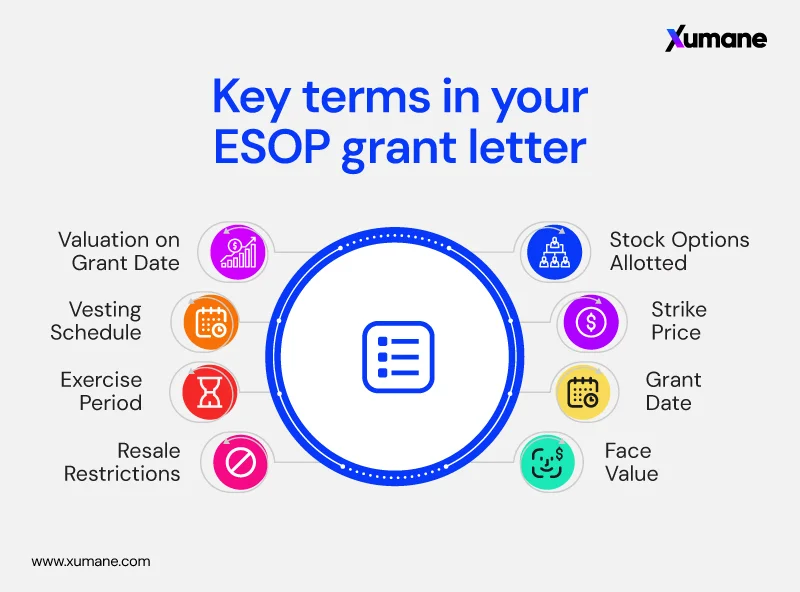
What most founders miss: an ESOP works as a retention tool only if employees actually understand it. A grant letter full of jargon with no explanation of vesting or tax impact does very little for morale, however generous the number of options looks on paper.
How to Set Up an ESOP Pool the Right Way
An ESOP pool is a portion of the company’s equity that founders reserve specifically for employees. Most Indian startups create the pool before a funding round so founders absorb most of the dilution instead of incoming investors. Investors also expect startups to follow this approach.
Seed stage: around 10% of fully diluted equity
Series A and beyond: 12–15%, and growing further at later stages as senior hires join
Approval needed: board resolution plus special resolution from shareholders
A quick example: if you set a 10% pool pre-Series A and the new investor takes a 25% stake, your pool dilutes proportionally too. Founders often “top up” the pool back to the original target right after the round closes, so there’s enough room for the next 18–24 months of hiring.
If you’re incorporating your startup and structuring equity at the same time, handle company incorporation and compliance together. This approach lets you build the ESOP pool into your cap table from the start instead of adding it later.
Vesting Schedule, Cliff, and Exercise Price
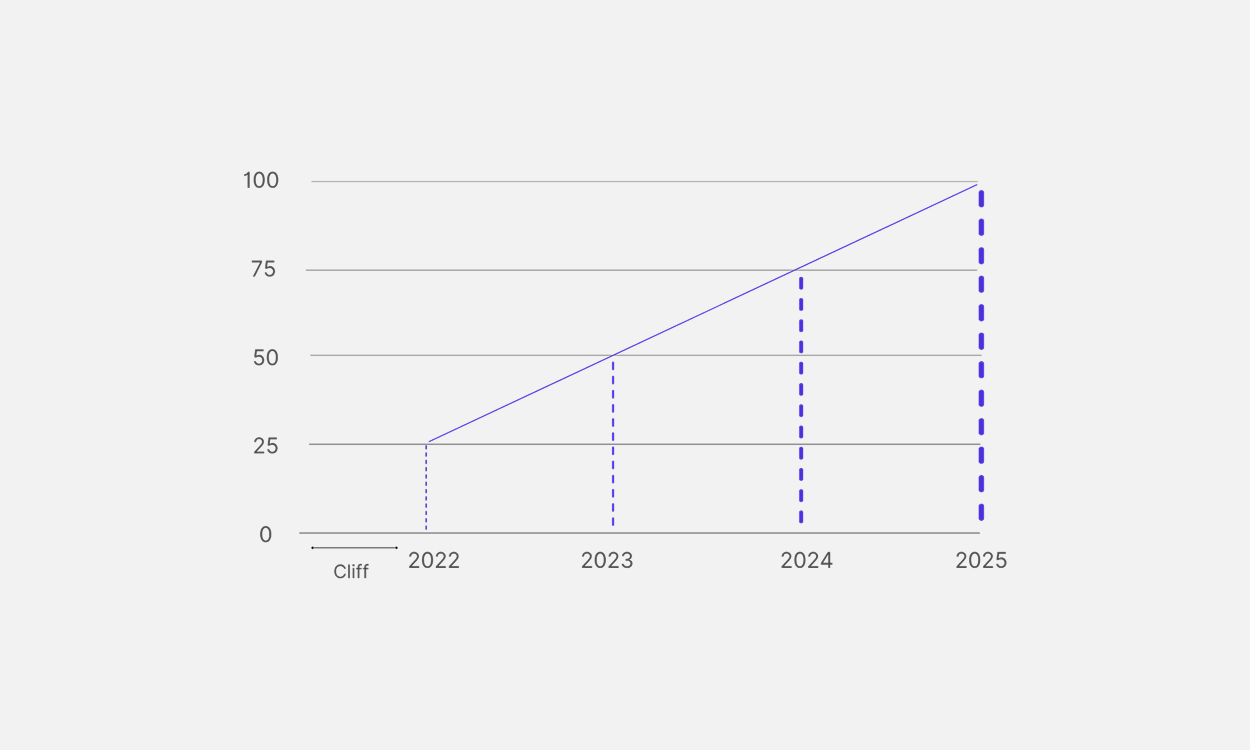
This is where most ESOP confusion lives, both for founders drafting the scheme and employees trying to figure out what they actually own. The standard structure across Indian startups is a 4-year vesting period with a 1-year cliff.
In simple terms, employees do not receive any vested options during the first 12 months. Leave before that, and the entire grant lapses — this is the cliff, and Indian rules treat one year as the minimum. Cross the cliff, and 25% vests immediately.
The remaining 75% typically vests monthly or quarterly over the next three years, allowing the employee to become fully vested by month 48.
Exercise price, explained
The exercise price (also called strike price) is what an employee pays per share when they exercise vested options — locked in at the Fair Market Value (FMV) on the grant date, determined by a registered valuer. If the company’s FMV rises later, the employee still pays the old, lower price. That gap is the wealth-creation part of the deal.
Vested options: employee CAN exercise, hasn’t yet
Exercised options: employee has paid and now holds shares
Post-termination exercise window: Employees usually have 90 days after leaving the company to exercise their vested options. Most people consider a window of less than 30 days unfair to employees.
The Legal Documents and MCA Filings You Cannot Skip
Let’s break this down. An ESOP isn’t a verbal promise or a line in an offer letter — it needs a documented, board-and-shareholder-approved scheme to hold up legally and to survive due diligence at your next funding round.
ESOP scheme document: objective, eligibility, pool size, vesting terms, exercise price formula, and what happens on termination or acquisition
Board and shareholder resolutions: approving the scheme and each subsequent grant
Individual grant letters: signed by company and employee, specifying number of options and vesting schedule
File Form SH-6: within 60 days of shareholder approval to disclose the ESOP scheme.
Register of Employee Stock Options: maintained by the company for every grant issued
Founders who skip the SH-6 filing or fail to keep grant letters signed often find out the hard way — during Series A due diligence, when the investor’s legal team flags every gap and stalls the term sheet until it’s fixed.
How ESOPs Are Taxed in India
ESOP taxation catches almost every first-time recipient off guard, so it’s worth explaining to your team before they exercise, not after. Tax hits at two separate points.
At exercise: the difference between the FMV on the exercise date and the exercise price is treated as perquisite income and taxed as salary, at the employee’s slab rate. At sale: any further gain is taxed as capital gains — short-term or long-term depending on the holding period.
DPIIT-recognised startups get a meaningful exception here: eligible employees can defer the perquisite tax until they sell the shares, leave the company, or five years pass from allotment, whichever comes first. That removes the cash-flow problem of owing tax on shares you haven’t sold yet.
If your startup qualifies, this deferral is worth building into how you communicate ESOP value at the offer stage — and it’s worth getting your tax filing and compliance sorted around it so neither the company nor the employee gets caught off guard at assessment time.
Common ESOP Mistakes Founders Make
A few patterns show up again and again in early-stage Indian startups, and they’re avoidable with a bit of planning upfront.
Creating a pool without a hiring plan — leads to either an underused pool or a mid-year restructuring scramble
No clawback clause — makes it hard to recover unvested equity when someone exits early
Arbitrary exercise price — not backed by a re
istered valuer’s FMV report, which creates tax and compliance risk
Over-diluting too early — giving away a large pool before the company has proven traction, which complicates future rounds
Poor communication — employees who don’t understand vesting or tax rarely value the grant the way founders expect them to
The upside of getting this right is real: over a dozen Indian startups ran ESOP buybacks in 2025, helping more than 9,200 employees unlock actual wealth from options that were structured, documented, and communicated properly from the start.
Frequently Asked Questions
Q: How much equity should a startup set aside for ESOPs in India?
A: Most Indian startups reserve 10–15% of fully diluted equity for their ESOP pool. Seed-stage companies typically start around 10%, increasing to 12–15% by Series A as leadership hires join. The right number depends on your hiring plan for the next 18–24 months.
Q: What happens to my ESOP if I leave before one year?
A: If you leave before completing the one-year cliff, all granted options lapse and you receive nothing. This is standard under Indian ESOP practice and exists to protect the company from granting equity to employees who don’t stay long enough to contribute meaningfully.
Q: Can the exercise price be changed after the grant is made?
A: No. The exercise price is fixed at the Fair Market Value on the grant date and cannot be reduced or altered retroactively without triggering tax complications. This is exactly why the exercise price should be based on a formal valuer’s report, not an internal estimate.
Q: Are ESOPs taxed twice in India?
A: Yes. Tax applies once at exercise, when the gap between FMV and exercise price is taxed as salary income, and again at sale, when further gains are taxed as capital gains. DPIIT-recognised startups can offer eligible employees a deferral on the exercise-stage tax.
Q: Do I legally need board approval to grant ESOPs, or can I just issue them informally?
A: Board approval, and in most cases shareholder approval, is mandatory under Section 62(1)(b) of the Companies Act, 2013. Grants made without proper resolutions and Form SH-6 filings can be challenged later and often surface as red flags during investor due diligence.
Q: Can promoters or founders receive ESOPs too?
A: Generally, promoters and directors holding over 10% equity are excluded from ESOP eligibility. DPIIT-recognised startups get an exception for the first 10 years from incorporation, allowing them to grant ESOPs to promoters and directors as well.
Ready to set up your ESOP the right way?
Lawizer’s experts handle ESOP scheme drafting, board and shareholder resolutions, and Form SH-6 filing — fully online, starting at just ₹4,999. No CA visit needed.
📌 TL;DR: A founder vesting schedule in India means promoters earn their shares over time — typically 4 years with a 1-year cliff — instead of receiving 100% ownership on day one. It protects the company from “dead equity” if a co-founder exits early, signals discipline to investors, and is enforced through a shareholders’ agreement rather than directly under the Companies Act, 2013. Lawizer drafts founders’ agreements with vesting built in from incorporation, not retrofitted after a dispute.
What You’ll Learn
What founder vesting actually means and why it differs from employee ESOP vesting
The standard 4-year, 1-year cliff structure Indian investors expect to see
How reverse vesting works for founders who already hold shares
Which clauses your founders’ agreement or SHA must include
What happens to unvested equity when a co-founder leaves
What Is a Founder Vesting Schedule?
A vesting schedule is the timeline over which a founder “earns” full legal ownership of the shares allotted to them, rather than owning everything outright the moment the company incorporates. Here’s the key point: once a company allots shares under the Companies Act, 2013, the shareholder becomes their legal owner.
Vesting does not change ownership directly. Instead, it operates through a contractual mechanism in the founders’ agreement or Shareholders’ Agreement (SHA). This provision requires a departing founder to sell back any unvested shares.
The term “reverse vesting” refers to an arrangement where the founder already holds the shares and must transfer the unearned portion back if they exit early. Unlike an employee, who earns options that vest over time, the founder starts with the shares and gives back the unearned portion if they leave before the vesting period ends.
Many founders believe vesting only benefits investors. In reality, it also protects co-founders from day one. It safeguards both the founders and the company’s cap table. A four-year vesting period with a one-year cliff is now the standard in India and globally. A cliff is the initial period during which no equity vests.
Why Indian Founders Can’t Afford to Skip It
What’s the real cost of skipping vesting? Picture an equal three-way split with no agreement. One founder leaves after eight months. The remaining two now need that person’s consent for almost every shareholder-level decision — share issuance, a new funding round, even routine governance — because they still legally hold their full stake.
This isn’t a rare scenario. Disputes over undocumented equity promises and dormant cap table entries are among the most common founder-side legal issues Indian startups bring to law firms once a funding round is in motion. A co-founder who went passive — moved abroad, became inactive, or simply stopped contributing — can still hold pre-emptive and anti-dilution rights that block a Series A from closing on time.
The short answer: A founder vesting schedule turns a potential equity dispute into a pre-agreed contractual outcome. Without it, founders often face legal disputes later. These cases may end up before the National Company Law Tribunal (NCLT) under Sections 241–242 of the Companies Act, 2013.
The Standard Structure: 4-Year Vesting, 1-Year Cliff
Let’s break this down. The structure almost every Indian startup and investor expects looks like this:
Year 0–1 (the cliff):No shares vest. If a founder leaves before the 12-month mark, they walk away with nothing.
End of Year 1: 25% of the founder’s shares vest in one go.
Year 1–4: The remaining 75% vests monthly, in equal instalments — roughly 1/36th each month.
Year 4 : The founder becomes fully vested and owns their entire allotted stake outright.
Founders who complete significant pre-incorporation work can negotiate vesting credit, allowing them to start partially vested on day one instead of beginning at zero. This is reasonable when documented, but it should be the exception, agreed in writing, not assumed.
Acceleration Clauses Worth Knowing
Acceleration speeds up vesting if a specific event occurs, usually an acquisition. Double-trigger acceleration offers a more balanced approach because it requires both an acquisition and a termination without cause before equity accelerates. This structure prevents founders from cashing out immediately after a deal closes and walking away, while still protecting them if the new owner later terminates them without cause.
Drafting It Right: What Your Founders’ Agreement Must Cover
A vesting clause that’s vague is almost as risky as having none. A quick example: an agreement that says shares vest “over time” without defining the cliff, the monthly schedule, or what counts as a “good leaver” versus a “bad leaver” leaves every term open to dispute later.
At minimum, your founders’ agreement or SHA should define:
Exact vesting schedule: cliff length, total vesting period, and vesting frequency (monthly is most common).
Good Leaver vs. Bad Leaver: The company repurchases unvested shares at fair value when a founder qualifies as a good leaver (for example, due to resignation, health reasons, or mutual agreement). However, the company repurchases those shares at face value or nil value when a founder becomes a bad leaver because of termination for cause or a breach of the agreement.
Valuation mechanism for buyback: who values the unvested shares, and by when. Without this, parties default to Rule 11UA of the Income Tax Rules, 1962 — a method built for tax compliance, not equitable founder buyouts.
IP assignment: a separate but related clause ensuring all IP built by founders, including pre-incorporation work, sits with the company, not the individual.
Deadlock resolution: what happens if co-founders can’t agree on a reserved matter, including a forced transfer trigger for serious breaches.
Getting these clauses drafted correctly at incorporation is far cheaper than fixing them later. Lawizer’s company incorporation services include founders’ agreement drafting with vesting built in from day one, so you’re not retrofitting protection after a co-founder relationship has already gone sideways.
Founder Vesting vs ESOP Vesting: Don’t Confuse the Two
Here’s a distinction that trips up a lot of founders. Section 62(1)(b) of the Companies Act, 2013, along with Rule 12 of the Companies (Share Capital and Debentures) Rules, 2014, governs Employee Stock Option Plans (ESOPs) in India.
Rule 12 generally prohibits promoters and directors holding more than 10% equity from receiving ESOPs. However, companies recognised as startups under the Startup India initiative by DPIIT can grant ESOPs to these individuals, as the exemption remains available for up to 10 years from the date of incorporation.
In contrast, founder vesting does not operate under an ESOP scheme. Instead, founders receive their shares through a separate ownership arrangement. It’s a contractual obligation in the founders’ agreement or SHA that applies to shares already allotted to promoters at incorporation. The two mechanisms achieve a similar goal — earning equity over time — but they sit in completely different legal frameworks, and confusing them in your documentation is a common drafting mistake.
If you’re also setting up an employee option pool alongside founder vesting, make sure your MSME and compliance registrations are in place first — investors will check both during diligence.
What Happens When a Co-Founder Leaves Early
A quick example to make this concrete: a founder holding 30% equity leaves at the end of Year 2, with a standard 4-year/1-year-cliff schedule in place. They’ve vested 25% (the cliff) plus 12 months of monthly vesting — roughly 50% of their total grant.
The other 50% reverts to the company, typically at face value or nil consideration as specified in the buyback clause, and can be reallocated to a replacement co-founder, added to the ESOP pool, or held by the company.
What most founders miss: if the agreement is silent on the buyback price for unvested shares, the default valuation route is Rule 11UA — net asset value or discounted cash flow — which was designed for income tax compliance, not for a fair founder exit. Specifying the valuation method and timeline in writing at the start avoids a costly negotiation later.
When Should You Set Up Vesting?
The short answer: at incorporation, before any institutional money comes in. Investors increasingly check for a vesting schedule and a documented founders’ agreement during diligence, and discovering its absence mid-term-sheet negotiation is a red flag that can delay or derail a round.
If you’ve already incorporated without one, it’s not too late — but it does require every co-founder to agree to retroactively place their existing shares under a vesting arrangement, which is a harder conversation than setting it up on day one. Either way, this sits alongside your other founder-stage filings, including your company’s annual income tax return filing and trademark protection for your brand.
Frequently Asked Questions
Q: Is founder vesting legally required in India?
A: No, the Companies Act, 2013 does not mandate founder vesting. It’s a contractual protection built into your founders’ agreement or SHA, not a statutory requirement. However, most institutional investors will insist on it before closing a funding round.
Q: What’s the difference between vesting and reverse vesting?
A: Vesting typically refers to options or shares granted to employees that they earn over time before receiving them. Reverse vesting applies to founders who already hold their shares; if they leave early, the unvested portion is sold back to the company. Founder agreements almost always use reverse vesting.
Q: Can founders negotiate a shorter vesting period than 4 years?
A: Yes. A 2-3 year vesting schedule with a shorter cliff is more founder-friendly and is sometimes accepted by early-stage investors, especially if the founder has already demonstrated significant traction. The 4-year, 1-year-cliff structure remains the default investors expect, so any deviation should be clearly justified and documented.
Q: What happens to unvested shares if a co-founder is asked to leave for cause?
A: This depends entirely on your “bad leaver” clause. Most agreements specify that unvested shares are forfeited at nil or face value in a for-cause termination, while vested shares may still be repurchased at fair value or retained, depending on the agreement’s terms. Without this clause defined in writing, the company has no automatic right to claw back shares.
Q: Does vesting reset when the startup raises a new funding round?
A: Generally no — founder equity is diluted as new shares are issued, but the original vesting timeline continues unchanged unless all parties specifically negotiate otherwise. Series A investors sometimes ask for renegotiated or restarted vesting as a condition of the round, which founders should review carefully before agreeing.
Q: Can a solo founder skip vesting entirely?
A: A solo founder has no co-founder to protect against, but investors will still often require founder vesting before funding, since it protects them against the founder leaving the company early post-investment. It’s worth setting up even for a single-founder startup if outside funding is on the roadmap.
Ready to protect your founder equity the right way?
Lawizer’s experts handle everything — founders’ agreement drafting, vesting schedule structuring, and full company incorporation — fully online, starting at just ₹1,499. No CA visit needed.
Three founders. One equal 33% split. No vesting schedule. Eighteen months later, one co-founder stops contributing but still owns one-third of the company. Many founders make the mistake of skipping a founder vesting schedule. At Lawizer, we have seen this happen often. This single document helps prevent future ownership disputes.
Eighteen months later, one co-founder stops contributing. However, they still own one-third of the company. Many founders make the mistake of skipping a founder vesting schedule.cision you make.
📌 TL;DR: A founder vesting schedule in India means promoters earn their shares over time — typically 4 years with a 1-year cliff — instead of receiving 100% ownership on day one. It protects the company from “dead equity” if a co-founder exits early, signals discipline to investors, and is enforced through a shareholders’ agreement rather than directly under the Companies Act, 2013. Lawizer drafts founders’ agreements with vesting built in from incorporation, not retrofitted after a dispute.
What You’ll Learn
What founder vesting actually means and why it differs from employee ESOP vesting
The standard 4-year, 1-year cliff structure Indian investors expect to see
How reverse vesting works for founders who already hold shares
Which clauses your founders’ agreement or SHA must include
What happens to unvested equity when a co-founder leaves
What Is a Founder Vesting Schedule?
A vesting schedule is the timeline over which a founder “earns” full legal ownership of the shares allotted to them, rather than owning everything outright the moment the company incorporates. Here’s the key point: once a company allots shares under the Companies Act, 2013, the shareholder becomes their legal owner.
Vesting does not change ownership directly. Instead, it operates through a contractual mechanism in the founders’ agreement or Shareholders’ Agreement (SHA). This provision requires a departing founder to sell back any unvested shares.
The term “reverse vesting” refers to an arrangement where the founder already holds the shares and must transfer the unearned portion back if they exit early. Unlike an employee, who earns options that vest over time, the founder starts with the shares and gives back the unearned portion if they leave before the vesting period ends.
Many founders believe vesting only benefits investors. In reality, it also protects co-founders from day one. It safeguards both the founders and the company’s cap table. A four-year vesting period with a one-year cliff is now the standard in India and globally. A cliff is the initial period during which no equity vests.
Why Indian Founders Can’t Afford to Skip It
What’s the real cost of skipping vesting? Picture an equal three-way split with no agreement. One founder leaves after eight months. The remaining two now need that person’s consent for almost every shareholder-level decision — share issuance, a new funding round, even routine governance — because they still legally hold their full stake.
This isn’t a rare scenario. Disputes over undocumented equity promises and dormant cap table entries are among the most common founder-side legal issues Indian startups bring to law firms once a funding round is in motion. A co-founder who went passive — moved abroad, became inactive, or simply stopped contributing — can still hold pre-emptive and anti-dilution rights that block a Series A from closing on time.
The short answer: A founder vesting schedule turns a potential equity dispute into a pre-agreed contractual outcome. Without it, founders often face legal disputes later. These cases may end up before the National Company Law Tribunal (NCLT) under Sections 241–242 of the Companies Act, 2013.
The Standard Structure: 4-Year Vesting, 1-Year Cliff
Let’s break this down. The structure almost every Indian startup and investor expects looks like this:
Year 0–1 (the cliff):No shares vest. If a founder leaves before the 12-month mark, they walk away with nothing.
End of Year 1: 25% of the founder’s shares vest in one go.
Year 1–4: The remaining 75% vests monthly, in equal instalments — roughly 1/36th each month.
Year 4 : The founder becomes fully vested and owns their entire allotted stake outright.
Founders who complete significant pre-incorporation work can negotiate vesting credit, allowing them to start partially vested on day one instead of beginning at zero. This is reasonable when documented, but it should be the exception, agreed in writing, not assumed.
Acceleration Clauses Worth Knowing
Acceleration speeds up vesting if a specific event occurs, usually an acquisition. Double-trigger acceleration offers a more balanced approach because it requires both an acquisition and a termination without cause before equity accelerates. This structure prevents founders from cashing out immediately after a deal closes and walking away, while still protecting them if the new owner later terminates them without cause.
Drafting It Right: What Your Founders’ Agreement Must Cover
A vesting clause that’s vague is almost as risky as having none. A quick example: an agreement that says shares vest “over time” without defining the cliff, the monthly schedule, or what counts as a “good leaver” versus a “bad leaver” leaves every term open to dispute later.
At minimum, your founders’ agreement or SHA should define:
Exact vesting schedule: cliff length, total vesting period, and vesting frequency (monthly is most common).
Good Leaver vs. Bad Leaver: The company repurchases unvested shares at fair value when a founder qualifies as a good leaver (for example, due to resignation, health reasons, or mutual agreement). However, the company repurchases those shares at face value or nil value when a founder becomes a bad leaver because of termination for cause or a breach of the agreement.
Valuation mechanism for buyback: who values the unvested shares, and by when. Without this, parties default to Rule 11UA of the Income Tax Rules, 1962 — a method built for tax compliance, not equitable founder buyouts.
IP assignment: a separate but related clause ensuring all IP built by founders, including pre-incorporation work, sits with the company, not the individual.
Deadlock resolution: what happens if co-founders can’t agree on a reserved matter, including a forced transfer trigger for serious breaches.
Getting these clauses drafted correctly at incorporation is far cheaper than fixing them later. Lawizer’s company incorporation services include founders’ agreement drafting with vesting built in from day one, so you’re not retrofitting protection after a co-founder relationship has already gone sideways.
Founder Vesting vs ESOP Vesting: Don’t Confuse the Two
Here’s a distinction that trips up a lot of founders. Section 62(1)(b) of the Companies Act, 2013, along with Rule 12 of the Companies (Share Capital and Debentures) Rules, 2014, governs Employee Stock Option Plans (ESOPs) in India.
Rule 12 generally prohibits promoters and directors holding more than 10% equity from receiving ESOPs. However, companies recognised as startups under the Startup India initiative by DPIIT can grant ESOPs to these individuals, as the exemption remains available for up to 10 years from the date of incorporation.
In contrast, founder vesting does not operate under an ESOP scheme. Instead, founders receive their shares through a separate ownership arrangement. It’s a contractual obligation in the founders’ agreement or SHA that applies to shares already allotted to promoters at incorporation. The two mechanisms achieve a similar goal — earning equity over time — but they sit in completely different legal frameworks, and confusing them in your documentation is a common drafting mistake.
If you’re also setting up an employee option pool alongside founder vesting, make sure your MSME and compliance registrations are in place first — investors will check both during diligence.
What Happens When a Co-Founder Leaves Early
A quick example to make this concrete: a founder holding 30% equity leaves at the end of Year 2, with a standard 4-year/1-year-cliff schedule in place. They’ve vested 25% (the cliff) plus 12 months of monthly vesting — roughly 50% of their total grant.
The other 50% reverts to the company, typically at face value or nil consideration as specified in the buyback clause, and can be reallocated to a replacement co-founder, added to the ESOP pool, or held by the company.
What most founders miss: if the agreement is silent on the buyback price for unvested shares, the default valuation route is Rule 11UA — net asset value or discounted cash flow — which was designed for income tax compliance, not for a fair founder exit. Specifying the valuation method and timeline in writing at the start avoids a costly negotiation later.
When Should You Set Up Vesting?
The short answer: at incorporation, before any institutional money comes in. Investors increasingly check for a vesting schedule and a documented founders’ agreement during diligence, and discovering its absence mid-term-sheet negotiation is a red flag that can delay or derail a round.
If you’ve already incorporated without one, it’s not too late — but it does require every co-founder to agree to retroactively place their existing shares under a vesting arrangement, which is a harder conversation than setting it up on day one. Either way, this sits alongside your other founder-stage filings, including your company’s annual income tax return filing and trademark protection for your brand.
Frequently Asked Questions
Q: Is founder vesting legally required in India?
A: No, the Companies Act, 2013 does not mandate founder vesting. It’s a contractual protection built into your founders’ agreement or SHA, not a statutory requirement. However, most institutional investors will insist on it before closing a funding round.
Q: What’s the difference between vesting and reverse vesting?
A: Vesting typically refers to options or shares granted to employees that they earn over time before receiving them. Reverse vesting applies to founders who already hold their shares; if they leave early, the unvested portion is sold back to the company. Founder agreements almost always use reverse vesting.
Q: Can founders negotiate a shorter vesting period than 4 years?
A: Yes. A 2-3 year vesting schedule with a shorter cliff is more founder-friendly and is sometimes accepted by early-stage investors, especially if the founder has already demonstrated significant traction. The 4-year, 1-year-cliff structure remains the default investors expect, so any deviation should be clearly justified and documented.
Q: What happens to unvested shares if a co-founder is asked to leave for cause?
A: This depends entirely on your “bad leaver” clause. Most agreements specify that unvested shares are forfeited at nil or face value in a for-cause termination, while vested shares may still be repurchased at fair value or retained, depending on the agreement’s terms. Without this clause defined in writing, the company has no automatic right to claw back shares.
Q: Does vesting reset when the startup raises a new funding round?
A: Generally no — founder equity is diluted as new shares are issued, but the original vesting timeline continues unchanged unless all parties specifically negotiate otherwise. Series A investors sometimes ask for renegotiated or restarted vesting as a condition of the round, which founders should review carefully before agreeing.
Q: Can a solo founder skip vesting entirely?
A: A solo founder has no co-founder to protect against, but investors will still often require founder vesting before funding, since it protects them against the founder leaving the company early post-investment. It’s worth setting up even for a single-founder startup if outside funding is on the roadmap.
Ready to protect your founder equity the right way?
Lawizer’s experts handle everything — founders’ agreement drafting, vesting schedule structuring, and full company incorporation — fully online, starting at just ₹1,499. No CA visit needed.