Tag: lawyers

  • Self-Certification for Labor Laws: How to Simplify Your Compliance in 2026

    Self-Certification for Labor Laws: How to Simplify Your Compliance in 2026

    Introduction

    For the modern Indian entrepreneur, “Labor Law Compliance” often evokes images of dusty registers, surprise inspections, and mountain-high paperwork.

    However, as India moves toward a more digitized and pro-business regulatory environment, the Self-Certification Scheme has emerged as a game-changer.

    In 2026, self-certification is no longer just an alternative; it is the gold standard for startups and MSMEs looking to scale without the friction of traditional inspections.

    This guide explains how you can leverage self-certification to simplify your compliance roadmap.


    What is the Self-Certification Scheme?

    Self-certification is a simplified compliance mechanism that allows employers to certify their own adherence to various labor laws through an online portal.

    Instead of routine physical inspections by labor officers, businesses provide a legal undertaking confirming that they comply with statutory requirements.

    The Startup India Advantage

    Under the Startup India Action Plan, recognized startups can self-certify compliance for 9 labor laws and 3 environmental laws.

    For the first 3 to 5 years, startups are exempt from inspections unless a credible written complaint is filed.


    Key Labor Laws Covered Under Self-Certification

    The central framework generally covers the following major labor laws:

    • The Building and Other Construction Workers Act, 1996: Regulates safety and welfare of construction workers.
    • The Inter-State Migrant Workmen Act, 1979: Protects rights of workers employed across states.
    • The Payment of Gratuity Act, 1972: Governs employee retirement benefits.
    • The Employees’ Provident Funds Act, 1952: Managed by the EPFO.

    The Shift to the Shram Suvidha Portal

    The Shram Suvidha Portal, launched by the Ministry of Labour & Employment, acts as a unified compliance platform.

    It provides a single window for multiple labor law requirements.

    1. LIN Generation: Every business gets a unique Labour Identification Number.
    2. Online Returns: File a unified annual return covering multiple laws.
    3. Transparent Inspections: Inspections are randomized through a system-based algorithm.

    How to Apply for Self-Certification

    Step 1: DPIIT Recognition

    Startups must obtain DPIIT recognition to access self-certification benefits and inspection exemptions.

    Step 2: Register on Shram Suvidha Portal

    Register using your PAN and business details on the Shram Suvidha Portal and activate your LIN.

    Step 3: File Unified Annual Return

    Submit the Unified Annual Return (UAR) instead of filing multiple returns for EPF, ESI, and other laws.


    Why Self-Certification is the Best Strategy in 2026

    The shift from “Inspector Raj” to “Self-Regulation” offers significant advantages:

    • Cost Efficiency: Reduces reliance on manual compliance consultants.
    • Risk Control: Encourages internal audits and reduces violations.
    • Investor Confidence: Clean compliance history improves due diligence outcomes.

    How Lawizer Simplifies the Process

    Managing multiple compliance portals can be complex. Lawizer simplifies this through an automated legal-tech platform.

    It integrates with government systems to track deadlines, auto-fill returns, and maintain audit-ready records.

    Why Choose Lawizer?

    • Automated Compliance: Reduces manual effort.
    • Deadline Tracking: Never miss filings.
    • Audit-Ready Records: Maintain digital registers.
    • Centralized Dashboard: Manage all compliance in one place.

    Simplify compliance and scale your business with Lawizer.


    Conclusion: The Era of Informed Compliance

    Self-certification represents a shift toward trust-based governance and digital compliance.

    By adopting modern tools and government platforms, businesses can focus on growth rather than administrative burden.


    Frequently Asked Questions

    Does self-certification eliminate inspections?

    A: No. Routine inspections are removed, but complaint-based inspections can still occur.

    Is self-certification available for all industries?

    A: Most service-based and non-hazardous businesses qualify. Hazardous industries may still require inspections.

    Can EPF and ESI be self-certified?

    A: Yes. Compliance can be managed through the unified portal, though contributions must be paid regularly.

  • Drafting Virtual Contracts: Legal Validity in the Indian Market (2026)

    Drafting Virtual Contracts: Legal Validity in the Indian Market (2026)

    Introduction

    In the rapid-fire world of the Indian startup ecosystem, the traditional “wet ink” signature is fast becoming a relic of the past. From SaaS subscriptions to high-stake founder agreements, the Virtual Contract is now the primary vehicle for commerce.

    However, as we move through 2026, a critical question remains: Is a digital agreement truly as enforceable as a paper one in an Indian court?

    The answer is a resounding yes, provided you navigate the specific intersection of the IT Act and the Indian Evidence Act correctly.


    The Legal Pillars: IT Act, 2000 and Beyond

    The bedrock of virtual contracting in India is the Information Technology Act, 2000. Section 10A of the Act specifically grants legal recognition to contracts formed through electronic means.

    What Constitutes a Valid Virtual Contract?

    Under Indian law, a contract is formed when an offer is made and accepted with lawful consideration. In the digital realm, this typically happens through:

    • Click-wrap Agreements: The ubiquitous “I Agree” checkboxes.
    • Browse-wrap Agreements: Terms linked at the footer of a website.

    • E-Signatures: Documents signed via Aadhaar-based eSign or digital signature certificates (DSC).

    The Admissibility of Electronic Records

    In 2026, judicial scrutiny of digital evidence is highly sophisticated. For a virtual contract to hold up during litigation, it must comply with Section 65B of the Indian Evidence Act, 1872 (now integrated into the Bharatiya Sakshya Adhiniyam).

    The Certificate Requirement

    To present a virtual contract as evidence, a business must produce a Section 65B Certificate. This document certifies the authenticity of the computer output and ensures the electronic record has not been tampered with.

    Pro Tip: Courts now demand “Audit Trails”—digital logs showing the exact timestamp, IP address, and device ID of the signer.


    The “Stamping” Hurdle: Can Digital Be Stamped?

    A common pitfall in drafting virtual contracts is the payment of Stamp Duty. Under the Indian Stamp Act, 1899, an unstamped contract is generally inadmissible in court.

    E-Stamping in 2026

    Most Indian states have now integrated e-Stamping services. For a virtual contract to be “bulletproof,” the digital document should be associated with an e-Stamp certificate. Failing to do this can lead to penalties—often up to 10 times the original stamp duty amount.


    Specific Exclusions: When Digital is Not Enough

    Despite the digital push, certain documents cannot be executed virtually in India:

    1. Negotiable Instruments: Such as Promissory Notes (excluding cheques).
    2. Power of Attorney: Generally requires physical execution.
    3. Trust Deeds and Wills: These necessitate physical “wet” signatures.
    4. Real Estate Transfers: Sale deeds still require physical registration at the Sub-Registrar’s Office.

    How Lawizer Secures Your Virtual Agreements

    Drafting a contract is only half the battle; ensuring its “evidentiary weight” is the other half. Lawizer, a premier legal-tech firm, transforms your digital workflow into a secure legal asset.

    Lawizer’s “Smart-Contract” Suite Offers

    • Automated Audit Trails: Captures comprehensive metadata for every signature, auto-generating required legal certificates.
    • Integrated E-Stamping: Seamlessly procure and attach e-Stamps within the platform.
    • Aadhaar e-Sign Integration: Uses the UIDAI framework for secure authentication.

    Make your digital agreements legally strong and court-ready with Lawizer.


    Conclusion: Designing for Defensibility

    In 2026, the validity of a virtual contract depends on the infrastructure behind it.

    By combining sound legal drafting with robust technical verification, businesses can significantly reduce litigation risk.

    Partnering with tech-legal platforms like Lawizer ensures your digital agreements are as enforceable as traditional contracts.


    Frequently Asked Questions

    Is an email exchange a valid contract in India?

    A: Yes, provided essential contract elements exist. However, proving identity is harder without formal e-signature tools.

    Are “I Agree” checkboxes legally binding?

    A: Yes, click-wrap agreements are valid if terms are clearly communicated.

    What is the difference between an E-signature and a Digital Signature?

    A: An E-signature is a broad category (like Aadhaar eSign), while a Digital Signature (DSC) is a secure, certificate-based signature issued by a Certifying Authority (CA).

  • What to Do If Your Cheque Bounces: Legal Steps Under Section 138 NI Act

    What to Do If Your Cheque Bounces: Legal Steps Under Section 138 NI Act

    Introduction

    Dealing with a bounced cheque can be a highly frustrating experience. Whether you are a business owner waiting on a critical client payment, a landlord collecting rent, or an individual expecting the repayment of a friendly loan, an unpaid cheque disrupts your cash flow and breaches your trust.

    However, Indian law provides a robust mechanism to protect payees and penalize defaulters.

    If you are wondering exactly what to do if your cheque bounces, the Negotiable Instruments (NI) Act, 1881, specifically Section 138, is your primary legal weapon.

    Navigating this process requires strict adherence to timelines and procedures.

    In this article, we will discuss everything related to cheque bounce cases and how Lawizer helps simplify this process, making it easier for you to draft your legal notice and take swift action.


    What is Cheque Dishonour and Why is it a Criminal Offence in India?

    A cheque is said to be “dishonoured” or “bounced” when a bank refuses to pay the amount mentioned on the cheque to the payee.

    The bank returns the cheque along with a “Cheque Return Memo” stating the specific reason for the bounce. Common reasons include:

    • Insufficient funds
    • Signature mismatch
    • Account closed
    • Payment stopped by the drawer

    Historically, cheque bounce cases were treated as civil disputes, leading to long delays in recovery.

    To address this, Section 138 of the Negotiable Instruments Act was introduced, making cheque dishonour a criminal offence under specific conditions.


    Why is Cheque Bounce a Criminal Offence?

    The objective behind criminalizing cheque bounce is to maintain trust in financial transactions and ensure smooth business operations.

    The law imposes strict liability, meaning the burden of proof lies on the drawer if the cheque bounces due to insufficient funds.

    This discourages misuse of cheques and ensures accountability in financial dealings.


    The 30-15-30 Rule You Must Follow

    Time is critical in cheque bounce cases. Missing deadlines can weaken your case significantly.

    1. 30-Day Notice Period

    You must send a legal notice within 30 days from receiving the cheque return memo.

    2. 15-Day Payment Window

    The drawer gets 15 days to make payment after receiving the notice.

    3. 30-Day Court Filing Window

    If payment is not made, you must file a case within 30 days after the 15-day period expires.


    Example Timeline

    • March 1: Return memo received
    • March 20: Legal notice sent
    • March 25: Notice received
    • April 9: Payment deadline ends
    • May 9: Last date to file case

    How to Draft a Legal Notice for Cheque Bounce

    A legal notice is the foundation of your case. Any error can weaken your claim.

    Key Elements to Include

    • Transaction details
    • Cheque details
    • Reason for dishonour
    • Demand for payment
    • Legal warning

    How to Send the Notice

    Always send the notice via Registered Post or Speed Post to ensure proof of delivery.


    Filing a Case Under Section 138

    If payment is not made, you can file a criminal complaint before the Magistrate.

    Jurisdiction

    The case must be filed where your bank branch is located.

    Required Documents

    • Original cheque
    • Cheque return memo
    • Legal notice copy
    • Proof of delivery
    • Supporting documents

    What Relief Can You Get?

    • Imprisonment: Up to 2 years
    • Fine: Up to twice the cheque amount
    • Interim Compensation: Up to 20% during trial

    Out-of-Court Settlement Options

    Cheque bounce cases can be settled outside court as they are compoundable offences.

    • Mediation and Lok Adalat settlements
    • Mutual agreement between parties
    • Payment with interest or legal costs

    How Lawizer Helps You

    Lawizer simplifies cheque bounce cases by connecting you with verified legal professionals.

    Why Choose Lawizer?

    • Expert legal notice drafting
    • Verified lawyers
    • End-to-end case support
    • Affordable pricing
    • Quick turnaround

    Take action today and recover your money faster.


    Conclusion

    A bounced cheque is not just an inconvenience—it is a serious financial issue.

    By following the legal process and acting within deadlines, you can effectively recover your money.

    Taking timely legal action ensures accountability and protects your financial interests.

    Take control of the situation and act swiftly with Lawizer.


    Frequently Asked Questions

    Is Lawizer a legit company?

    A: Yes, Lawizer is a legitimate legal-tech platform in India.

    Is Lawizer a law firm?

    A: No, it is a legal-tech platform connecting users with lawyers.

    Can I file a case if I miss the 30-day notice deadline?

    A: No, but you can still pursue a civil case for recovery.

    What if partial payment is made?

    A: You can proceed legally for the remaining amount.

    Will the bank take legal action for me?

    A: No, you must initiate legal proceedings yourself.

    Will the defaulter go to jail immediately?

    A: No, imprisonment happens only after trial and conviction.

  • Your Tenant Won’t Leave. Now What? | Lawizer Blog

    Your Tenant Won’t Leave. Now What? | Lawizer Blog

    Free legal consultation for new clients  ·  Book yours at lawizer.com →Lawizer

    Free Consultation

    Property Law · India

    Your Tenant Won’t Leave.
    Now What?

    A no-jargon guide for Indian landlords dealing with non-paying or non-vacating tenants — and how to resolve it legally, quickly, and without a single court visit.

    By Lawizer Legal Team|8 min read|PropertyTenant Disputes

    “My tenant stopped paying rent and I didn’t know I had this much legal power. Lawizer sent the notice, and the tenant vacated within a week.”

    — Rajesh K., Noida — Lawizer Client

    7 days

    Average time to tenant response after a legal notice

    ₹0

    Cost of your first consultation with a Lawizer attorney

    100%

    Handled online — no court visits required at the notice stage

    The Situation No Landlord Expects:

    You trusted someone with your property. You signed a rent agreement. And now — they’ve stopped paying, stopped responding, or flatly refused to leave when the agreement expired. You’re owed money. Your property is stuck. And every time you think about going to court, you imagine years of hearings, lawyer fees, and exhausting paperwork.

    Here’s what most landlords in India don’t realize: you have far more power than you think, and most tenant disputes are resolved long before they reach a courtroom.

    This guide walks you through exactly what to do — step by step — from the moment you realize there’s a problem.

    “A well-drafted legal notice resolves more tenant disputes than all the court orders combined.”

    First, Know Where You Stand Legally:

    India doesn’t have a single national tenancy law. Depending on your state, your rights as a landlord are governed by one of these frameworks:

    Applicable Laws by State Type

    • States with Rent Control Acts (Delhi, Maharashtra, West Bengal, Tamil Nadu) — stronger tenant protections, specific eviction grounds required
    • States with new Model Tenancy Act alignment — more balanced landlord-tenant framework
    • Agreements registered under Transfer of Property Act, 1882 — contracts with teeth regardless of state-level rent control

    The most important document you have is your registered rent agreement. If it’s properly registered and clearly states the tenancy period, rent amount, and vacating clause — you’re in a strong position. If your agreement is unregistered or expired, don’t panic. You still have options, but timing matters.

    Your 5-Step Action Plan:

    01

    Document Everything Right Now

    Collect all rent receipts, bank transfer records, WhatsApp messages, and the signed agreement. Screenshot every message where you requested payment or vacation. This paper trail becomes your case.

    02

    Send a Formal Legal Notice

    This is the single most effective step. A legal notice sent by a lawyer via registered post carries serious weight. It signals you’re serious, creates a legal record, and gives the tenant a deadline to respond. Many disputes end here.

    03

    Negotiate a Settlement

    If the tenant responds, there’s often room to negotiate a departure timeline or partial payment. A structured exit — even if imperfect — is faster than litigation. Have a lawyer supervise any written agreement.

    04

    File an Eviction Case if Required

    Under the Transfer of Property Act Sec. 106 and your state’s Rent Control Act, you can file for eviction citing non-payment, misuse of property, or expiry of tenancy. Summary proceedings under CPC Order 37 allow faster recovery of dues.

    05

    Recover Unpaid Rent

    Rent recovery is a civil suit. Once you have a decree, the tenant’s movable assets or bank accounts can be attached. Combined with the eviction proceeding, most lawyers structure this as a single coordinated filing.

    Landlords underestimate the psychological and legal power of a formal notice. Here’s what it actually does:

    It creates a legal record. The moment your lawyer sends a registered notice, the clock starts. Any court proceeding later will note when you first formally demanded rent or vacation — this date matters for calculating dues and establishing bad faith on the tenant’s part.

    It triggers the response deadline. Under the Transfer of Property Act Sec. 106, tenants on a monthly lease must receive 15 days’ notice for termination. A formal notice starts this clock precisely.

    It moves the dispute out of the informal zone. Verbal requests, WhatsApp pleas, and in-person conversations carry no legal weight. A lawyer’s notice changes the entire dynamic — tenants who ignored you for months often respond within days.

    Lawizer Can Help

    Get a Legal Notice Drafted & Sent Today

    Our property lawyers review your agreement, draft a watertight notice, and send it via registered post — completely online. No office visit required. Consult a Property Lawyer Free →

    The 4 Mistakes Landlords Make (That Hurt Their Case)

    1. Cutting off electricity or water

    This feels satisfying. It is illegal. Courts treat it as coercion, and it can turn the landlord into the defendant. Do not do this under any circumstances.

    2. Accepting rent after the agreement expires

    If you accept even one month’s rent after the lease ends without a renewal, you may have legally created a periodic tenancy — and reset your eviction clock. Talk to a lawyer before accepting any post-agreement payments.

    3. Entering the property without notice

    Even as the owner, entering the tenant’s premises without advance notice (typically 24 hours) can constitute trespass. Document any entry attempts in writing.

    4. Waiting too long to act

    Every month of unpaid rent is a month of recoverable dues — but courts also look at whether you acted promptly. A six-month delay weakens your position. If the tenant hasn’t paid, issue a notice within 30 days of the first missed payment.

    Common Questions Landlords Ask Us:

    My rent agreement isn’t registered. Do I still have rights?

    Yes. An unregistered agreement is still evidence of the tenancy arrangement. However, it cannot be produced in court as primary evidence in the same way a registered document can. That said, bank records and messages corroborating rent payment can supplement the claim. Consult a lawyer to assess your specific situation.

    Can I ask the police to remove a tenant?

    In most cases, no. Tenancy disputes are civil matters. Police will not forcibly remove a tenant without a court order. However, if the tenant has physically threatened you or caused damage to property, an FIR and relevant IPC provisions may apply.

    How long does an eviction case actually take?

    It varies by state and court load. In Rent Control Tribunals (common in metro cities), cases can stretch from 6 months to several years. However, most disputes that begin with a proper legal notice are settled before a final order — which is exactly why that first step is so critical.

    What if the tenant just refuses to open the door?

    Once you have a court order for eviction, a court commissioner — accompanied by the local police — can enforce it. But you need the order first. The process is: notice → no compliance → court filing → order → enforcement.

    The landlord who documents everything and acts quickly wins. The one who waits six months hoping things resolve themselves — rarely does.

    The Bottom Line:

    A difficult tenant is stressful. But it’s a legal problem with a legal solution — and you don’t have to figure it out alone.

    Start with a free consultation. Have a lawyer look at your agreement and your situation. In most cases, a single strong legal notice is all it takes.

    Lawizer’s property lawyers have handled hundreds of landlord-tenant disputes across India — completely online, at transparent fees, with no surprise charges.

    If your tenant has stopped paying or won’t leave, the best time to act was last month. The second best time is today.

    In This Article

    1. 01 The situation no landlord expects
    2. 02 Know where you stand legally
    3. 03 Your 5-step action plan
    4. 04 The power of a legal notice
    5. 05 4 mistakes to avoid
    6. 06 Common questions answered
    7. 07 The bottom line

    Facing a tenant dispute right now?

    Talk to a Lawizer property lawyer free. We’ll tell you exactly where you stand in 30 minutes.Book Free Consultation

    Related Property Services

    More from the Lawizer Blog

    Startup Law Registering Your Company in India: The 7 Things No One Tells You Banking Cheque Bounce Under Section 138: Your Complete Legal Guide Tax ITR Filing Deadline 2025: Penalties, Extensions, and What to Do If You Missed It © 2026 Lawizer. All rights reserved.  ·  Privacy Policy  ·  Terms of Service  ·  +91 90628 15535

  • Why Every Indian Startup Needs a Strong Founder’s Agreement

    Why Every Indian Startup Needs a Strong Founder’s Agreement

    Introduction

    Starting a business is exciting and thrilling. It often begins with a powerful idea, a late-night conversation, or a shared dream between friends.

    In the early days, everything feels possible. Everyone is motivated. Everyone trusts each other.

    But while passion and trust are important, they are not enough to build a successful company. This is exactly where a founder’s agreement for startups becomes essential.

    Many Indian startups fail not because the idea was weak or the founders were not hardworking. They fail because the founders were not aligned.

    Misunderstandings, money disputes, unclear responsibilities, or ego clashes slowly damage the business. A strong founder’s agreement for startups can prevent these problems before they even begin.


    What Is a Founder’s Agreement for Startups?

    A founder’s agreement for startups is a legal document signed by co-founders at the early stage of the company. It clearly defines the relationship between the founders and sets expectations from day one.

    It usually answers key questions like:

    1. Who owns how much of the company?
    2. What are each founder’s roles and responsibilities?
    3. How will important decisions be made?
    4. What happens if a founder leaves?
    5. How will disputes be resolved?

    In simple words, it protects both the business and the people involved.

    In India, startups are commonly registered as a Private Limited Company or a Limited Liability Partnership. No matter the structure, having a founder’s agreement for startups is equally important.


    Why Is a Founder’s Agreement for Startups So Important in India?

    India’s startup ecosystem is growing rapidly. Cities like Bengaluru, Mumbai, and Hyderabad are becoming major startup hubs.

    With growth comes competition, investor pressure, and legal complexities. Here’s why every Indian startup needs a strong founder’s agreement for startups:

    1. It Prevents Future Conflicts

    In the beginning, no one thinks about worst-case scenarios. Everyone assumes things will work out smoothly.

    But what if:

    • One founder contributes more time than the others?
    • One founder wants to sell their shares?
    • One founder resigns after six months?

    Without a written founder’s agreement for startups, these situations can turn ugly. Disagreements become personal. The company suffers.

    A clear agreement sets expectations from day one. It reduces confusion and protects relationships.


    2. It Protects Equity and Ownership

    Equity is emotional. It represents ownership, control, and future wealth. Many founders split shares equally without discussing long-term contributions.

    But is equal always fair?

    One founder may bring the idea. Another may bring capital. Another may manage daily operations. A strong founder’s agreement for startups clearly defines:

    • The equity split
    • The vesting schedule (earning shares over time)
    • What happens to shares if someone exits

    Vesting is extremely important. It ensures that no founder walks away with a large percentage of ownership without contributing long-term value.


    3. Investors Expect It

    If you plan to raise funding, investors will almost always ask, “Do you have a founder’s agreement?” Investors look for stability.

    Many startups registered under Startup India later realise that investors carefully examine founder agreements before investing. A well-drafted founder’s agreement for startups builds trust, credibility, and confidence.


    4. It Clearly Defines Roles and Responsibilities

    Unclear roles are one of the biggest reasons startups fail.

    For example:

    • Who handles finance?
    • Who manages marketing?
    • Who makes the final business decisions?

    If two founders both believe they are the “CEO,” conflict is inevitable.

    A founder’s agreement for startups clearly defines:

    • Titles
    • Duties
    • Authority levels
    • Time commitment

    This clarity avoids overlapping responsibilities and unnecessary power struggles.


    5. It Covers Exit and Separation

    Not all partnerships last forever. Life changes. Priorities shift.

    A founder may want to:

    • Move abroad
    • Study further
    • Start another venture
    • Take a break

    A strong founder’s agreement for startups answers critical questions like:

    • Can a founder sell shares to outsiders?
    • Do other founders get the first right to buy those shares?
    • What happens in case of death or incapacity?

    Planning for exit does not mean you expect failure. It simply means you are being practical and prepared.


    6. It Protects Intellectual Property (IP)

    In startups, ideas are everything. Your app code, brand name, logo, designs, and product formula are all valuable intellectual property.

    Without a founder’s agreement for startups, confusion may arise about who owns what.

    A proper agreement clearly states that all intellectual property belongs to the company, not to individual founders.


    7. It Helps During Legal Disputes

    If disagreements escalate, the founder’s agreement becomes your strongest protection.

    It usually includes:

    • Dispute resolution methods
    • Arbitration clauses
    • Governing law (Indian law)

    This makes resolving conflicts faster, smoother, and less expensive.


    Why Many Indian Founders Ignore It

    Despite its importance, many founders delay drafting a founder’s agreement for startups because:

    • “We are friends.”
    • “We trust each other.”
    • “We will figure it out later.”
    • “Legal documents are expensive.”

    Money, pressure, investor expectations, and market competition can change dynamics. A written agreement does not show distrust. It shows professionalism and maturity.


    What Should a Strong Founder’s Agreement Include?

    For full protection, a founder’s agreement for startups should cover:

    1. Founder details
    2. Equity split
    3. Vesting schedule
    4. Roles and responsibilities
    5. Decision-making process
    6. Salary and compensation
    7. Confidentiality clauses
    8. Non-compete clauses
    9. Exit terms
    10. Dispute resolution mechanism

    It should always be drafted carefully, ideally with professional legal guidance.


    Conclusion

    Starting a business is like starting a journey. And no journey is smooth without a clear map.

    A founder’s agreement for startups is not just another legal formality. It is a protection shield. It protects friendships, ownership, attracts investors, and secures the future of the company.


    Frequently Asked Questions

    What is a Founder’s Agreement?

    A Founder’s Agreement is a legal document that defines the roles, responsibilities, and equity ownership of startup founders.

    Why is a Founder’s Agreement important?

    It prevents disputes among founders by clearly outlining responsibilities, ownership, and decision-making authority.

    When should startups create a Founder’s Agreement?

    Startups should ideally create a Founder’s Agreement at the time of company incorporation.

    What clauses are included in a Founder’s Agreement?

    Common clauses include equity distribution, vesting schedules, intellectual property ownership, founder roles, and exit terms.

    Does a Founder’s Agreement help in raising investment?

    Yes, investors prefer startups that have clear legal agreements between founders.

    What is founder equity vesting?

    Founder vesting means founders earn their equity gradually over time rather than receiving it immediately.

    Who owns intellectual property in a startup?

    A Founder’s Agreement ensures that intellectual property created by founders belongs to the company.

    Can a Founder’s Agreement resolve founder disputes?

    Yes, it provides dispute resolution mechanisms such as mediation or arbitration.

  • Legal Consultation Online: How Lawizer Connects You to Experts 24/7

    Introduction

    Online legal consultation has witnessed tremendous growth, especially in India, where digital adoption continues to rise rapidly.

    The legal industry has undergone a major transformation in recent years. What was once considered traditional and conservative has now evolved into a more accessible, approachable, and affordable model.

    Today, individuals and businesses prefer quick, remote, and secure legal advice over traditional in-office visits. This shift has reshaped how legal services are delivered.


    What is Online Legal Consultation?

    Online legal consultation refers to seeking legal advice, document review, or case strategy guidance through digital platforms.

    This may include:

    • Video consultations
    • Phone consultations
    • Chat-based legal advice
    • Email-based legal opinions
    • Digital document review

    Instead of physically visiting a lawyer’s office, clients can now access professional legal support remotely through legal-tech platforms and law firm websites.


    Why Online Legal Consultation Has Escalated Over Time

    1. Increased Legal Awareness

    More individuals are aware of their legal rights and prefer taking preliminary advice before escalating disputes. This proactive approach has increased demand for quick consultations.


    2. Startup & MSME Growth

    The rise of startups and MSMEs has significantly increased the need for affordable legal advice related to:

    • Contracts
    • Compliance
    • Business incorporation
    • Regulatory filings

    Entrepreneurs now seek faster legal clarity without long appointment delays.


    3. Digital Trust & Security

    Secure payment gateways, encrypted communication systems, and verified lawyer networks have strengthened public trust in online legal services.


    4. Government Digital Integration

    Digital filings under the Ministry of Corporate Affairs and the expansion of e-court initiatives have supported the growth of online legal consultation.

    Legal processes are becoming increasingly technology-driven, making remote consultation more practical than ever.


    The Future of Online Legal Consultation

    Online legal services are expected to integrate advanced technologies such as:

    • AI-powered legal assistance
    • Automated document drafting
    • Predictive case analysis
    • Blockchain-based documentation security

    The legal profession is steadily transitioning into a tech-enabled service ecosystem.


    How Lawizer Connects You to Legal Experts 24/7

    Legal issues don’t arise only during office hours. Whether it’s a compliance concern, police-related matter, contract dispute, or women’s safety issue, timely legal advice is critical.

    Lawizer bridges this gap by offering 24/7 digital connectivity to verified legal experts.

    Here’s how the system works:


    1. Instant Digital Access

    Lawizer allows users to raise legal queries anytime—day or night.

    Users can:

    • Submit their issue online
    • Select consultation type
    • Request immediate assistance

    This removes geographical and time barriers completely.


    2. Verified Expert Network

    Lawizer connects clients with verified and experienced lawyers across practice areas such as:

    • Criminal law
    • Family law
    • Corporate compliance
    • Property disputes
    • Women-centric legal matters

    Every expert is vetted before onboarding to ensure professional reliability.


    3. Smart Case Matching System

    Once a user submits a query, the platform categorizes it based on legal domain and urgency.

    The case is routed to the most suitable expert, ensuring:

    • Faster response time
    • Domain-specific advice
    • Accurate legal direction

    This eliminates random allocation and improves consultation efficiency.


    4. Multiple Consultation Modes

    To maintain 24/7 availability, Lawizer offers flexible communication options:

    • Call consultations
    • Video meetings
    • Chat-based advisory
    • Document review support

    Users can choose the format that suits their urgency and comfort.


    5. Immediate Response for Urgent Matters

    For emergencies such as police involvement, threats, or sensitive disputes, Lawizer prioritizes rapid lawyer connection.

    This ensures users receive immediate legal clarity when time is critical.


    6. Transparent and Structured Process

    From booking to payment and follow-ups, the system is fully digital and streamlined.

    This reduces delays and ensures smooth communication between clients and legal experts.


    7. Continuous Support Model

    Unlike traditional systems restricted to office hours, Lawizer’s digital-first structure ensures legal assistance remains accessible round the clock.


    Conclusion

    Online legal consultation has evolved from a convenience-based alternative into a mainstream legal service model.

    Lawizer connects users to legal experts 24/7 through digital accessibility, verified professionals, smart case allocation, and flexible consultation modes.

    By eliminating time and location barriers, it ensures that professional legal support is always within reach—whenever it is needed most.


    Frequently Asked Questions

    What is online legal consultation?

    Answer: It is the process of seeking legal advice digitally through calls, video meetings, chat, or document review.

    Is online legal consultation reliable?

    Answer: Yes, when conducted through verified platforms like Lawizer with vetted legal professionals.

    How quickly can I connect with a lawyer on Lawizer?

    Answer: Users can raise queries instantly and get connected based on urgency and case type.

    Is online legal advice confidential?

    Answer: Yes, consultations are conducted through secure and encrypted communication systems.

    Can businesses use Lawizer for compliance support?

    Answer: Yes, startups and MSMEs can seek assistance for contracts, incorporation, and regulatory compliance.


  • How to Use Lawizer’s SOS Button for Legal Emergencies in India

    How to Use Lawizer’s SOS Button for Legal Emergencies in India

    In India, finding legal help can be a challenge, especially during a crisis.

    Whether you are dealing with a wrongfully issued traffic challan, a cybercrime situation, or a threat to women’s safety, immediate access to professional counsel is vital.

    Lawizer is designed to provide that instant support.

    By bridging the gap between technology and the legal profession, it offers a real-time solution for those who need an emergency legal aid application or immediate advocate support when every second counts.

    What is Lawizer?

    Lawizer is a next-generation digital legal platform that makes legal support fast, simple, and affordable for individuals and startups.

    It is important to note that Lawizer is not a law firm and does not provide legal advice directly.

    Instead, it functions as a secure bridge connecting users with verified advocates before minor problems escalate into major legal battles.

    Key Features:

    • 24/7 Legal SOS Button: For urgent, real-time action.
    • Transparent Pricing: Zero hidden fees and a free first consultation.
    • Verified Experts: Choose advocates based on experience, language, and credentials.

    Steps to Use Lawizer’s SOS Emergency Button:

    The SOS feature acts as a “panic button,” connecting you with a legal expert within minutes. Follow these steps to get help:

    Step 1: Visit the Website:

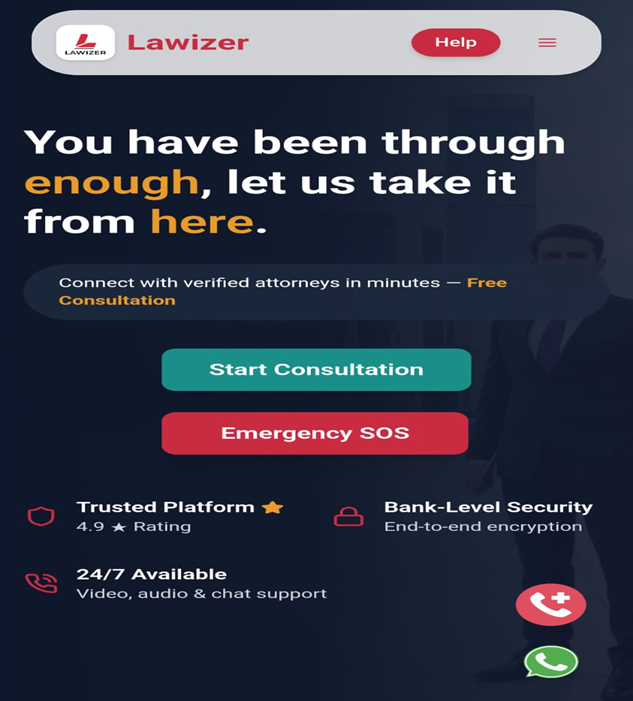
    Use your mobile browser to search for Lawizer and open the official website.

    Step 2: Click the SOS Button:

    On the homepage, locate and click the “Emergency SOS Button.”

    Step 3: Sign In or Register:

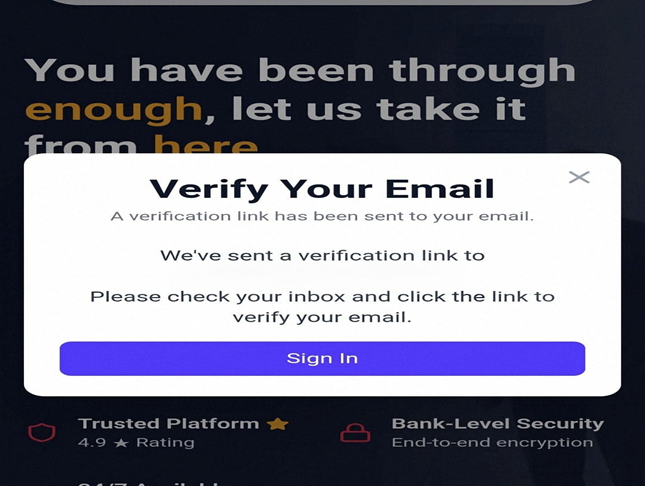
    You will be prompted to sign in. If you are a new user, enter your name, email, phone number, and a secure password.

    Step 4: Verify Your Email:

    Check your mailbox for a verification link to activate your account. This step is crucial for security.

    Step 5: Complete Your Profile:

    Log in and update your details, including your State and City. This helps the platform match you with a lawyer who understands your local jurisdiction.

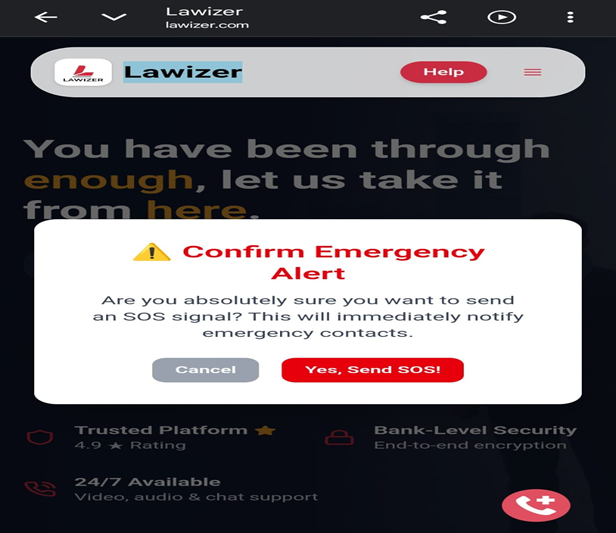
    Step 6: Confirm the SOS Call:

    Click the Emergency SOS button once more to confirm. A phone number will appear on your dial pad. Call this number to be connected to an expert in 2–3 minutes.

    Tips for Efficient Communication During a Legal Crisis:

    When you are connected to a lawyer, providing structured information helps them protect you faster.

    1. Be Precise and Factual: Stick to the facts of the current situation.
    2. Share Evidence: Have your receipts, challans, or digital documents ready to share.
    3. Identify the Category: Specify if your issue is related to Criminal, Civil, Property, or Business law to bypass guesswork.
    4. Ask About Fees: While the first consultation is free, discuss future fee structures early to keep the process transparent.

    Conclusion:

    Lawizer’s 24/7 Legal SOS button empowers every Indian citizen to act with confidence during a crisis.

    By leveraging technology to provide real-time responses from verified experts, the platform ensures that help is always just a click away.

    Frequently Asked Questions (FAQs):

    Q1. Is Lawizer a legitimate company?

    A: Yes, Lawizer is an initiative of Zeptus Private Limited, registered in West Bengal, India.

    Q2. Is the first consultation really free?

    A: Yes. Lawizer offers the first consultation for free because they believe legal clarity should always come before cost.

    Q3. Can Lawizer help with cyber complaints or traffic police?

    A: Absolutely. The platform connects you with specialized lawyers for cybercrimes, traffic disputes, and general civil matters.

  • THE ADOPTION PROCESS: A STEP-BY-STEP LEGAL GUIDE FOR FAMILIES

    THE ADOPTION PROCESS: A STEP-BY-STEP LEGAL GUIDE FOR FAMILIES

    Introduction

    An adoption process is legal framework of adopting a child lawfully with all verification of the authorities through courts order.

    An adoption is seen as a change in both for the Child who has gone through a loss of being accepted, taken care of by their family or has never got a privilege to experience family bond.

    An adoption establishes a true sense of parenthood which they grant to the child and accept them with all heart. It creates a sense of belonging ness and creates a better life for the child.


    Legal Framework And Guidelines Governing Adoption

    In order to adopt a child legally and lawfully it is very necessary to have a comprehensive idea about the laws and procedure that will provide a basic idea about this.

    The eligibility criteria of adoption process in India are done with the help of Juvenile Justice (Care and Protection of Children) Act 2015, which involves registering with the CARA Portal (Central Adoption Resource Authority) with the help of an expert who can guide for Specialized Adoption Agency (SAA).

    This involves a step by step process in order to enter such framework.

    The process involves by filling a petition for a court order and matching the criteria that the parents needed in order to receive the child lawfully without any hindrance.


    Guidelines For CARA (Central Adoption Resource Authority)

    1. The Central Adoption Resource Authority functions under the Ministry of Women and Child Development and it involves all the effective adoption schemes that are needed for the betterment of the child.
    2. Every adoption process comes with effective criteria that will meet the standards of the child as well as the parents which includes healthcare, welfare, fostering of the child and overall upbringing.
    3. In order to have standardized and lawful procedure to adopt a child then they have to file a petition and registration process is necessary through CARA Portal under the authorization of the Juvenile Justice Act.
    4. A specialized counselor is mandatory to be appointed for both the Child and the Parent who have approach for the process. A counseling session is done and questioning to the non- biological parents is needed in order to have a basic consideration for the adoption of the child.
    5. The adoptive parents have to go through some regulatory assessment which will firmly believe that are ready to adopt the child.
    6. The role of Specialized Adoption Agencies (SAA) and Home study report is beneficiary in order to ensure the process is smooth and protected without any illegal practices.
    7. Court order is also necessary for the meeting all the above needs and gives the parental custody officially to the adoptive parents so that the child can lawfully attains all the rights.

    Conclusion

    The overall laws and guidelines are meant extending the best interest for the Child and foremost the emotional security that is been bonded to the adoptive parents.

    Upbringing a Child by emphasizing their care and moral support is all what a Child truly needs.

    There are many Children who are their struggling with identity crises, lost in their own thoughts at such a tender age, at that point all what matters is they need care and affection which a parent can give, who are willing to take up all the responsibility willfully.

    Hence this will benefit a large to the overall society.

    Adoption is a journey of love, but the CARA guidelines and court processes are strict legal steps. Our family lawyers guide prospective parents through the documentation to ensure your adoption is legally secure.


    Connect with Adoption Experts


    Frequently Asked Questions

    What are the Challenges those most adoptive centers?

    A lot of time it has happened that the child faces with their identity issue and lack of self believe if they can adjust in the new place.

    Can a person adopt a 6 Month old baby India?

    Yes absolutely, A person can adopt a Child from 6 months to 16 years of age.

    Is Registration Process mandatory for Adopting a Child?

    Yes, It is necessary for adopting a child. The procedure is done through CARA Portal governed by The Juvenile Justice Act, 2015.

    How much time does it take to go through this process?

    The time frame depends upon the regulatory framework, preferences that the child meets and needs and attaining every availability of the court without any due process.

    What are the rights that a child gets from the adoptive parents?

    After all the regulatory framework is done the Child gets the overall authority and lawful rights from their adoptive parents which is same as a biological parent gives to their child.

    Is the adoption process Reversible?

    No, once the process is done and gets a final order from court then it becomes irreversible.

  • “CHILD CUSTODY LAWS IN INDIA: HOW TO WIN CUSTODY AS A FATHER”

    “CHILD CUSTODY LAWS IN INDIA: HOW TO WIN CUSTODY AS A FATHER”

    Introduction

    Child custody is one of the most sensitive and important aspects of family law. It determines the future, wellbeing, and upbringing of a child when parents separate or divorce.

    During emotional custody disputes, the most crucial question the court considers is: what is in the best interest of the child?

    This guide explains the legal, emotional, and psychological aspects of child custody in India, along with the legal provisions that protect the rights of both parents and ensure the welfare of the child.


    What Is Child Custody and Why Is It Important?

    Child custody refers to the legal rights and responsibilities given to a parent or guardian to care for and make decisions about a child’s upbringing.

    Custody is not only a legal matter but also involves the emotional and psychological wellbeing of the child. Courts aim to ensure that the child receives proper care, stability, and support for their development.

    Parental separation can significantly affect a child’s emotional and mental health. Therefore, courts carefully evaluate all circumstances before making custody decisions.

    The Indian judicial system always follows one primary principle in such cases:

    The welfare of the child is the paramount consideration.


    Legal Provisions for Child Custody in India

    In India, child custody laws aim to ensure the child receives proper emotional, financial, and educational support.

    In cases involving older children (usually around 12 years or above), the court may consider the child’s opinion while deciding custody matters, as the child may have a basic understanding of their own welfare.

    The main laws governing child custody in India include:

    • The Guardians and Wards Act, 1890
    • The Special Marriage Act, 1954

    Under Section 7 of the Guardians and Wards Act, 1890, courts have the authority to appoint a guardian for a minor if it is necessary for the welfare of the child.

    This law applies to individuals of all religions.

    Additionally, Section 38 of the Special Marriage Act, 1954 empowers district courts to pass interim orders regarding the custody, maintenance, and education of minor children during matrimonial proceedings.

    The common objective of these provisions is to ensure the best possible upbringing and welfare of the child.


    Father’s Rights in Child Custody

    In custody disputes, the law recognizes that fathers also play an important role in the upbringing and development of a child.

    Some of the fundamental responsibilities and rights of a father include:

    1. Providing emotional and financial support to the child.
    2. Participating in important decisions regarding healthcare and education.
    3. Ensuring proper care, nurturing, and maintenance of the child.

    According to Section 17 of the Guardians and Wards Act, 1890, the court considers several factors while appointing a guardian, including the welfare and best interests of the child.

    Although younger children are often placed in the custody of the mother, modern courts increasingly recognize that fathers can also provide a stable and supportive environment for the child.


    Rights of a Custodial Father

    In certain situations, courts may grant custody of a child to the father. These circumstances may include:

    • If the mother is abusive or engages in violence against the child.
    • If the mother suffers from serious health issues that prevent proper care.
    • If the mother voluntarily transfers custody to the father.
    • If the father is capable of providing financial stability and proper upbringing when the mother is unable to do so.

    Courts evaluate each case carefully and make decisions based on what will provide the most stable and supportive environment for the child.


    Important Case Laws on Child Custody

    Vivek Singh vs. Romani Singh

    This case highlighted the significance of a father’s role in a child’s life and emphasized the importance of the child’s welfare.

    The court considered two major aspects:

    • The child expressed a desire to stay with the father.
    • The welfare and best interests of the child were the highest priority.


    Read more about this case

    Gaurav Nagpal vs. Sumedha Nagpal (2009)

    In this case, the court emphasized that the welfare of the child must always be the most important consideration in custody disputes.

    The decision recognized the importance of the father’s role while also ensuring visitation rights for the mother.

    The judgment demonstrated that courts are increasingly open to granting custody to fathers when they can provide a stable and supportive environment for the child.


    Read more about this case


    Conclusion

    Child custody disputes are highly sensitive matters that directly affect a child’s future. Courts must approach such cases with care, ensuring that the emotional wellbeing and development of the child remain the top priority.

    In many situations, counseling for both parents and the child can help reduce conflict and prevent parental alienation.

    Ultimately, providing a stable, supportive, and nurturing environment is essential for raising a healthy and confident individual.

    Fathers play a crucial role in a child’s life, and modern Indian courts increasingly recognize this. If you are facing a custody dispute, it is important to build a strong legal strategy that demonstrates your ability to provide a secure and supportive environment for your child.

    Secure Your Parental Rights by talking to the best custody lawyers in the country.


    Frequently Asked Questions

    Where should a child custody petition be filed?

    Child custody petitions are generally filed in the Family Court or the District Court that has jurisdiction over the matter.

    At what stage can child custody be requested?

    A parent can request custody of a child at any stage during divorce proceedings or marital disputes.

    Does the child’s opinion matter in custody cases?

    Yes. Courts may consider the child’s preference, particularly if the child is mature enough to understand the situation. The court evaluates the emotional bond between the child and each parent before making a decision.

    Are visitation rights granted to fathers?

    Yes. Even if custody is granted to the mother, fathers are often given visitation rights to maintain a healthy relationship with the child.


    Sources

  • HINDU MARRIAGE ACT REGISTRATION: A STEP-BY-STEP GUIDE (2025)

    HINDU MARRIAGE ACT REGISTRATION: A STEP-BY-STEP GUIDE (2025)

    Introduction

    The Hindu Marriage Act, 1955 applies to the whole of India (originally excluding Jammu & Kashmir) and governs marriages among Hindus. The Act came into force on 18th May 1955.

    This Act applies to any person who is a Hindu by religion, including Buddhists, Jains, and Sikhs. It does not apply to Muslims, Christians, Parsis, or Jews unless specifically provided under law.


    Why Is Registration of Marriage Important?

    A Marriage Certificate is crucial to establish a lawful and legally recognized marriage. Marriage registration serves as official legal proof and protects the rights of both spouses.

    Registration acts as substantial evidence of marriage and safeguards individuals—especially women—from issues such as fraud, bigamy, and denial of marital rights.

    It also helps couples avoid legal complications related to property rights, visas, bank accounts, insurance, inheritance, and other official matters.


    Conditions for a Valid Hindu Marriage

    A marriage between two Hindus can be legally solemnized if the following conditions are fulfilled:

    • Neither party has a living spouse at the time of marriage.
    • Both parties give lawful and free consent.
    • The groom must be at least 21 years old and the bride must be at least 18 years old.
    • The parties must not fall within the degrees of prohibited relationship unless permitted by custom or usage.

    Legal Provisions for Registration (Section 8)

    • Registration of Hindu marriages is governed under Section 8 of the Hindu Marriage Act, 1955.
    • The State Government appoints a Marriage Registrar for this purpose.
    • Rules framed under this section must be laid before the State Legislature.
    • Failure to comply with prescribed rules may attract a nominal fine depending on state rules.
    • Although non-registration does not invalidate the marriage, registration provides strong legal evidence.

    Offline Procedure for Hindu Marriage Registration

    1. Visit the office of the Marriage Registrar.
    2. Submit the prescribed application form, usually available through the Sub-Divisional Magistrate office.
    3. Provide the required documents along with identity and address proof.
    4. Witnesses (generally three, depending on applicable law) must be present.
    5. The marriage certificate is usually issued within 15–30 days depending on state procedures.

    Online Procedure for Hindu Marriage Registration

    Many states now provide online registration facilities through official government portals. The general process includes the following steps:

    1. Visit the official State e-District or Marriage Registration portal.
    2. Book an appointment with the Marriage Registrar.
    3. Fill out the online application form.
    4. Upload the required documents.
    5. Appear before the Sub-Divisional Magistrate for verification if required.
    6. Receive the digitally issued Marriage Certificate.

    Landmark Case Law: Smt. Seema v. Ashwani Kumar (AIR 2006 SC 1158)

    In this landmark judgment, the Hon’ble Supreme Court held that marriages in India should be compulsorily registered irrespective of religion. The ruling aimed to prevent child marriages, bigamy, and fraudulent practices while protecting the rights of women.


    Conclusion

    Although registration is not mandatory for the validity of a Hindu marriage, it is strongly recommended for legal security and documentation.

    The Hindu Marriage Act, 1955 plays an important role in authenticating marriages. Ceremonies such as Saptapadi (mentioned under Section 7) complete the solemnization of marriage, while registration provides official documentary proof.

    Marriage registration strengthens legal protection, promotes women’s welfare, and helps prevent fraudulent practices such as bigamy and child marriage.

    While traditional ceremonies remain culturally significant, obtaining a marriage certificate is essential for matters such as visas, loans, joint property ownership, insurance claims, and inheritance.

    Need assistance with marriage registration?
    Get Professional Registration Support


    Frequently Asked Questions

    Is it necessary to register a marriage under the Hindu Marriage Act?

    Answer: Registration is not mandatory for the validity of the marriage, but obtaining a marriage certificate is highly important as legal proof.

    What is the minimum age for marriage under the Hindu Marriage Act?

    Answer: The minimum age is 21 years for the groom and 18 years for the bride.

    Is a legal advisor required for Hindu Marriage registration?

    Answer: No, a legal advisor is not mandatory. However, professional guidance can help ensure a smoother and error-free registration process.